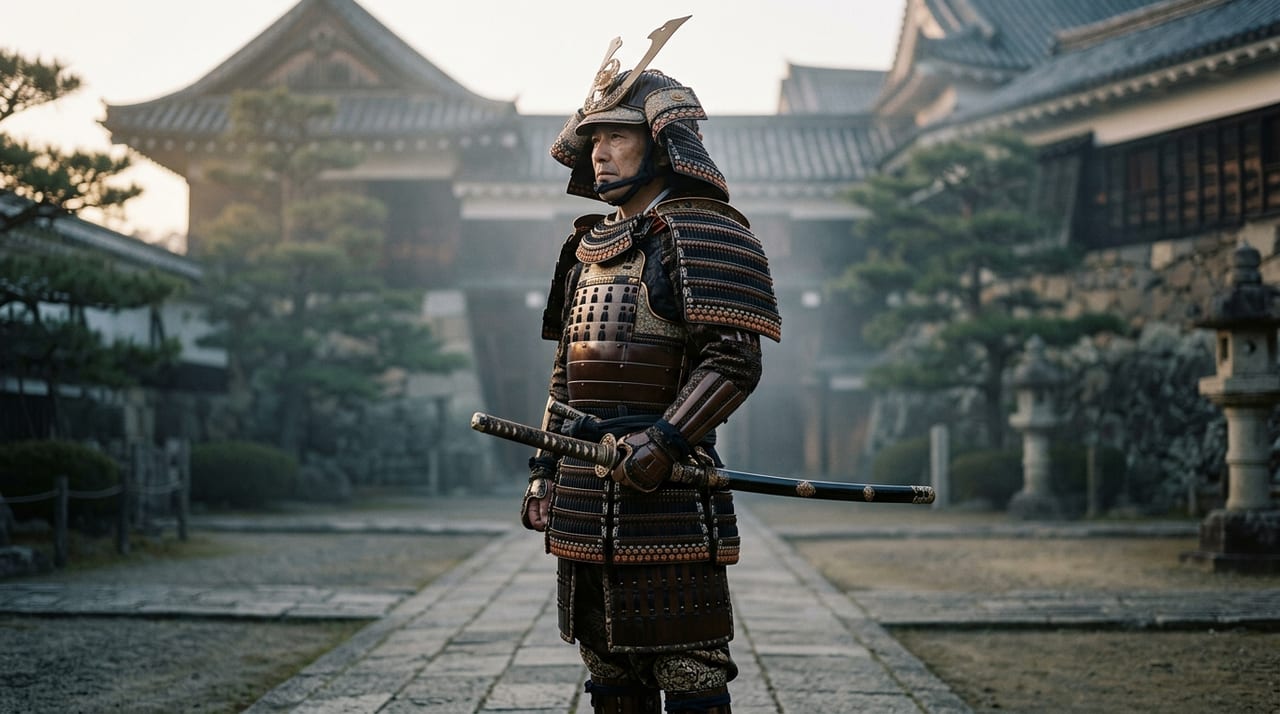
 * Image is for illustrative purposes only.
Tokugawa Iemitsu
徳川家光
Third Shogun Who Solidified the Edo Bakufu; Establisher of Buke Shohatto and Sankin-kotai
Description
Tokugawa Iemitsu (1604-1651) was the third shogun of the Edo bakufu. As the "shogun by birth," he made the bakufu's system of rule unshakeable. He succeeded his father, Hidetada, and took over the shogunate in 1623. He tightened the Buke Shohatto, established the sankin-kōtai system to strengthen control over the daimyō, and completed the sakoku policy, building the basic system of governance of the Edo period.
Iemitsu was born in Keichō 9 (1604) as the second son of Tokugawa Hidetada. As a child he was sickly, and he was raised through the devoted care of his wet nurse, Kasuga no Tsubone (Saitō Fuku). It is said that Kasuga no Tsubone appealed to Ieyasu at Sunpu to make Iemitsu the heir. After a succession struggle with his younger brother Kunimatsu (later Tadanaga), he received the formal appointment as shogun in Genna 9 (1623) and took office as the third shogun.
After becoming shogun, Iemitsu set about strengthening the power of the bakufu. In Kan'ei 12 (1635) he revised the Buke Shohatto and institutionalized sankin-kōtai. By requiring the daimyō to alternate between Edo and their home provinces, he drained them economically and in manpower, reducing their capacity to resist the bakufu. This system remained the foundation of daimyō control throughout the Edo period. Furthermore, after suppressing the Shimabara Rebellion (1637-38), in 1639 he banned Portuguese ships from arriving, effectively completing the sakoku system.
In relation to Japanese swords (nihontō), Iemitsu regarded swords as a source of bakufu authority and as the spiritual pillar of the warrior class. The shogunal house had collected and preserved famous swords generation after generation, and Iemitsu carried on this tradition. Iemitsu himself was also fond of the martial arts. He studied under Yagyū Munenori, received a licence in Yagyū Shinkage-ryū, and often held gozen-jiai such as the Kan'ei gozen-jiai (tournaments held before the shogun).
Notable Swords
- Famous blade from the Tokugawa shogunal house lineage; a bakufu treasure collected by the third shogun Iemitsu
- Work of a renowned sword smith patronized by the Edo Bakufu and active during the third shogun's reign