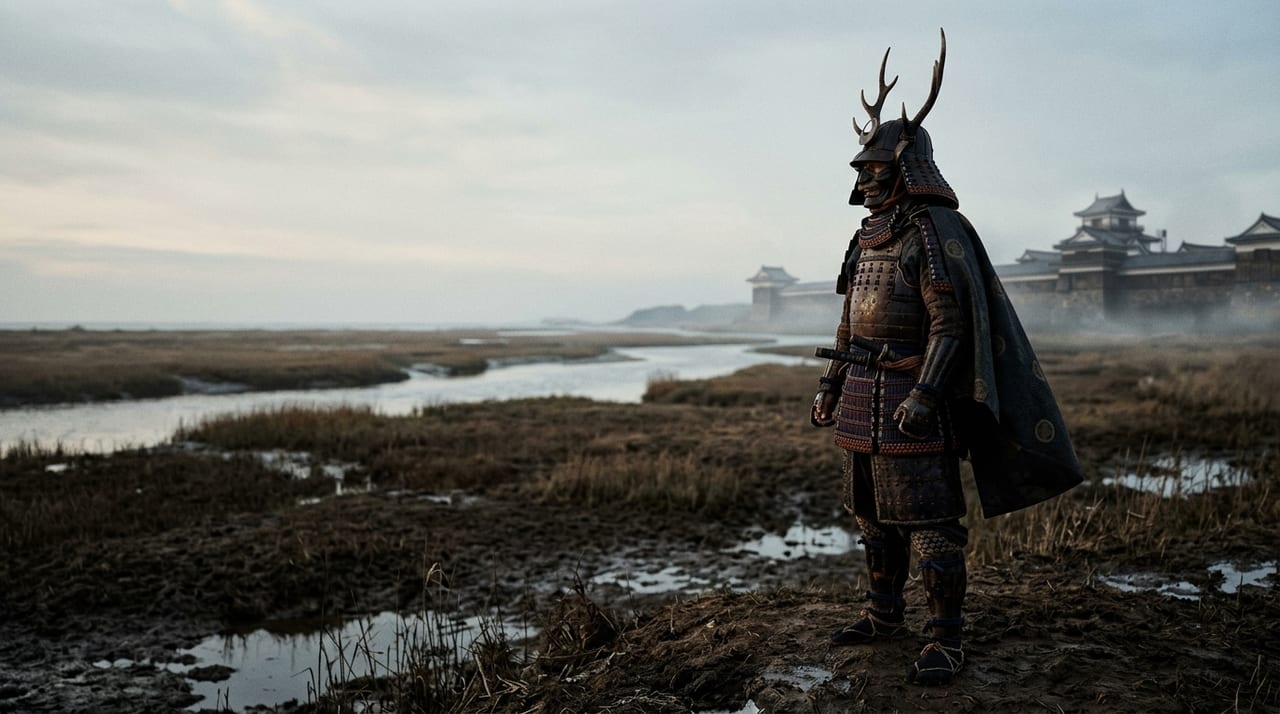
 * Image is for illustrative purposes only.
Shimazu Iehisa
島津家久
The Iron Fist of Satsuma — The General Who Slew Ryūzōji Takanobu at Okitanawate
Description
Shimazu Iehisa, the Youngest of the Four Shimazu Brothers
Born in Satsuma Province in Tenbun 16 (1547), Shimazu Iehisa was, together with Yoshihisa, Yoshihiro and Toshihisa, one of the "Four Shimazu Brothers," a fierce warrior who supported the Shimazu house's furious advance toward the conquest of Kyūshū. Known as the purest warrior among the four brothers, Iehisa combined brilliant tactical command with personal valor. He was also one of the architects who refined the lure-and-ambush tactic unique to the Shimazu house, known as tsuri-nobuse.
The Battle of Okitanawate: Subjugation of Ryūzōji Takanobu
In the third month of Tenshō 12 (1584), at Okitanawate (present-day Shimabara City, Nagasaki Prefecture), Iehisa won a complete victory using the tsuri-nobuse tactic. His forces, even combined with those of Arima Harunobu, numbered roughly 5,000 to 8,000 soldiers. They faced the great army of Ryūzōji Takanobu, estimated at 18,000 to 60,000 men (accounts vary among the historical records). Ryūzōji Takanobu was a warlord who at that time contested the hegemony of Kyūshū with the Shimazu clan. He had expanded his domains centered on Hizen to Chikuzen, Chikugo, Higo and elsewhere. Lured by Iehisa's clever stratagem into a marsh, the Ryūzōji army suffered devastating losses, and Takanobu himself was slain. This great victory over an army several times larger proved both Iehisa's strategic genius and the overwhelming fighting power of the Shimazu forces.
Satsuma's Sword Culture and Iehisa
Satsuma Province occupies a unique and important position in the world of the Japanese sword. In Iehisa's era, the swords of Satsuma were forged by the Naminohira school, which regards the late-Heian smith Naminohira Yukiyasu as its de facto founder. This lineage continued into the early Meiji period. In the Edo period, a vigorous style of swords known as "Satsuma shintō" also emerged.
The Shimazu Gojū and the Spirit of the Sword
The youth education organization known as "gojū," which conveys the ethos of Satsuma's samurai, is said to have begun with Iehisa's elder brother Yoshihiro, and it was carried on in the Satsuma Domain during the Edo period. In the gojū, training was conducted with senior members guiding junior members. The swordsmanship of Yakumaru Jigen-ryū was also used in education to train body and mind.
Sudden Death at Sadowara and a Mystery
In Tenshō 15 (1587), after the Shimazu house surrendered during Toyotomi Hideyoshi's campaign to subdue Kyūshū, Iehisa died suddenly at Sadowara Castle in Hyūga. Although there is a theory that Toyotomi Hidenaga poisoned him, he is generally believed to have died of illness. Only three years after the great victory at Okitanawate, the sudden death of Iehisa, who as the strongest of warriors had driven the Shimazu house's conquest of Kyūshū, left many mysteries and much regret for later generations. The Shimazu house without Iehisa would go on to produce, at the Battle of Sekigahara, a different kind of legend of valor: the "Shimazu retreat" (Shimazu no nokiguchi), created by his elder brother Yoshihiro.