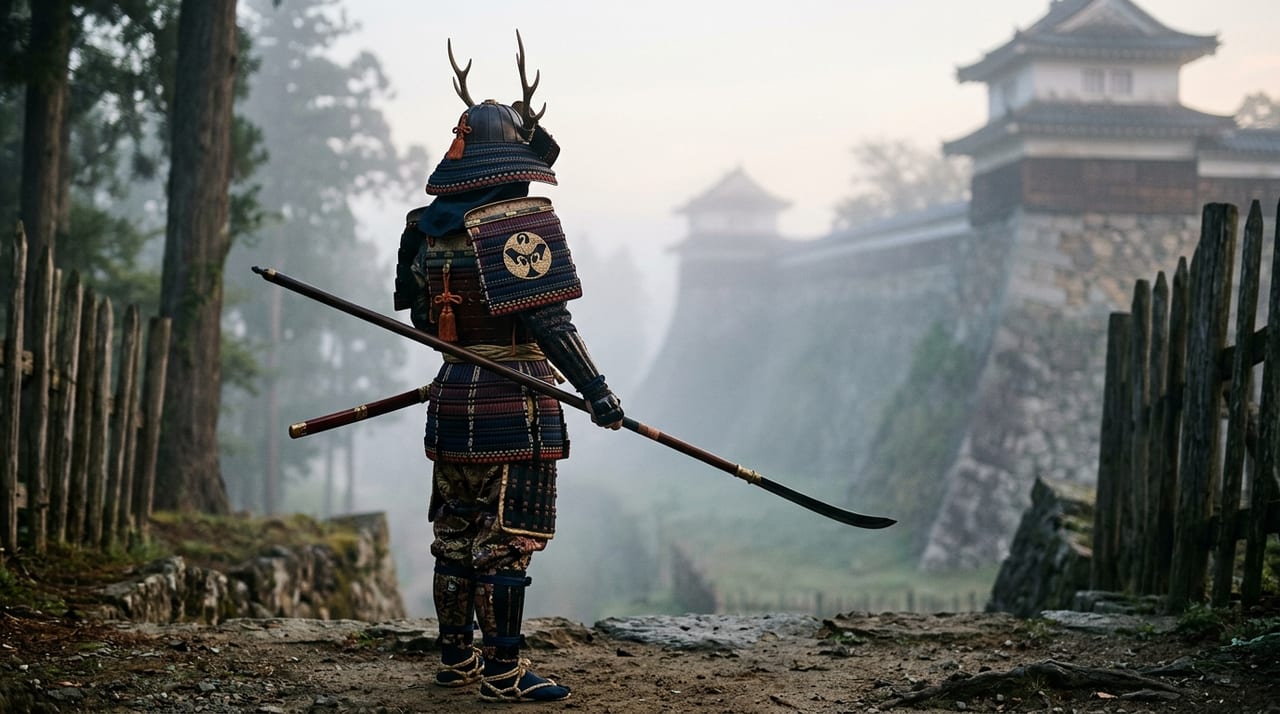
 * Image is for illustrative purposes only.
Hōjō Masako
北条政子
The Nun Shogun
Description
The Birth of the Nun Shōgun
Born in Izu Province in Hōgen 2 (1157), Hōjō Masako was the wife of Minamoto no Yoritomo and, as the de facto power of the Kamakura shogunate, one of the most influential women in Japanese history. Her father, Hōjō Tokimasa, was merely a local magnate of Izu. However, Yoritomo, who had been exiled to Izu as a prisoner, and Masako fell in love and married despite Tokimasa's opposition, and this union became the beginning of what would later become the establishment of the Kamakura shogunate. Masako was not merely a shogun's wife. Even after Yoritomo's death, she continued to hold the fate of the shogunate as the "Nun Shōgun," an unrivaled heroine.
Devoted Love for Yoritomo and Tragedy
The relationship between Masako and Yoritomo was bound by intense affection, but it was also accompanied by deep anguish. Throughout his life, Yoritomo had many concubines and mistresses, and it is said that out of jealousy Masako had the residence of Fushimi Hirotsuna, where Yoritomo's mistress Kame no Mae lived, torn down. However, such an act was not merely an outburst of jealousy. It was also an extremely political decision directly linked to the succession question within the Kamakura shogunate as a political institution. Yoriie and Sanetomo, the two sons Masako bore, were the legitimate heirs of the shogunate. The political need to prevent the children of concubines from threatening the regime lay behind Masako's fierce actions.
The Jōkyū War and the Nun Shōgun's Speech
The peak of Masako's career as a politician was her speech during the Jōkyū War in Jōkyū 3 (1221). When Retired Emperor Go-Toba issued an in'en calling for the overthrow of the shogunate, the shogunate was thrown into turmoil, and not a few gokenin were inclined to side with the retired emperor. In this critical situation, Masako gathered the gokenin together and spoke of the debt owed to Yoritomo. "Ever since the late Lord Yoritomo subdued the enemies of the court and founded the Kantō, the ranks and stipends we have received, their kindness is higher than the mountains and deeper than the sea. Those who value their name should quickly strike down Fujiwara no Hideyasu and Miura Taneyoshi, and preserve the legacy of the three shōguns." These words stirred the hearts of the gokenin. The shogunate's army advanced on Kyoto and succeeded in suppressing the Jōkyū War. This speech has been passed down to the present day as one of the most famous speeches in Japanese history.
Influence on Samurai Sword Culture
In Yoritomo's reign, swords became established as symbols of samurai authority and order. However, it was largely due to Masako's political will that this policy was maintained and developed after Yoritomo's death. After Masako's death, in the Goseibai Shikimoku (Jōei Code) established by her nephew Hōjō Yasutoki in Jōei 1 (1232), Masako is cited as a precedent under the name "Nii-dono." The fundamental idea of post-Kamakura samurai culture, which positions the sword as the symbol of the warrior's spirit, was born out of the distinctiveness of the samurai government that Masako had steadfastly protected.
The Hōjō Family and Kamakura Smiths
The era in which Masako's natal Hōjō family seized power as regents (shikken) of the Kamakura shogunate overlapped with an important turning point in the history of Japanese swords. It was in this period that smiths gathered in Sōshū (Kamakura) and the so-called Sōshū-den was established. Sōshū smiths, represented by Gorō Nyūdō Masamune (Okazaki Masamune), integrated and developed the techniques of existing sword schools such as Yamato, Yamashiro, Bizen, and Bitchū. They produced an innovative style characterized by intense nie and rugged jigane. The development of the Sōshū-den is inseparably connected with the fact that the Kamakura warrior government, centered on the Hōjō family, protected the smiths. The distinctiveness of the samurai government that Masako built was the very soil that made possible the artistic perfection of the Japanese sword, which the world admires.
Later Years and Legacy
Masako's later years were a succession of tragedies. Her eldest son, Yoriie, was stripped of the shogunal office, confined at Shuzenji in Izu, and later murdered. Her second son, Sanetomo, was assassinated at Tsurugaoka Hachimangū in Kamakura by his nephew Kugyō. Faced with the greatest crisis, the extinction of the Minamoto shogunal line, Masako sought to preserve the shogunate by inviting a sekke shōgun, Fujiwara no Yoritsune. In Karoku 1 (1225), Masako died at the age of sixty-nine. The political will and devotion to the warrior government that Masako embodied throughout her life laid the foundation for the 150 years of the Kamakura shogunate. Behind the development of Japan's sword culture, which evolved inseparably with warrior society, lies the fact that people of strong will, like Masako, continued to protect the distinctiveness and dignity of the warrior class.