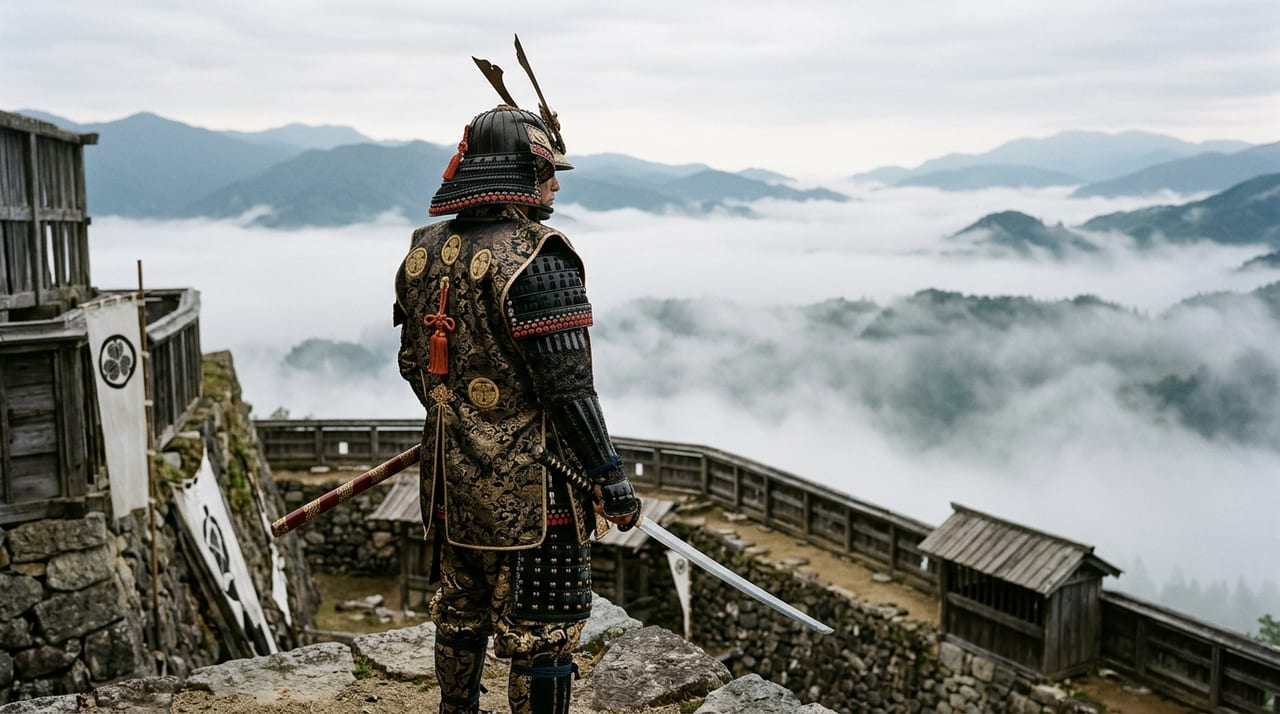
 * Image is for illustrative purposes only.
Ashina Moriuji
蘆名盛氏
Master of Aizu, the Lord Who Brought the Ashina Clan to Its Zenith
Description
Ashina Moriuji (1521-1580) was a Sengoku daimyō who built the peak of the Ashina clan, whose power was based in Aizu (present-day western Fukushima Prefecture). Skillfully combining diplomacy and military force, he expanded his domain from Aizu toward Sendō (Nakadōri).
Moriuji succeeded to the family headship in Tenbun 10 (1541). In Eiroku 4 (1561), he handed the headship to his eldest son, Moriuki, and retired, but he continued to hold real power and led the Ashina house for roughly 40 years. While fighting neighboring powers such as the Date clan, the Tamura clan, the Satake clan, and the Nikaidō clan, he sometimes formed alliances, skillfully maintaining and expanding his power. In particular, the construction of Mukaihaguroyama Castle (present-day Aizumisato), completed in 1568, was a major undertaking that demonstrated the authority of the Ashina clan.
In domestic affairs, he focused on developing gold mines and appointed the Yanada clan as shōnin-tsukasa (overseer of merchants) to strengthen control over distribution.
After Moriuji's death in 1580, the Ashina clan declined rapidly, and in 1589 it was destroyed by Date Masamune at the Battle of Suriagehara.
Related Warriors
長野業正
Mid-Sengoku PeriodNagano Narimasa
The Fierce General of Kozuke Who Repeatedly Defeated Takeda Shingen—The Kanto's Premier Strategist Who Repelled Vast Armies with Limited Forces
三好長慶
Mid Sengoku PeriodMiyoshi Chōkei
Hegemon Before Nobunaga, Master of the Kinai Region
尼子晴久
Mid-Sengoku PeriodAmago Haruhisa
The Overlord of San'in: The Fierce General Who Built the Amago Clan to Its Peak—A Great Lord of Izumo Who Vied for Supremacy with Mōri Motonari
足利義輝
Mid Sengoku PeriodAshikaga Yoshiteru
13th Shogun of the Muromachi Shogunate, the Swordsman Shogun