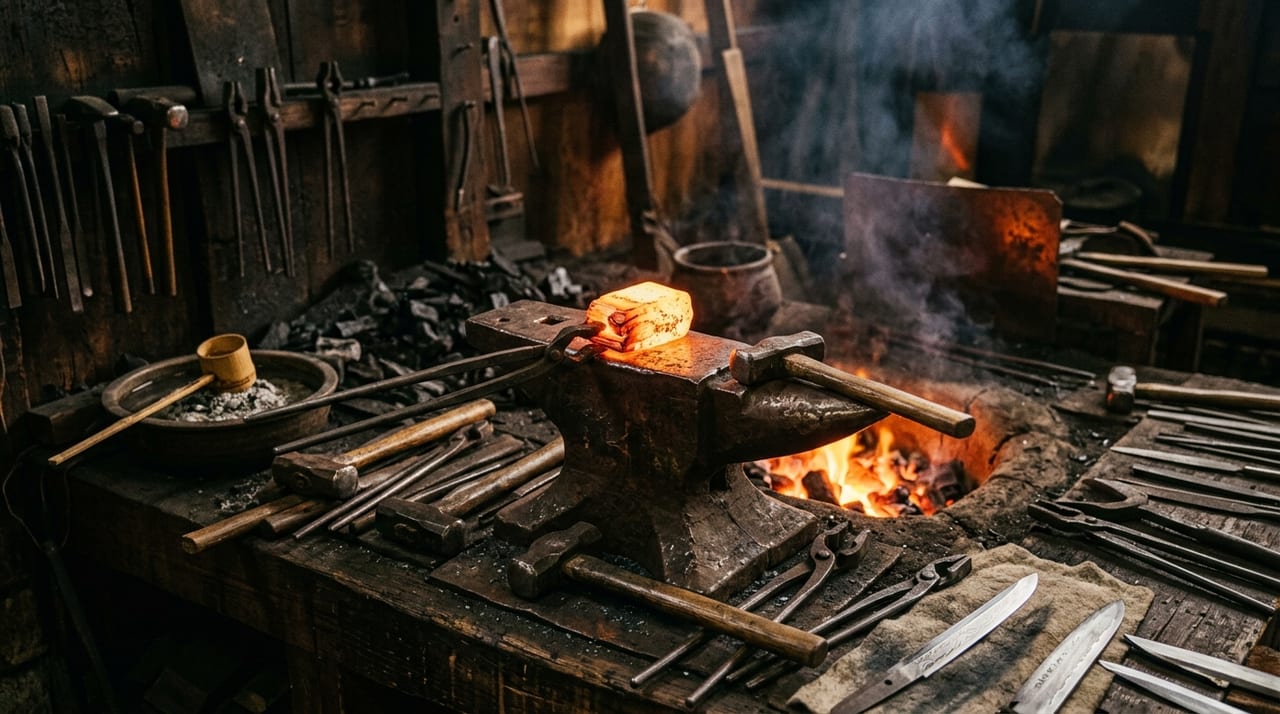
 * Image is for illustrative purposes only.
Osafune Nagamitsu
長船長光
Description
Nagamitsu was a swordsmith of the Osafune school, which arose in Bizen Province (present-day Okayama Prefecture) in the late Kamakura period. He is said to have been a son of Mitsutada, the founder of the school. Signed works bearing dates from Bun'ei 11 (1274) to Kagen 2 (1304) are known, and his period of sword-making spans roughly thirty years. Besides the view that the “Sakon-no-shōgen Nagamitsu” inscription belongs to a second-generation smith, there are also views that consider it a single generation, and opinions are divided. While inheriting the splendid chōji-midare style that his father Mitsutada had perfected, he refined it, and he was the central figure who led Osafune to the height of Bizen blades.
His style has a wide range. He forged everything from magnificent, splendid midare blades incorporating kawazuko-chōji and jūka-chōji, to gentle works with shallow notare mixed with the plump, gunome-like chōji unique to Nagamitsu, and even works in a suguha style. The jigane is ko-itame-hada, tightly packed and refined, and the vivid standing of midare-utsuri is a major highlight. The bōshi forms a distinctive shape, slightly disordered above the yokote and returning to a small round tip. Since this is also common to his disciples, it is called “sansaku-bōshi.”
His best-known masterpiece is the National Treasure “Daihannya Nagamitsu” (Tokyo National Museum collection). It is a masterpiece with a dazzling hamon incorporating jūka-chōji. During the Muromachi period it was valued at an exceptional price of 600 kan of coins, and it was given this name in allusion to the Great Perfection of Wisdom Sutra (Daihannya-kyō), 600 fascicles in total. It is also known for its provenance, passing from Ashikaga Yoshiteru to Miyoshi Nagayoshi, then to Oda Nobunaga and Tokugawa Ieyasu. Another example is the National Treasure “Tsuda Tōtōmi Nagamitsu” (Tokugawa Art Museum collection), which derives its name from the fact that Tsuda Tōtōmi-no-kami Shigehisa, a senior retainer (karō) of Akechi Mitsuhide, owned it. Nagamitsu has six works designated National Treasures and twenty-eight designated Important Cultural Properties, and he is counted among the swordsmiths of the koto period with the most extant signed works. The abundance of signed works has also been valued in later appraisals as reliable reference pieces for judging the style of the Osafune school.
In terms of lineage, he also occupies a pivotal position in the Osafune main line. His son Kagemitsu succeeded as the third generation, establishing the main line, which led to the flourishing of the Osafune family thereafter. In the rankings of the Nihon Tōkō Jiten, he is placed in the highest grade, “saijō-saku.” Together with having left many famous signed works, this keeps Nagamitsu highly regarded today as a master who embodies the pinnacle of the Bizen tradition.
Famous Works
- Daihannya Nagamitsu (National Treasure)
- Tsuda Tōtōmi Nagamitsu (National Treasure)