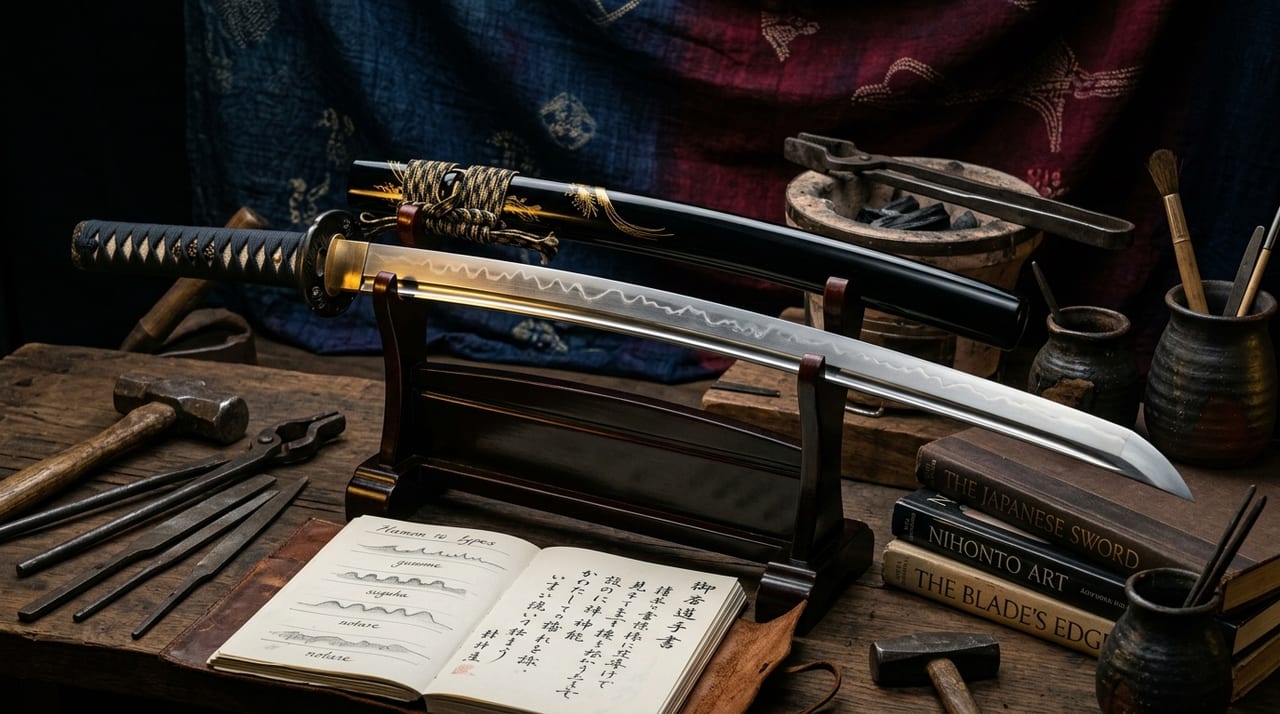
 * Image is for illustrative purposes only.
Demon Slayer (Kimetsu no Yaiba)
鬼滅の刃
Features numerous elements rooted in real sword culture, including tamahagane steel and hamon patterns, sparking worldwide interest in Japanese blades.
Description
Demon Slayer is one of the most influential modern works in spreading Japanese sword culture worldwide. The Nichirin swords in the series draw heavy inspiration from real Japanese forging techniques. The Swordsmith Village arc depicts the process of forging a sword from tamahagane steel, reflecting the authentic tatara smelting and fold-forging traditions. The color-changing property of Nichirin blades parallels the beauty of real hamon patterns: suguha, midare, choji, and gunome are actual patterns that serve as the most important points of appreciation, revealing a smith's individuality and skill. The anime's depiction of swordsmiths pouring their soul into each blade mirrors how real swordsmiths spend months perfecting a single sword. Every sword at TOUKENZA is an authentic Japanese blade forged using these time-honored traditional methods.
Real Swords Featured
Tamahagane
The specialized steel used exclusively for Japanese swords, produced through the tatara smelting process using iron sand and charcoal over three days and nights.
Hamon
The distinctive pattern along the blade created during the quenching process. Varieties include suguha, midare, choji, and gunome, each reflecting the smith's artistry.
Fold-forging (Orikaeshi Tanren)
The traditional technique of repeatedly folding and forging the steel to remove impurities and create a resilient blade structure.
Jihada (Grain Pattern)
The texture of the blade's steel surface. Patterns such as itame, mokume, masame, and nashiji are key points of appreciation in sword connoisseurship.
See authentic Japanese swords
See authentic Japanese swordsThis page is intended to introduce Japanese sword culture and is not affiliated with any of the works mentioned.