Yasukuni Swords and the Army's Certified Swordsmith System: The Untold History of Military-Commissioned Blade Makers
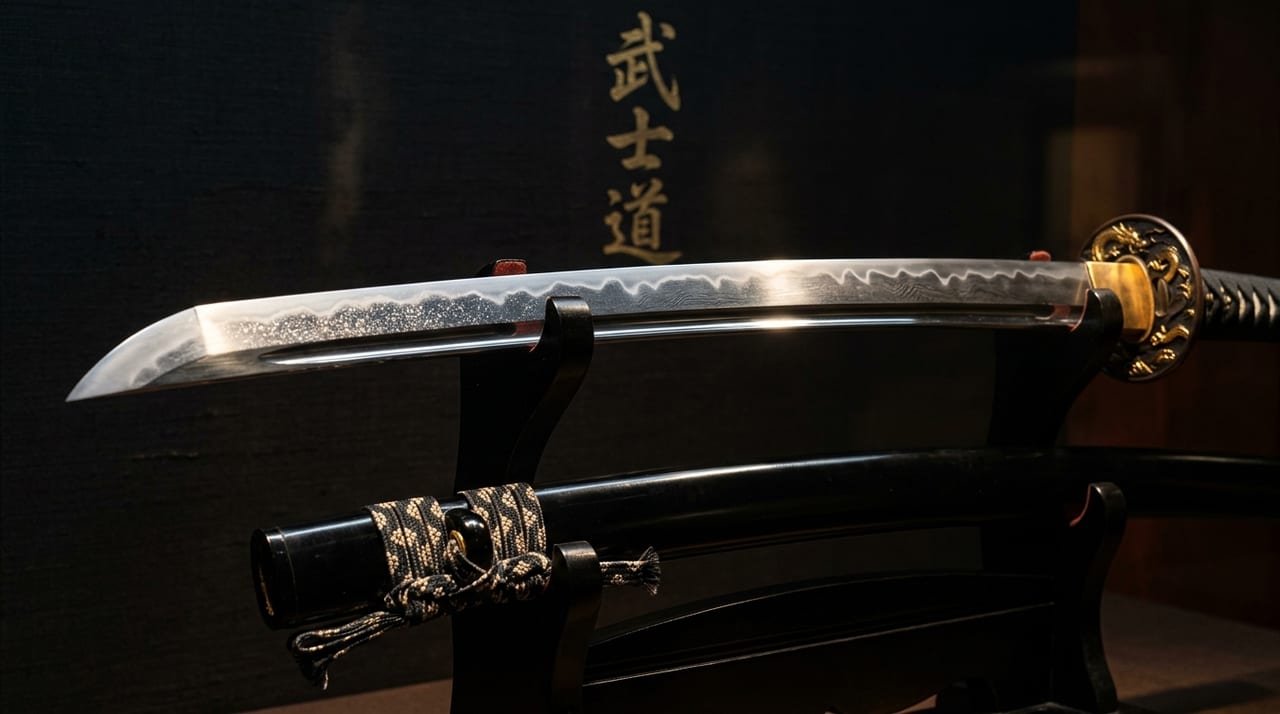 * Image is for illustrative purposes only.
Table of Contents
Military Sword Demand Explosion and Quality Issues
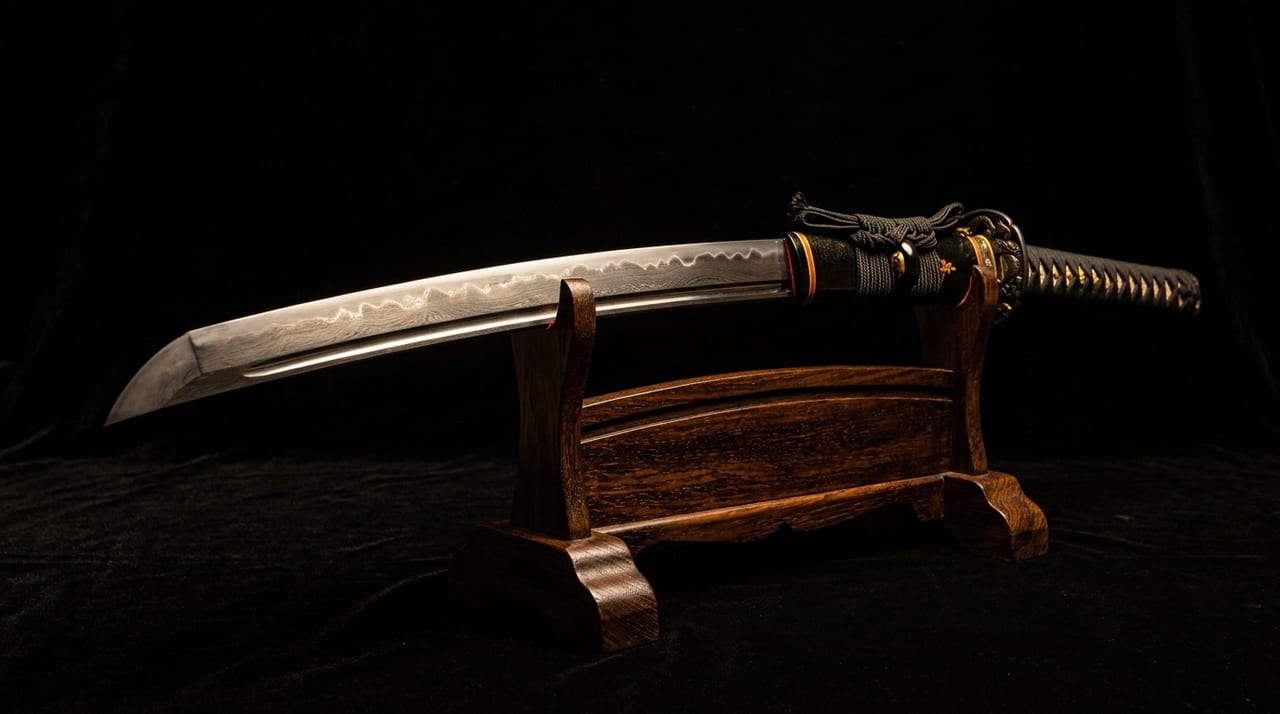
From the early Showa period into the turbulent era heading toward the Second Sino-Japanese War and the Pacific War, demand for military swords carried by Japanese military officers swelled rapidly. At that time, it was customary for officers to purchase military swords at their own expense, and suppliers rushed into mass production to meet this enormous demand. As a result, mass-produced items called "Showa blades" began flooding the market—manufactured with machining and foreign steel (imported steel materials), bypassing traditional forging processes.
These crude products had poor cutting ability and toughness alike, and breakage accidents in actual combat became frequent. Among officers, dissatisfaction grew—"I want a real sword, but I don't know which one is real"—and the Imperial Japanese Army Ministry came to recognize the necessity of quality control. Moreover, at that time the military had a tendency to position the Japanese sword not merely as a weapon but as a "symbol of bushido spirit," and the prevalence of mass-produced inferior goods was viewed as problematic from a spiritual perspective as well.
In response to this situation, the Army Ministry established the "Army-Commissioned Sword Craftsman" system as a policy aimed simultaneously at improving military sword quality and preserving traditional Japanese sword techniques. The military sought to officially recognize excellent sword craftsmen and systematically encourage military sword production using traditional forging techniques while ensuring quality standards.
The Yasukuni Shrine Japanese Sword Forge—Striking Steel on Sacred Ground
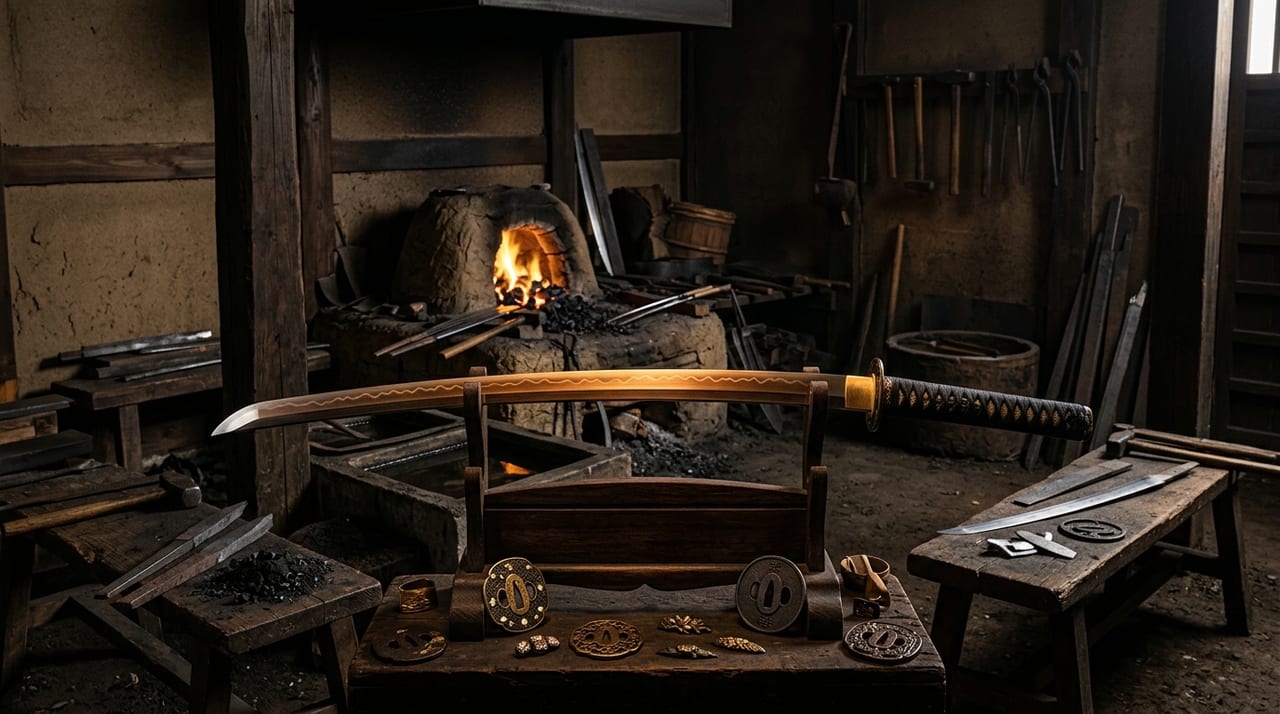
The most symbolic initiative of this era was the "Japanese Sword Forge" established within the Yasukuni Shrine grounds. Established in 1933 (Showa 8), with Army Minister Araki Sadao as advisor, by the Foundation for Japanese Sword Forging in cooperation with the sword world and the military, this facility was positioned not as a mere manufacturing factory but as a "sacred space" for striking swords to protect the nation.
Yasukuni Shrine is a place enshrining the war dead, and swords forged within its grounds were said to possess spiritual added value as vessels of "the divine spirit protecting the nation." Swords produced in this way came to be called "Yasukuni blades," and the Yasukuni Shrine stamp—a distinctive signature incorporating the character "Yasu" (靖)—became proof of authenticity. For officers, carrying a Yasukuni blade was an act of solidarity with the war dead, and it held meaning beyond the mere choice of a weapon.
The forge operated from 1933 to the end of the war in 1945 (Showa 20), during which approximately 8,100 blades are said to have been produced. Sword craftsmen summoned from across the nation took turns in residence, and renowned sword makers who would later be remembered by name—such as Miyairi Yukihira and Gassan Sadakatsu—also participated in production. It also accepted visitors, functioning as a place where ordinary citizens could witness the sword-making process.
Army-Commissioned Sword Craftsman Recognition Standards and System Framework
Recognition as an Army-Commissioned Sword Craftsman was based on a rigorous examination system and was not merely a nominal qualification. The examination consisted of three main pillars.
| Examination Item | Details |
|---|---|
| Technical Examination | Submitted trial blades were required to meet prescribed quality standards. The balance of hardness and toughness, the completeness of the hamon, and the uniformity of the jihada were rigorously evaluated, and not a few craftsmen were rejected. |
| Material Standards | The use of traditional tamahagane or equivalent pure Japanese steel was mandated. The mixing with imported foreign steel, which was beginning to spread at the time, was clearly prohibited, demonstrating the commitment to preserve the essence of Japanese swords at the material stage. |
| Production Method Standards | Strict adherence to traditional manufacturing processes was required, including folding and forging (tamahagane refined in a tatara furnace and folded repeatedly to remove impurities). No mixing of mechanical processes such as pressing was permitted. |
Recognized craftsmen received regular orders from the Army and supplied military swords with officer-grade fittings conforming to standards such as the Type 32 and Type 94. The nakago (tang) of the blade bore either the inscription "Army-Commissioned Sword Craftsman" or a certification number, and these became important evidence in post-war authentication.
The Faces of Commissioned Craftsmen—Master Artisans Preserving Traditional Techniques
Many of those who became recognized as Army-Commissioned Sword Craftsmen were figures who would later support the revival of Japanese swords.
Miyairi Yukihira (1913–1977) was a sword craftsman from Sakaki Town, Nagano Prefecture, who continued to preserve pure traditional forging techniques even during the height of the Showa blade era. He maintained his techniques and trained successors even during the post-war winter for Japanese swords, and was recognized in 1963 (Showa 38) as the second sword craftsman to be designated a Living National Treasure (holder of Important Intangible Cultural Property). Numerous sword makers representing the contemporary sword world emerged from Miyairi's school, making him a typical example of how the commissioned craftsman system functioned as a device for preserving technical lineages.
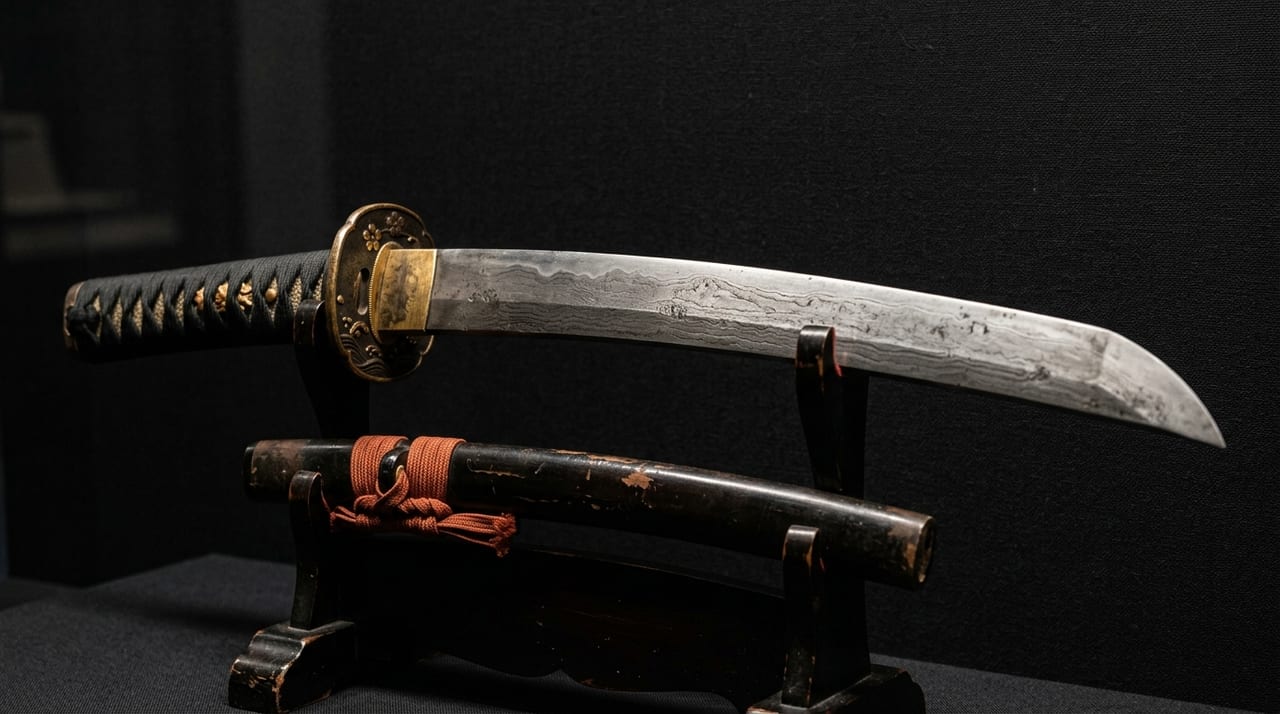
Gassan Sadakatsu was the successor to the Gassan school, based in Osaka, and also participated in production at the Yasukuni Forge. The Gassan school's distinctive "ayasugihada" (patterned cedar-grain surface)—a unique surface texture with wave patterns resembling cedar grain on the blade's jihada—is still highly valued in works that reproduce it. The technique was passed down to Gassan Sadatoshi (third son of Gassan Sadakazu II), his grandson, and has been kept alive to the present day.
Many sword craftsmen who were active after the war, such as Fujiyasu Masahira and Sumitani Masamine, had their foundation in the experience of honing their techniques as commissioned craftsmen. Paradoxically, external pressure from military demand promoted both the preservation of traditional techniques and the cultivation of successors.
Merits and Demerits of the System—At the Intersection of "Technical Preservation" and "Military Use"
While the Army-Commissioned Sword Craftsman system achieved certain results, it carried problematic aspects whose evaluation remains divided among later scholars. On the positive side, it maintained traditional forging techniques as "techniques recognized by the state" even under the wartime system. After the war, GHQ temporarily prohibited the manufacture and possession of swords (Potsdam Ordinance, 1945), but the accumulated techniques and human networks of the commissioned craftsmen became the core of Japanese sword revival after the relaxation of restrictions in 1954. Had the practitioners of the technique ceased to exist, the prosperity of the contemporary sword world might not have occurred.
On the negative side, the recognition system functioned as a de facto barrier to entry, making it easier for local traditional schools with weak connections to the military to be excluded from the market. Additionally, as a result of prioritizing military demand, there emerged a tendency to evaluate swords from the perspective of "practical military blades" rather than "Japanese swords as art objects," and some point out that it became difficult for certain schools to pass down their distinctive decorative and artistic techniques.
Regarding Yasukuni blades, there is also the problem that they cannot be separated from the political context of Yasukuni Shrine. Among contemporary sword researchers and historians, debate continues over the evaluation of Yasukuni blades—whether they are purely excellent swords as objects of appreciation or relics of militarism.
Legacy for the Modern Era—Positioning in Military Sword Research and the Sword Market
Military swords produced in the pre-war Showa period occupy an extremely complex position in the current sword market.
Yasukuni blades and works by recognized commissioned craftsmen are highly valued among collectors as "exceptions among Showa blades." In evaluations by the Society for Preservation of Japanese Art Swords (NBTHK), excellent Yasukuni blades may receive ratings of "Special Preservation Sword" or higher, and it is not uncommon for pieces with confirmed authentic signatures and clear provenance to trade for several million yen or more.
On the other hand, due to misconceptions about mass-produced military blades from the same period, examples continue to occur where even commissioned craftsman works are undervalued and lumped together as "Showa blades." Researchers have established authentication methods to distinguish authenticity and quality through observation of tang signatures, edge pattern characteristics, and forged surface texture, and specialized research is steadily advancing.
The fact that techniques cultivated within the historical context of military sword production have been passed down to contemporary sword craftsmen is an indispensable perspective for discussing the cultural continuity of Japanese swords. The history of Yasukuni blades and the Army-Commissioned Sword Craftsman system vividly illuminates the multifaceted nature of the Japanese sword—that it is simultaneously a weapon, a cultural property, and a device for transmitting technique.