Schools and Training of the Togishi — How Nagoya Togi, Hatsuya, and Whetstone Origins Define the Art of Polishing
 * Image is for illustrative purposes only.
Table of Contents
The Togishi as a Profession — The Person Who Has the Final Say on a Sword's Beauty
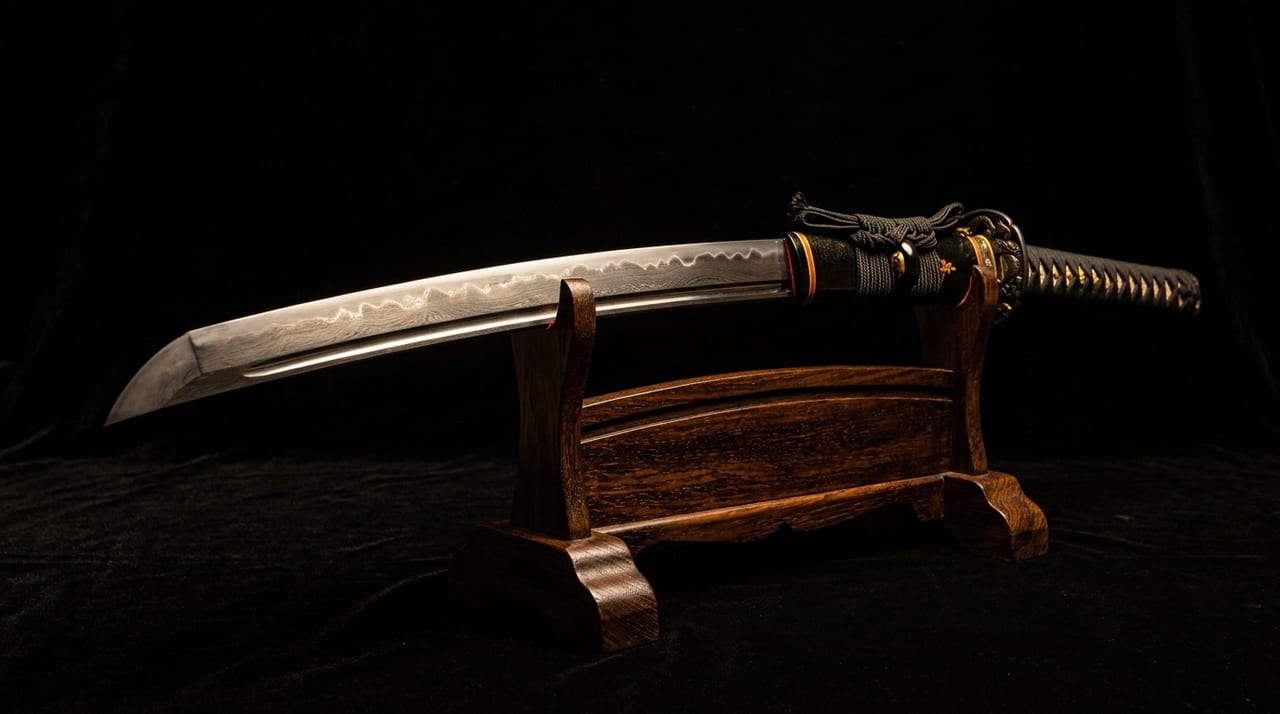
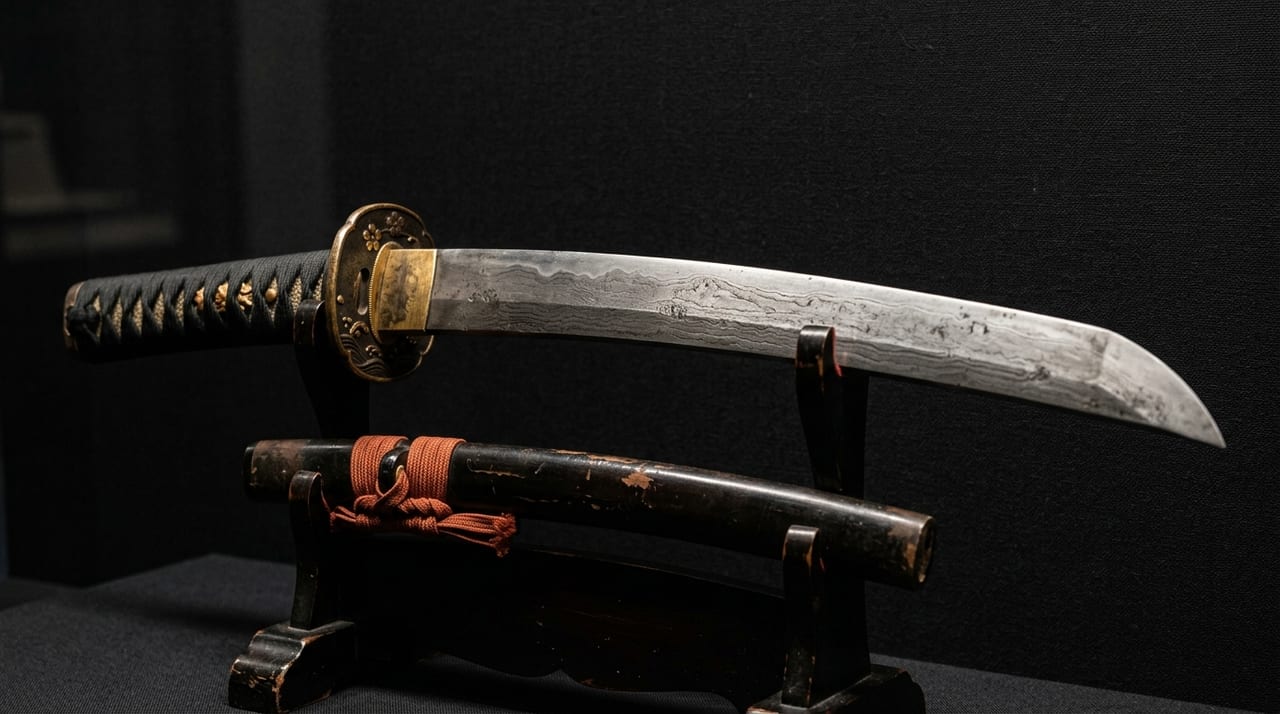
A Japanese sword does not become a "sword" through forging alone. The blade forged by a tōshō (swordsmith) reveals its true beauty only through the hands of the togishi (polisher). The surface texture of the jigane (steel of the blade surface), the nie (visible martensite crystals) and nioi (fine martensite mist) of the hamon (temper line), the utsuri — all these visual elements are drawn out by the togishi's use of the whetstone. Part of the reason a particular sword is highly regarded is, without doubt, the skill of the togishi.
Polishing is broadly divided into "shitaji-togi" (rough polishing to shape the form) and "shiage-togi" (fine polishing to bring out the aesthetic qualities), with different types of whetstones used at each stage. The technical system encompassing this entire process is passed down from master to apprentice through oral instruction and hands-on transmission, possessing a distinctiveness worthy of the term "school." The preservation condition of the blade and the quality of the polishing are factors that affect appraisal and valuation in buying and selling, making an understanding of polishing indispensable to anyone dealing in Japanese swords.
Lineages Continuing from the Edo Period
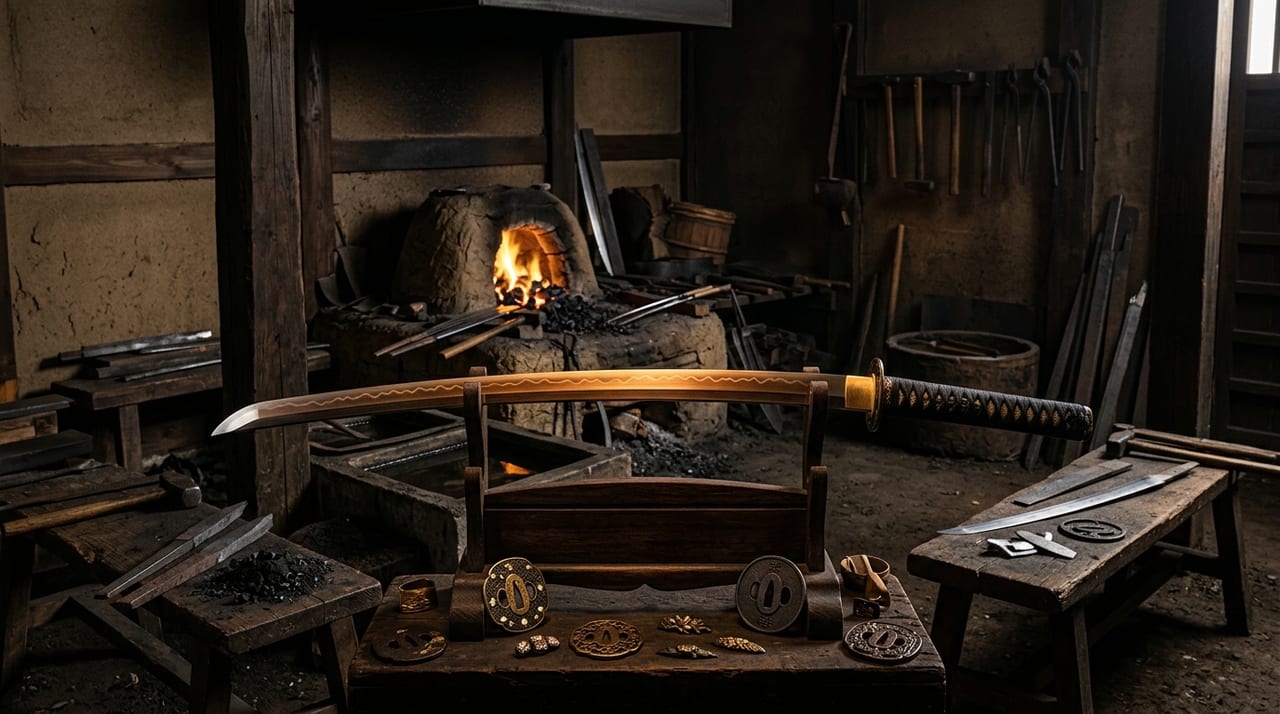
The lineages of togishi have not been documented as clearly as those of tōshō, but from the Edo period to the present two broad traditions have existed: the "Shōami lineage" and the "Hon'ami lineage." The Hon'ami family gained fame as the official polishers to the Tokugawa shogunate, and their techniques spread throughout the country through their disciples.
After the Meiji era, the family-business lineages of Hon'ami and Shōami faded, but the vertical transmission of technique through master-and-disciple relationships continued. Modern togishi are connected by ties such as "a disciple of Master ___" or "studied under Master ___," and this functions in effect as a "school." A renowned togishi's students are found throughout the country, and the philosophy of polishing and the preference for whetstones are passed from master to disciple. Among contemporary togishi, there are those who study different techniques under multiple masters and establish their own unique style. Lineages are not always a single unbroken line; at times techniques from multiple traditions intersect and are inherited together — a fact that speaks to the depth of this artisan's world.
What Is Nagoya Togi?
"Nagoya togi" is one of the technical styles frequently discussed among togishi. The name is said to derive from a polishing technique developed by a group of togishi based in Aichi Prefecture (former Owari and Mikawa). Its characteristics lie in the use of the hatsuya and in the distribution of polishing pressure applied more actively to draw out the utsuri of the jigane.
The hatsuya is a small whetstone used in the final stage of polishing, wrapped around a fingertip to work the hamon area. After polishing with ordinary whetstones, gently "stroking" with the hatsuya brings out the granular texture of the nie and nioi. In Nagoya togi, there is said to be a distinctive angle and pressure in the way the hatsuya is applied, with the effect of maximizing the brilliance of the hamon. Mastering the hatsuya requires years of experience, and it is said that even a slight error in the angle or force of application can result in the scenery of the hamon turning out monotonously flat instead. For this reason, it is said that among togishi who excel at Nagoya togi, there are not a few who have spent long years refining their handling of the hatsuya alone.
However, "Nagoya togi" is not an official school name but something closer to an industry term. Interpretations vary among togishi, and the word can be used both as a compliment and in a critical context. There are criticisms that it overemphasizes the hamon at the expense of the unassuming beauty of the jigane, while others hold a high opinion of its precise expression of the hamon.
Whetstone Origins and Togishi Preferences
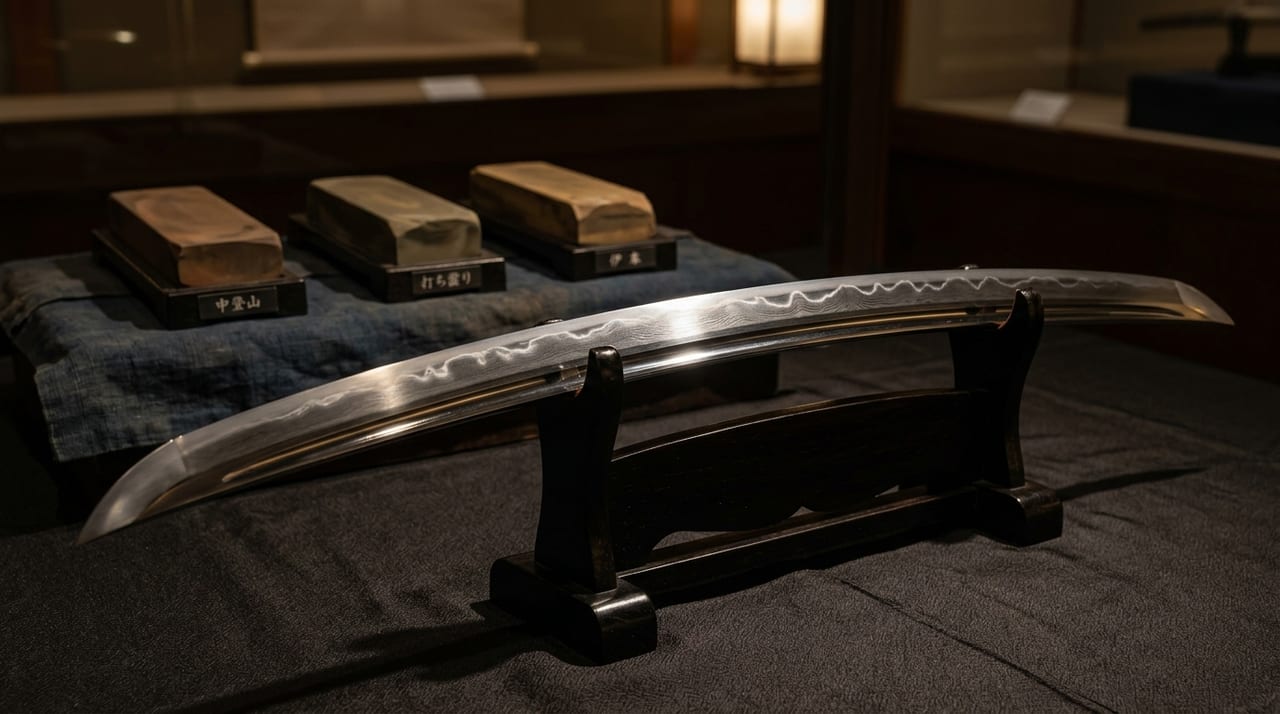
One of the greatest factors that determines a togishi's technique is the "whetstone." Whetstones used for Japanese sword polishing differ in effect depending on their origin, grain, and hardness, and togishi use whetstones from different origins for different stages of work.
The "Nakayama whetstone (nakayama-to)" from Kameoka, Kyoto is a natural whetstone regarded as the pinnacle of finish polishing. Its grain is uniform and its hardness appropriate, making it well suited to bringing out the beauty of the jigane's surface. Its output is limited, making it rare, and a high-quality Nakayama whetstone trades at tens of thousands to hundreds of thousands of yen per stone.
The "Iwami whetstone (iwami-to)" from Okuizumo, Shimane is widely used in the latter stages of rough polishing. Its grain is somewhat coarse, excelling at defining the outline of the hamon, and it is considered well suited for bringing out the jihada (grain pattern of the steel) of kotō from the Kamakura through Muromachi periods.
The "Okazaki whetstone (okazaki-to)" from Okazaki, Aichi is a relatively coarse whetstone used in the early stages of rough polishing, serving the role of establishing the foundation of the polish. It is generally easy to obtain and is often used in apprentice training.
When selecting a whetstone, the togishi considers the period of the sword and the character of the jigane. Kotō from the Kamakura period have complex and delicate jigane, and are drawn out slowly with a softer whetstone. The general view is that shintō and shinshintō from the Edo period have comparatively uniform jigane, so a somewhat stronger whetstone can be used. Furthermore, since natural whetstones from the same origin and the same stratum differ from stone to stone in character, togishi try out many whetstones and determine which to use by judging compatibility with the blade. In recent years it is said that quarrying high-quality natural whetstones has itself become difficult, and it is said that an increasing number of togishi are devising ways to use them in combination with artificial whetstones.
Criteria for Deciding to Re-polish
Through use, aging, or past polishing, the jigane of a blade gradually grows thinner. Re-polishing is a means of keeping the sword's form beautiful, and at the same time an act of shaving away a small amount of the blade itself. Re-polishing may be considered when rust or chipping has occurred, or when the blade has clouded from a long time since the previous togi (polishing), but carelessly re-polishing a blade in sound condition risks losing jigane and diminishing the sword's value, which is why many togishi and enthusiasts believe one should aim for "the minimum necessary polishing." When commissioning a re-polish, it is considered preferable to consult a trusted togishi and seek their judgment based on the period of the sword and the condition of the jigane.
Years of Training and Modern Togishi Development
The training period for a togishi is generally five to ten years. The first two to three years after taking on an apprenticeship are spent thoroughly drilling the handling of whetstones, the use of the polishing stand, and the basics of rough polishing. Finish polishing (use of the hatsuya, cosmetic polishing) is acquired step by step by demonstrating practical skills before the master's eyes.
In the modern era, systems for objectively evaluating the technical standards of togishi are being established through polishing technique training programs hosted by the NBTHK (Society for the Preservation of Japanese Art Swords) and through applications for certification under the Agency for Cultural Affairs' "Traditional Craftsperson" system. Nevertheless, the importance of "mitori-geiko" — learning by directly watching the master's handiwork — remains unchanged, and the transmission of intuitive techniques that are difficult to put into text or video will continue to depend on master-disciple relationships. In recent years it is also said that the number of young people aspiring to become togishi is on a declining trend, and securing successors has become a challenge for the industry as a whole.
Points for Checking the Polishing Condition at the Time of Purchase
When purchasing a sword, the condition of the polishing is an important factor that affects the impression and value of the sword. Particularly in the case of mail-order purchases where one cannot examine the piece in person, it is useful to pay attention to the following points.
- Whether photographs are provided that clearly show the hamon and jigane
- Whether there is a description of the extent of togi wear, rust, or chipping
- Whether an NBTHK or similar kanteisho (appraisal certificate) is included
- If a re-polish has been performed in the past, whether information is given about the circumstances
Products where such information is carefully presented serve as one indicator that the seller has a correct understanding of the blade's condition and is disclosing it honestly. Since polishing is a factor that greatly affects how a sword looks, if there are any questions, we recommend contacting the seller to confirm before purchasing.
The togishi is the final "narrator" of the Japanese sword. The togishi's skill of drawing out the history and beauty of the blade forged by the tōshō with a single whetstone is the final finishing touch of sword culture, and the artisanal philosophy behind it continues to support the value of the Japanese sword for all time.