How to Display Nihontō — Beautiful and Safe Exhibition Methods
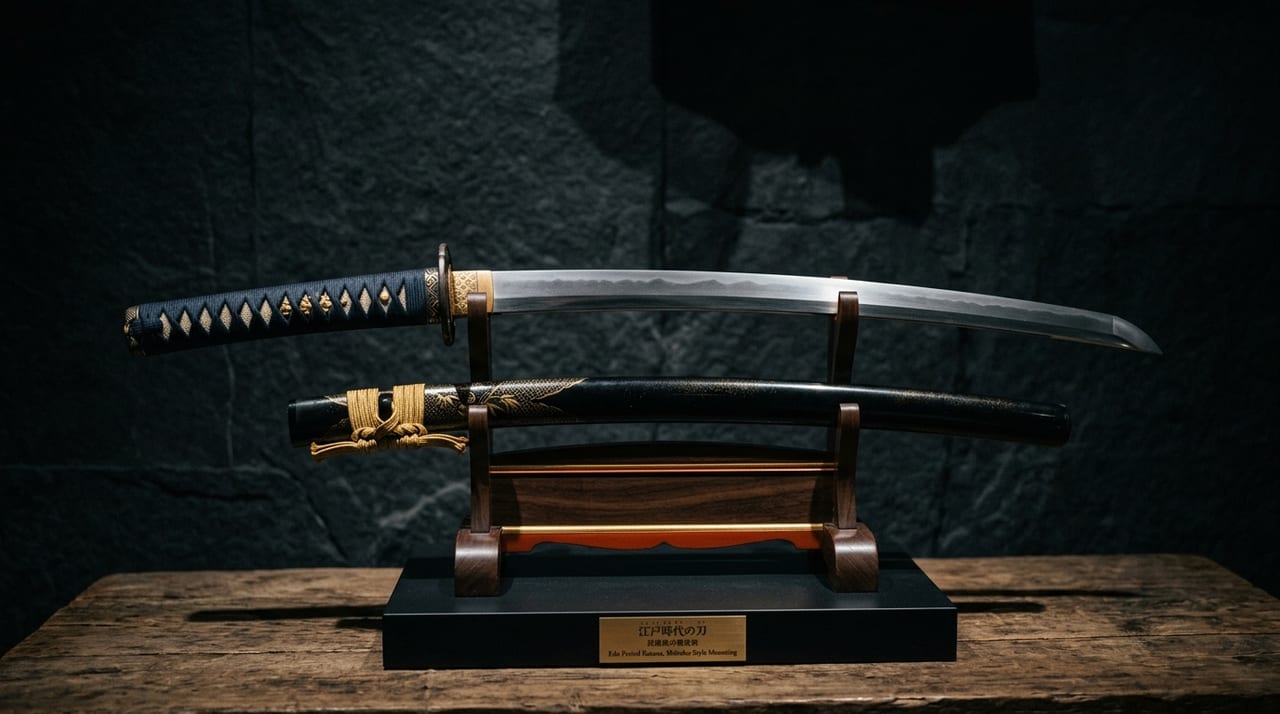 * Image is for illustrative purposes only.
Table of Contents
Displaying Nihontō — Balancing Beauty and Preservation
The greatest joy of owning a nihontō is being able to appreciate its beauty every day. The hamon gleaming in the morning light, the jigane patterns floating in the glow of evening lamps — a sword changes its expression depending on the light source and angle of the day, never failing to captivate the viewer. However, if you continue to display a sword without knowing the correct method, you may unknowingly damage it. Knowledge of exhibition methods that balance beauty and safety is the foundation that sword owners should acquire first.
Before beginning to display a sword, confirming in advance the direction of light in which the hamon and jigane patterns appear most beautiful will make the installation work smoother. It is also advisable to choose a display location slightly removed from the everyday flow of household traffic, so that family members and guests do not inadvertently touch the sword. Handling each sword in one's collection with care not only increases the satisfaction of those who appreciate it, but also leads to passing it on to the next generation in good condition. In the sections that follow, we will explain in order, from traditional display methods to modern preservation ideas.
Traditional Display Methods Using a Katanakake
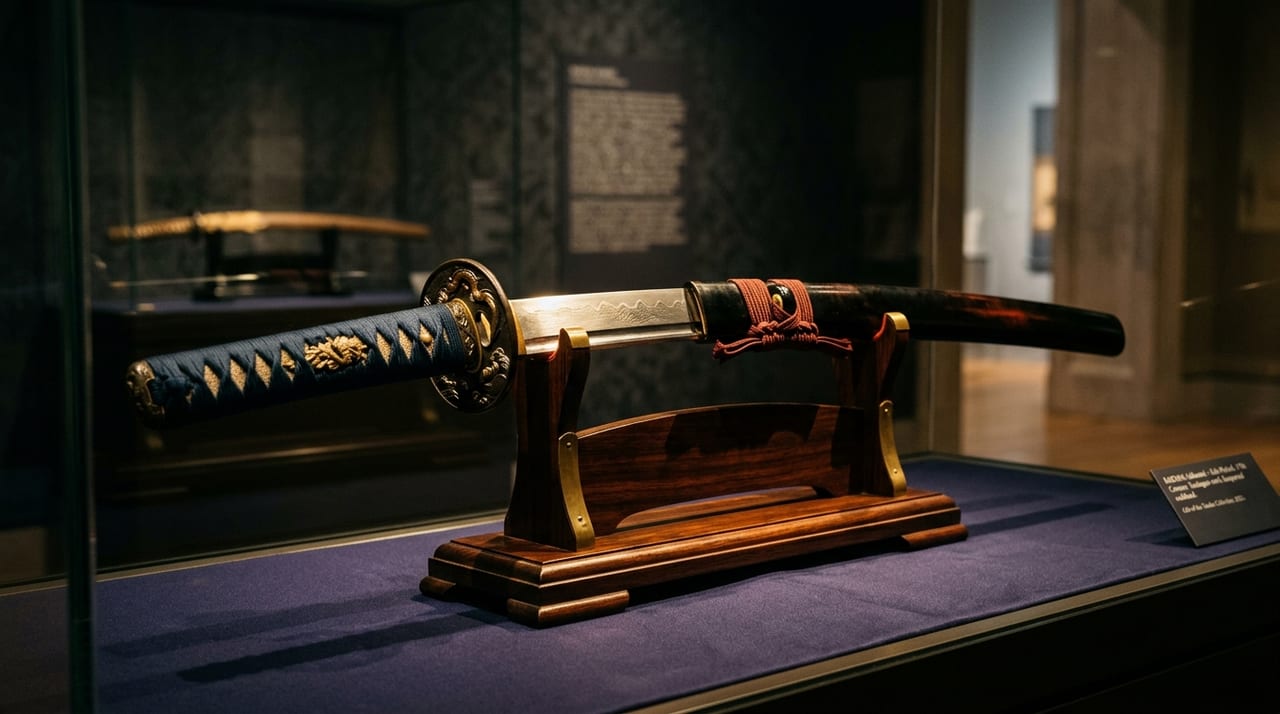
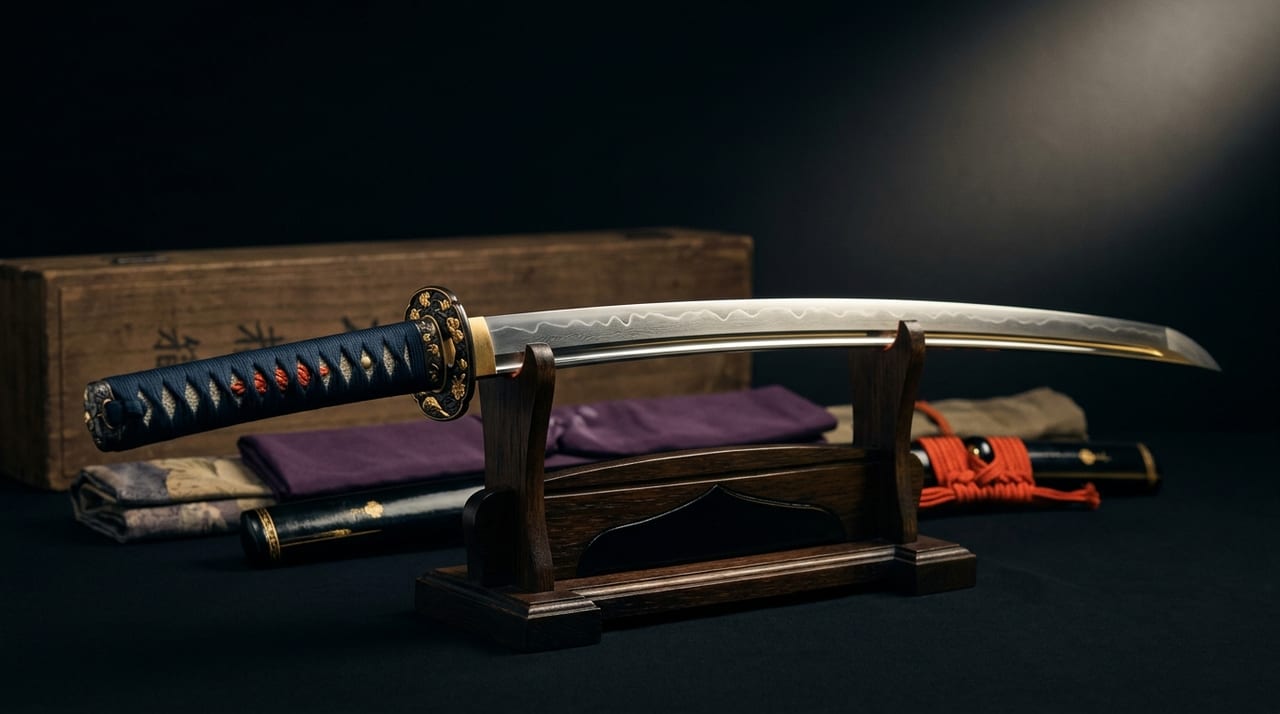
The most dignified display method is horizontal placement using a "katanakake" (sword stand). The basic rule is to place the sword with the edge facing upward, with the tsuka pointing to the left as the formal orientation. This orientation is an established etiquette in samurai society that embodies the sword's classification and historical significance. Katanakake come in various forms — single-tier, double-tier, and so on — and should be chosen to match the number of swords to be displayed and the atmosphere of the room. A high-quality kiri-wood or lacquered katanakake harmonizes beautifully with the sword and draws the entire display space together.
When placing a sword on a katanakake, the following points should be kept in mind.
- Do not touch the blade directly with bare hands; handle it with a thin cloth or folded paper between your hands and the blade. The oils from your fingers will cause rust if they adhere to the blade, so this consideration is the first step in displaying a sword.
- Place the katanakake itself on a stable, level surface so that it cannot be knocked over by an earthquake or inadvertent contact from guests, and position it away from walkways.
- Aligning the orientation of the tsuba and habaki with the posture of the blade creates a more beautiful appearance.
- When displaying multiple swords side by side, allow sufficient spacing between each one so that adjacent swords do not come into contact when one is removed.
The Importance of Glass Cases and Environmental Management
For long-term safe display, storing swords in a glass case with UV-cut functionality is the most reliable approach. Ultraviolet light fades the quenching color and jihada of a sword and accelerates rust, so it must always be avoided. It is recommended to maintain a relative humidity of 50–60% inside the case. Placing a desiccant inside the case and replacing it each season will maintain a stable environment. Making a habit of attaching a hygrometer and constantly monitoring the readings is effective for protecting a treasured sword.
Care must also be taken regarding the placement of the case. Avoid locations near rooms with large humidity fluctuations, such as kitchens or bathrooms; positions along exterior walls are also unsuitable as condensation tends to form there. In addition to desiccants, keeping the case open as infrequently as necessary is also effective for stabilizing the humidity inside. Choose stable shelves and stands within the case that can bear the weight of the swords, and make use of fixtures to prevent swords from rolling and falling in the event of an earthquake. A case with measures to improve the airtightness of the door's opening and closing mechanism will be less susceptible to outside air and will reduce the effort of humidity management.
Expressing the Hamon with LED Lighting
Lighting is indispensable for beautifully showcasing the hamon, a sword's greatest visual highlight. Shining light at an angle of approximately 45 degrees to the blade will render the depth and complexity of the hamon in sharp relief. The pleasure of display lies in using a spotlight-type LED and fine-tuning the angle to find the position where the sword looks most beautiful.
The differences by type of light source are as follows.
| Light source | Characteristics | Suitability for display lighting |
|---|---|---|
| LED lighting | Produces little heat and contains almost no ultraviolet rays | Most appropriate |
| Incandescent bulbs / halogen lamps | Produce large amounts of heat; prolonged irradiation risks heat buildup inside the case or around the blade | Best avoided |
Bringing the light source too close to the blade makes it susceptible to heat, so it is advisable to maintain a certain distance while adjusting the angle and brightness. A dimmable LED allows you to vary the brightness between everyday display and when guests visit, enabling variation in how the hamon appears. Routing the lighting fixture's cords along the outside of the katanakake or case, so that they do not touch or catch on the blade or saya, is also an indispensable precaution from the standpoint of accident prevention.
Selecting the Display Location and Environmental Management
The choice of display location is an important decision that directly affects the preservation condition of a sword. Window positions in direct sunlight must absolutely be avoided. The ideal location is an interior room where temperature and humidity are stable throughout the year. Even when displaying in a tokonoma or shoin, a recessed position less susceptible to outside air is optimal.
In addition, locations where cooking fumes and moisture rise from a kitchen, or where air conditioning or heating air blows directly, are prone to temperature and humidity instability and should be avoided. When displaying a sword mounted on a wall, it is important for safety to confirm in advance the strength of the wall surface and the location of studs, and to choose a position where the katanakake or case can be firmly fixed. When displaying in a room with frequent guests, choose a position that does not obstruct foot traffic and allow ample space around the display so that accidental collisions do not occur.
Asset Protection through Security Measures and Insurance
When displaying valuable swords at home, security measures are essential. The following preparations should be made.
- Always choose a glass case that can be locked, and make a habit of keeping it locked except when receiving guests.
- If possible, also consider installing security cameras or a security system.
- Take out a personal property insurance policy specializing in swords to prepare against risks such as theft, fire, and flood damage.
Casually publicizing the existence of displayed swords on social media and the like carries the risk of increasing the likelihood of theft, so this should be avoided. The registration certificate required for possessing a sword must be stored in a safe location separate from the blade, and care must be taken to prevent its loss or damage. Make a habit of periodically reviewing the coverage of your insurance policy to confirm that the appraised value and coverage details match your actual circumstances.
Seasonal Maintenance
Merely displaying a sword does not mean that maintenance is unnecessary. As regular maintenance, the following should be kept in mind.
- At least once every three months, check the condition of the blade and perform maintenance with uchiko powder and oil as necessary.
- During the rainy season when humidity is high and in winter when dryness is severe, make use of desiccants or humidifiers to maintain appropriate humidity inside the case.
- Once a year, have a professional togishi assess the condition to detect minor rust or scratches at an early stage.
When performing maintenance, avoid bare hands and be sure to use a clean cloth or folded paper when touching the blade. The oils from your fingers are a cause of rust, so the same care is required when appreciating the sword. When performing work, take care not to direct the edge toward your own body, and it is also important to work in a calm location with no people or objects nearby. Checking at the same time that there is no looseness or damage in the fittings and fasteners of the katanakake or case will help prevent unexpected falls or accidents. Keeping simple notes as a maintenance record will help you avoid missing the next time you should check or any changes you noticed, and will be useful for long-term preservation management.