The Frontline of 3D Digital Archiving of Japanese Swords
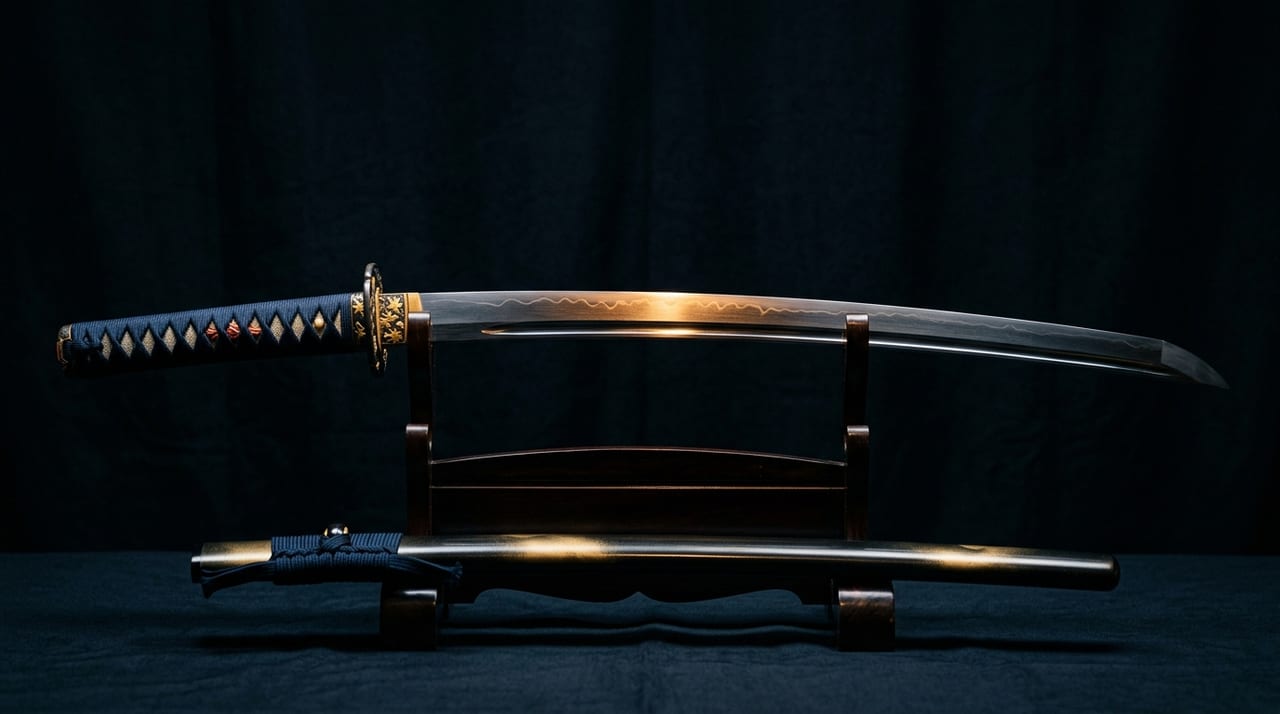 * Image is for illustrative purposes only.
Table of Contents
Introduction: Carrying Forward 800 Years of Craft in Digital Form
A Japanese sword is more than a weapon. It is the crystallization of more than 800 years of swordsmithing tradition, a work of art in which every minute detail — hamon, jigane, nakago and more, easily overlooked by the naked eye — embodies the spirit of the craftsman. Yet even swords designated as kokuhō (National Treasure) or jūyō bunkazai (Important Cultural Property) are never entirely free from the risk of loss through fire, earthquake, or deterioration over time.
Against this backdrop, efforts to record and preserve Japanese swords as precise digital data have been advancing rapidly in recent years. Museums, research institutions, and private companies are collaborating to build "digital archives" using CT (computed tomography) scans and high-precision 3D scanners at locations across the country. This article examines that cutting edge from three perspectives: technology, case studies, and challenges.
Recording Blades with CT Scans and 3D Scanners
CT scanning is a groundbreaking technology that allows the internal structure of a blade to be analyzed non-destructively. It can visualize in three dimensions the layered structure of tamahagane, the bonded state of shingane (core steel) and kawagane (jacket steel), and the distribution of steel produced by orikaeshi tanren (folding).
At the Tokyo National Museum, micro-CT imaging is carried out on swords designated as jūyō bunkazai (Important Cultural Property), enabling analysis of internal structure at a resolution of 0.1 mm or less. This makes it possible to confirm forging methods that are difficult to determine from outward appearance alone — such as hon-sanmai, kōbuse, and the presence or absence of muneyaki — and to read the history of past repairs and polishing. The ability to "see" the interior without grinding down the blade is critically important from the standpoint of cultural property protection.
Meanwhile, external measurement using 3D scanners can record the sori (curvature) of a sword, nagasa (blade length), and the amount of change in motohaba and sakihaba to a precision of 0.05 mm. Reproducibility is far higher than with conventional hand measurement, and tracking changes over decades has become much easier. For sword researchers, it has become a powerful means of quantitatively comparing the sugata (form) of individual swords.
The Technical Challenge of Digitally Preserving Hamon
The hamon is the supreme expression of a Japanese sword's beauty. It is a white pattern that emerges during yaki-ire (quenching) of the blade, taking different designs depending on school and tōkō (swordsmith) — chōji, gunome, suguha, and more. Yet digitally recording this hamon is technically very difficult.
The reason is that the hamon changes dramatically in appearance depending on how light falls on it. Under light sources at different angles it shows an entirely different expression, so a single photograph cannot adequately record its true beauty. The technique drawing attention as a solution to this problem is RTI (Reflectance Transformation Imaging). Multiple images taken while illuminating from many angles are composited, enabling the surface condition under any light-source direction to be reproduced after the shoot.
In the "Tōken Bunkazai Database" project being carried out in collaboration between the Agency for Cultural Affairs and the NPO Nihon Bunkazai Kagakkai, detailed recording of hamon by RTI photography is being attempted. As objective hamon data unaffected by exhibition lighting conditions accumulates, comparative analysis among researchers will become significantly easier.
Furthermore, "polarized 3D scanning" technology for measuring glossy metal surfaces with high precision is also approaching the stage of practical application. Whereas structured-light scanners ordinarily suffer from interference from specular reflection, combining polarizing filters makes it possible to capture even minute undulations on the blade surface. Application to recording the hada (grain) of jigane — itame, mokume, masame, and more — is also anticipated.
Examples of Online Museums and Virtual Exhibitions
The results of digital archiving are being made publicly available in the form of virtual exhibitions.
At the Tokyo National Museum's "TNM & TOPPAN Museum Theater," a virtual experience of swords using VR was conducted. A kokuhō (National Treasure) tachi was 3D-scanned and produced as VR content that can be observed at life size. The experience of being able to freely observe from any direction a sword that in a physical exhibition can only be seen from limited angles through a display case received high praise.
The Kyoto National Museum also participates in the "e-Kokuhō" project, publishing image data of the jūyō bunkazai (Important Cultural Property) and kokuhō (National Treasure) in its collection. For swords, close-up images of the nakago (tang) and mei (signature) as well as photographs of the hamon taken immediately after polishing are included, and their value as research material is high.
In the private sector, the Japanese sword specialist portal site "Tōken World" has made a database of images of more than several thousand swords freely available. In addition to allowing cross-collection searches of holdings in art museums and museums across the country, it also provides interactive content explaining the names of each part of a sword using 3D models, and is used as introductory material for beginners.
Looking abroad, the Metropolitan Museum of Art in New York publishes metadata and high-resolution images of the Japanese swords in its collection under a CC0 license as part of its "Open Access" policy. An environment in which researchers can freely download and use this material is giving a major boost to international sword research.
The Current State and Challenges of Digital Technology Use
Although the spread of digital archiving is proceeding steadily, there is no shortage of challenges to be resolved.
- Lack of data standardization: Because each institution records with its own shooting conditions and data formats, cross-institutional comparison is difficult. International standards establishing a unified format for sword digital data have not yet been developed, and building the infrastructure needed to integrate and use data from different institutions has become an urgent priority.
- Shortage of specialist personnel: People who combine specialist knowledge of 3D scanning and image processing with expertise in sword appraisal are extremely rare. Both technical skill and a trained eye are indispensable, from setting shooting conditions to interpreting acquired data, and cultivating such personnel requires a long time and systematic education.
- Cost barriers: High-precision 3D scanners require capital investment of several million to several tens of millions of yen. The barrier to adoption is high for regional art museums and private collectors, and there is a tendency for digitization to be concentrated in large public institutions. As of 2026, efforts by small and medium-sized institutions making use of crowdfunding and subsidies have begun in some areas.
- Expectations for and limits of AI appraisal: Research into using machine learning to estimate the maker and school from hamon patterns is advancing. Hamon classification experiments using deep-learning models have reported a certain level of accuracy, but multi-faceted elements such as naked-eye observation, tactile feel, and weight balance are indispensable for appraisal, and AI has not yet reached the stage of replacing the experience of an expert. Its realistic role is strictly as a "supplementary tool."
Outlook for the Future: The Fusion of Digital and Tradition
Digital archiving is bringing new possibilities to the "transmission" of Japanese swords.
- Reducing the risk of loss: Loss through fire, earthquake, and theft is the greatest threat to cultural properties, but precise digital data can serve as a clue for restoration. The case in which 3D scan data was used in the consideration of restoration following the 2019 Shuri Castle fire broadly raised awareness in society of the importance of digital preservation of cultural properties. This lesson is being applied to the sword field as well, and priority digitization at major holding institutions is accelerating.
- Transmission of tōkō technique: By precisely analyzing the work of retiring tōkō (swordsmiths) to quantify the characteristics of their forging methods, it is expected that "digital masters" that the next generation of craftsmen can consult will be built. There is a possibility that some of the techniques passed down orally or by imitation can be visualized and shared in the form of data.
- Promotion of global sword research: Comparative research on Japanese swords in overseas collections will become significantly easier through the sharing of digital data. Digital data will play a major role in particular in tracing the provenance of swords that left Japan after the war, and it will likely be a key to promoting international cooperation among holding institutions.
The digital archiving of Japanese swords has the potential to revolutionize not only "preservation" but all phases — research, education, appreciation, and transmission. In terms of the fusion of tradition and cutting-edge technology, the initiatives of the sword world are becoming a model case for other cultural property fields.
For the highlights of the hamon itself, The Complete Guide to Hamon Patterns is also a helpful reference.