Suishinshi Masahide — Father of the Shinsintō Revival Movement and the Edo-Period Swordsmith Who Theorized Ancient Blade Aesthetics
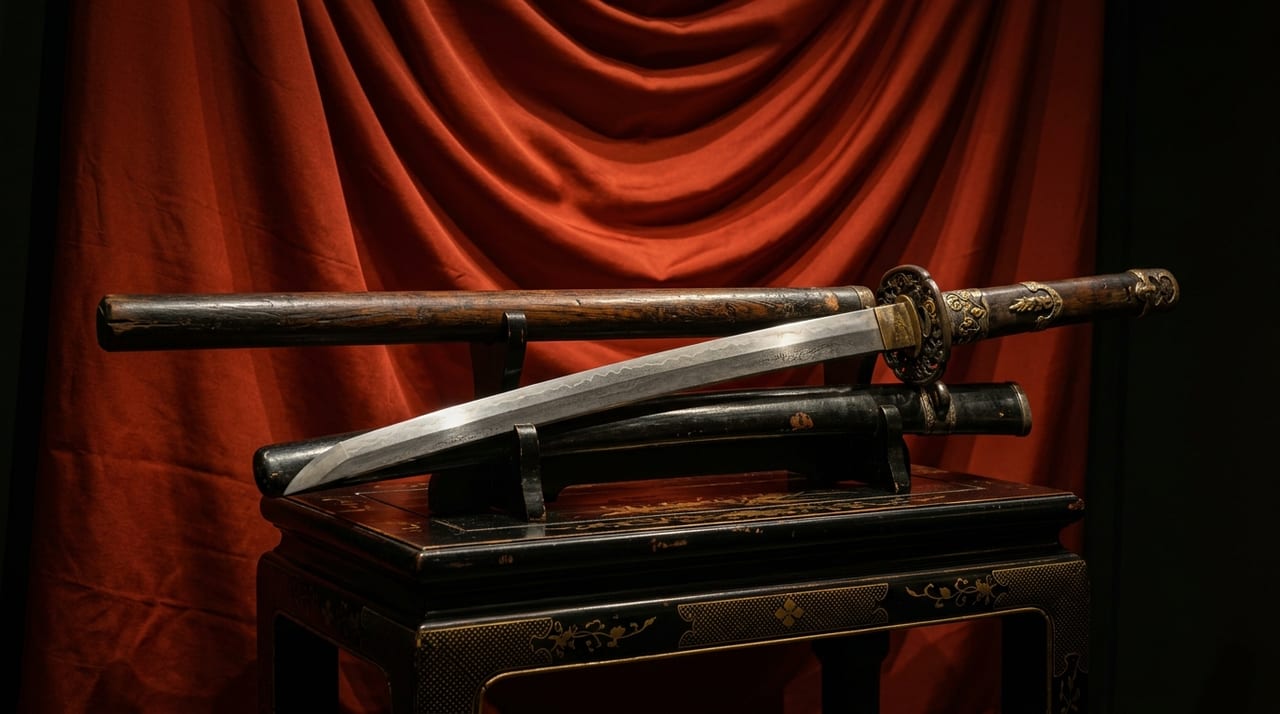 * Image is for illustrative purposes only.
Table of Contents
Who was Suishinshi Masahide?
Suishinshi Masahide (c. 1750–c. 1825) was a swordsmith and sword researcher who flourished during the late Edo period, specifically the Kansei to Bunsei era (1790s–1820s), and is remembered as one of the most influential swordsmith theoreticians in the history of Japanese swords.
Masahide was from Okitama District in Dewa Province (present-day Yamagata Prefecture). After moving to Edo, he worked as a swordsmith while simultaneously devoting himself to the study of old swords. By systematizing his findings into theoretical works and training numerous disciples, he laid the foundation for what would later be called the "Shinshinto Revival Movement," a Japanese sword renaissance.
As Masahide progressed through his training as a swordsmith, he reportedly came to have serious doubts about the styles of the Shinto period that dominated at the time. Throughout his life, he repeatedly studied multiple schools and transmission lineages, reflecting his findings in his own sword-making. The fact that he was both a practical researcher who incorporated these studies into his work and a theoretician demonstrates his character as one who moved fluidly between theory and practice.
What Was the Shinshinto Revival Movement?
During the middle Edo period (Kyoho to Horeki era, first half to mid-18th century), Japanese swords had come to be dominated by ornate and delicate styles, moving away from the bold aesthetic of nie-laden blades characteristic of Kamakura-period swords. Masahide criticized this as a "hollowing out of the Shinto era" and advocated for a return to old swords—particularly masterworks from the Kamakura and Nanbokucho periods.
This assertion had a profound impact on the sword-collecting world of the time. Masahide's "revivalist theory" was not mere nostalgia, but rather an analytical examination of why Kamakura swords were superior, offering concrete guidance for contemporary smiths to reproduce their essence—the materials, forging techniques, and science of hardening.
Masahide's ideal, it is said, was to revive the techniques of the "Five Great Traditions (go-kaden)" established during the Kamakura period in the shinshinto era. The Five Great Traditions were the representative sword-making schools of the old-sword period, each with distinctive jihada and hamon characteristics, consisting of the following five:
- Yamashiro tradition
- Yamato tradition
- Bizen tradition
- Soshu tradition
- Mino tradition
By comprehensively studying the Five Great Traditions, Masahide sought to transmit to late-Edo swordsmiths the technical essence of old-sword craftsmanship.
Masahide's Writings—Systematizing Sword Theory
Suishinshi Masahide's greatest achievement was systematizing the knowledge and philosophy of sword-making into written form. His major works are known as follows.
Tōken Jitsuyōron (Practical Theory of Swords): A comprehensive treatise on the theory of materials, manufacturing, and authentication of Japanese swords. It was groundbreaking in articulating the manufacturing secrets that swordsmiths held as experiential knowledge and organizing them in a format that successors could study.
Tōken Bengi (Clarification of Doubts About Swords): A philosophical work that pointed out the problems with shinto swords and argued for the necessity of returning to old-sword methods. It analytically addressed "Why were old swords superior?" and "Why do shinto swords fall short of old swords?"
These works were studied not only by swordsmiths in Masahide's circle but also by sword researchers of the late Edo and Meiji periods, forming the intellectual foundation of Japanese sword research. By preserving in written form techniques that had previously relied on oral transmission and secret teachings, Masahide made the essential points of old-sword research accessible to those outside master-disciple relationships—a groundbreaking approach for his time.
Masahide's Own Sword-Making Style
Suishinshi Masahide was not only a theoretician but also a swordsmith who received high praise for his actual sword-making.
Jihada: Based on well-forged small-plate grain, it aimed for the refined grain patterns of ancient Bizen and Yamashiro styles. With fine, evenly distributed jinie appearing throughout, it formed a lustrous jihada.
Hamon: After studying the diverse hamon patterns of old swords—including gunome, notare, and choji—he executed various styles. In his Soshu Revival works that emphasized nie, he expressed large-nie hamon and was highly regarded for "recreating old swords."
Form: Most of his tachi and wakizashi possessed classical elegance and austere proportions, displaying a weighty quality conscious of the old-sword period for a late-Edo blade.
Reflecting his pursuit as a theoretician, Masahide's stylistic approach varied across his career from early to late works. Even among blades bearing the same "Suishinshi Masahide" signature, those made at different periods show individuality in their jihada and hamon expression, allowing one to trace the progression of his research—a fascinating perspective when appreciating this master's works.
Key Points When Appreciating and Collecting Suishinshi Masahide Swords
When engaging with Suishinshi Masahide's works, keeping several perspectives in mind deepens one's understanding.
- Verifying Signature and Date: When appreciating Masahide's works, paying attention to how the signature is cut and the date of manufacture inscribed can provide clues about the stage of Masahide's research and stylistic development. As mentioned, his style varied across his career, making blade-by-blade comparison of individual characteristics a rewarding way to appreciate his work.
- Verifying Authentication Certificate: When owning or selling Japanese swords made from the late Edo period onwards, including those by Masahide, the presence of an authentication certificate from the Japan Fine Swords Preservation Society (NBTHK) is an important factor in assessment. The certificate represents expert judgment regarding the authenticity and maker attribution of the blade and plays an important role in understanding provenance and succession to the next owner.
- Importance of Direct Viewing: Elements such as the luster of the jihada, the definition of the nie and nioi in the hamon, and the proportional harmony of the form are difficult to judge from photographs alone; many nuances can only be truly appreciated by handling the blade in person and viewing it under different angles of light. If possible, it is advisable to seek opportunities for direct viewing through trusted specialists or authentication institutions.
Masahide's Disciples—The Next Generation Leading the Revival Movement
The quality and number of disciples trained by Suishinshi Masahide rank among the most substantial in Japanese sword history.
Taikei Naotane: One of Masahide's greatest disciples. He comprehensively mastered the Bizen, Soshu, and Yamashiro traditions, becoming a master craftsman who represented the pinnacle of late-Edo shinshinto.
Minamoto no Kiyomaro: Though not strictly a direct disciple of Masahide, he was the spiritual successor to Masahide's revival movement and achieved the finest hamon of the late Edo period.
The achievements of these disciples preserved the vitality of sword culture through the transition from the late Edo to the Meiji period. Without Masahide's revival movement, sword culture might have had an even harder time surviving the 1876 Sword Abolition Edict following the Meiji Restoration. What Masahide transmitted to his individual disciples was not merely technique but the very attitude of studying old swords analytically, and this was widely inherited through various schools in different regions.
What Suishinshi Masahide Left in Japanese Sword History
Suishinshi Masahide's greatest legacy lies in transforming Japanese swords from a craftsman's experiential technical knowledge into "a culture that could be studied and described theoretically and academically."
Before Masahide, swordsmith techniques were passed down secretly from master to disciple as oral and secret teachings. By documenting and theorizing these techniques, Masahide transformed Japanese sword culture into a shared intellectual resource. This legacy is directly connected to the foundation of contemporary sword research, preservation, and education, and it is evaluated that without Masahide, the form of modern Japanese sword culture would have been significantly different.