The Science of Polishing shinogi-ji and hira-ji — Stone-by-Stone Grinding Differentiation and Gloss Control
 * Image is for illustrative purposes only.
Table of Contents
The Two Faces of Japanese Sword Polishing — shinogi-ji and hira-ji
Looking at the cross-section of a Japanese sword blade, multiple "surfaces" (men) exist running from the cutting edge toward the mune. The two most important of these are hira-ji and shinogi-ji.
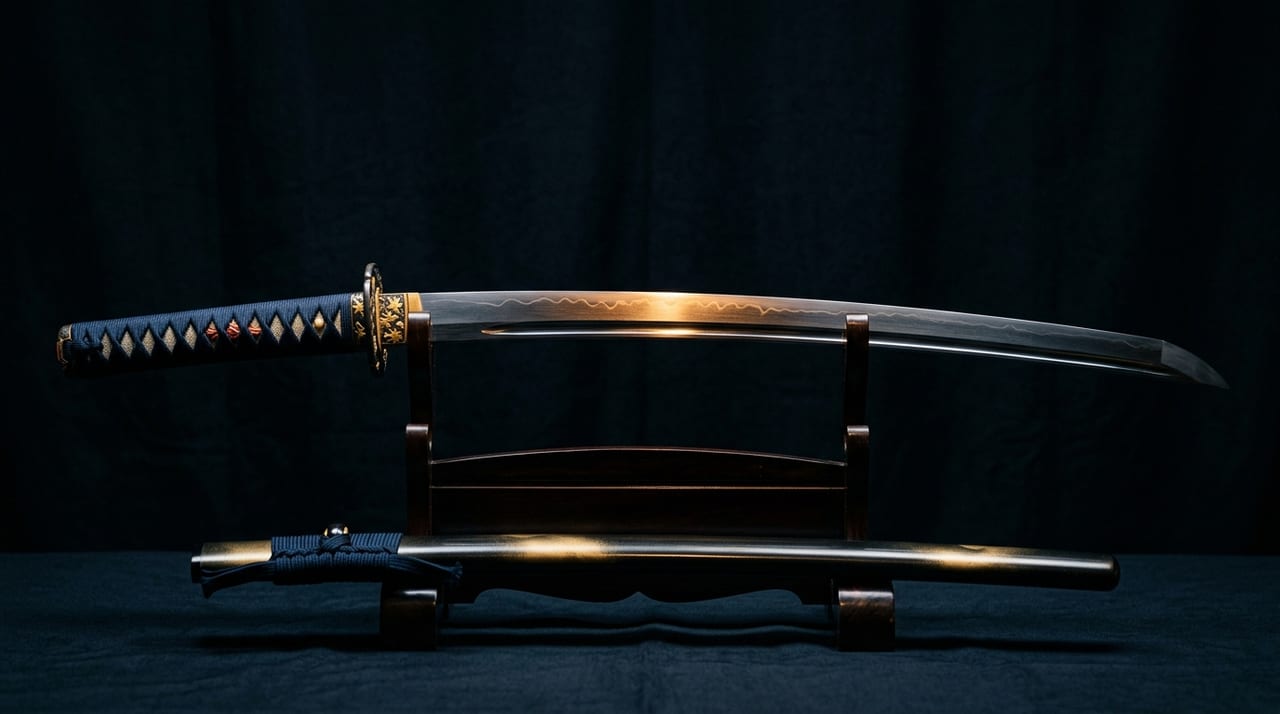
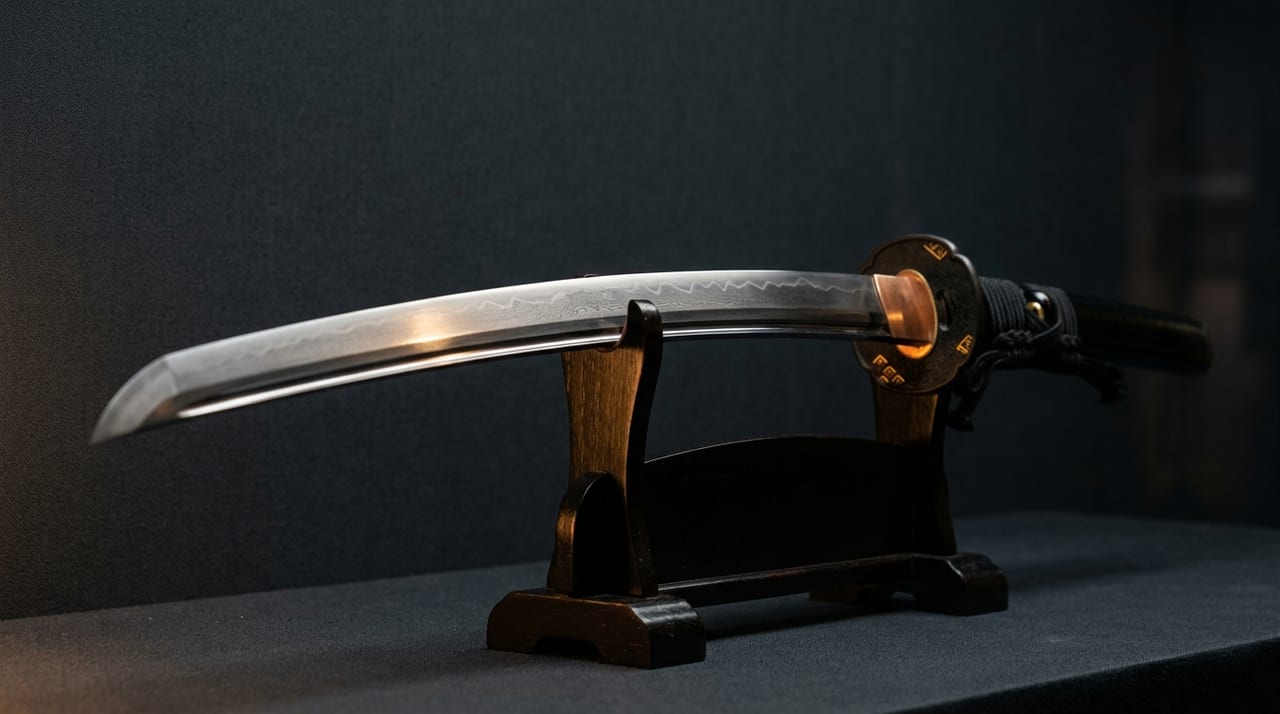
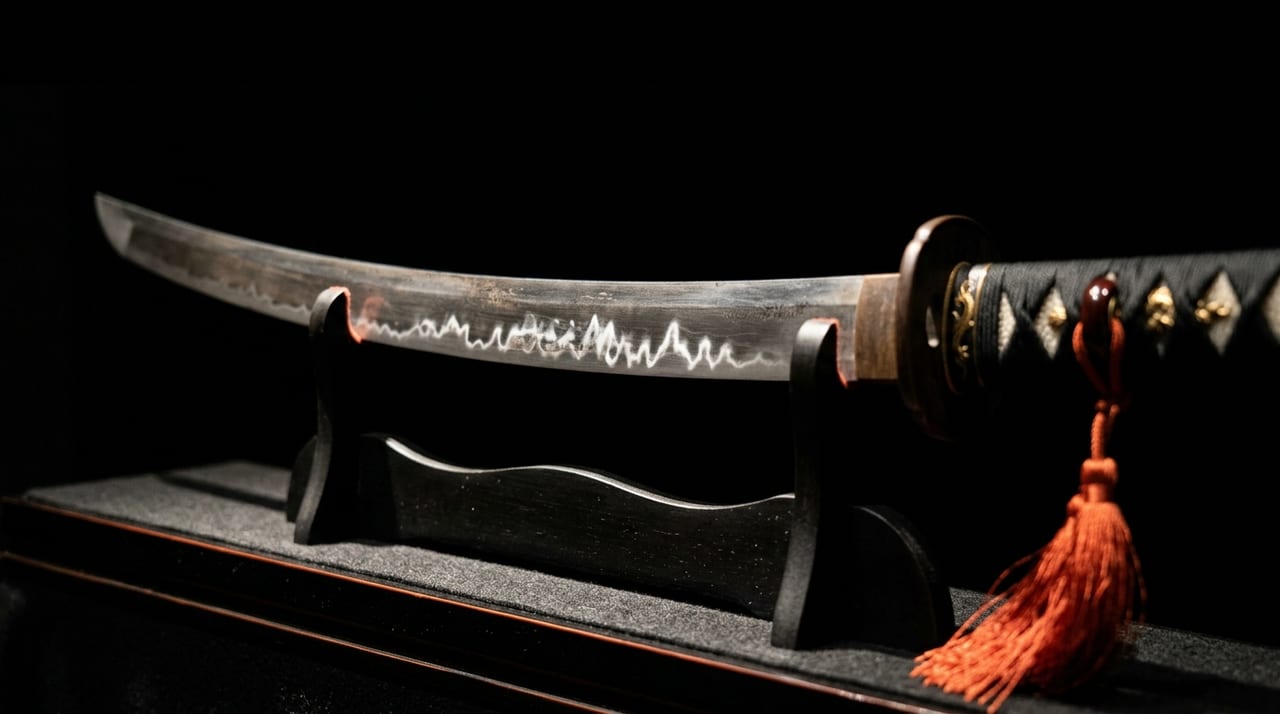
Hira-ji refers to the broad flat surface between the hamon-bearing side of the edge and the shinogi-suji (ridge line). The greater part of the beauty of a Japanese sword resides in this hira-ji, where the kitae-hada of the jigane — itame, masame, mokume, and the like — appears most clearly.
Shinogi-ji refers to the surface running from the shinogi-suji to the mune, a narrower inclined plane compared to the hira-ji. On a shinogi-zukuri blade, the way this surface is finished greatly affects the three-dimensional quality and visual appeal of the blade.
Togishi polish these two surfaces with entirely different approaches. The types of whetstones used, the pressure applied during polishing, the quality of gloss ultimately sought — all differ. Understanding this difference is the core of understanding the technical system of Japanese sword polishing.
The Stages of Polishing — From Rough Stones to Finishing Stones
Japanese sword polishing is a step-by-step process that advances from coarse whetstones to finer ones. Broadly, it is divided into two major phases: shitaji-togi (foundation polishing) and shiage-togi (finishing polishing). The rough-grinding stage carried out by the tōshō themselves is explained in Final Inspection and the Tōshō's Quality Judgment, but the process after the blade passes into the hands of the togishi proceeds as follows.
Whetstone Stages of Shitaji-togi
- Arato (#80–#240 equivalent) is the coarse whetstone used for initial polishing, shaping the blade received from the tōshō in its rough-finished state. It is the process of correcting the height and position of the shinogi and the thickness of the edge to specification, and is the important stage at which the blade's nari is determined.
- Bisui-to (#400–#600 equivalent) is used after the blade's shape has been refined, to reduce surface scratches to a moderate fineness. The work of making the ridge of the boundary line between hira-ji and shinogi-ji — the shinogi-suji — distinct is also carried out at this stage.
- Nakanagura-to (#800–#1200 equivalent) is used at the stage close to the completion of shitaji-togi. It creates uniform polish marks across the entire blade surface and prepares the transition to the next finishing stones.
Whetstone Stages of Shiage-togi
- Uchigumori-to is a special finishing whetstone for Japanese sword polishing, with those produced from natural stone in Kyoto being highly prized. Hira-ji polished with this stone takes on a surface bearing a distinctive haziness, like a light mist (kasumi). This "uchigumori-hada" is the aesthetic core of Japanese sword polishing, and brings out the kitae-hada of the jigane most beautifully.
- Hatori-to is a tool specialized for polishing the edge of the hamon, using an implement called a hatori in which whetstone is applied in small brush-like strips. It is delicate work that sharpens the outline of the hamon and brings out the nie and nioi.
- Nugui is a fine abrasive used in the final stage of polishing, with the effect of making the kitae-me of the jihada yet more distinct.
Differentiated Polishing of shinogi-ji and hira-ji — Why the Same Stone Cannot Be Used for Both
The primary reason different approaches are needed for hira-ji and shinogi-ji is that the target finish texture is fundamentally different.
| Surface | Target Texture | Characteristics |
|---|---|---|
| Polishing hira-ji | Haziness (kumori) | Hira-ji polished with uchigumori-to does not possess a mirror-like, highly polished sheen. Rather, a "kumori-hada" that softly diffuses light is considered beautiful. Within this haze, the itame, masame, and mokume of the jigane emerge, bringing the tōkō's tanren skill to the viewer's eye. Kumori-hada is not a defect, but an expression of "beauty" intentionally created by Japanese sword polishing. |
| Polishing shinogi-ji | High gloss (near-mirror finish) | Although called a mirror finish, it is not a complete mirror surface like modern stainless-steel polishing, but rather a gloss with "a brightness through which the layers of the jigane can be glimpsed." This gloss, by contrasting with the haze of hira-ji, visually highlights the line of the shinogi-suji and creates depth and three-dimensionality in the blade. |
This contrast of "hira-ji as haze, shinogi-ji as gloss" is the aesthetic core of Japanese sword polishing, and embodies an aesthetic fundamentally different from Western sword polishing, which uniformly buffs the entire surface.
The Scarcity of Whetstones and Contemporary Challenges
The quality of Japanese sword polishing depends directly on the quality of the whetstones, but the best natural whetstones — in particular the raw stone for uchigumori-to — have been rapidly depleted in recent years. The Kameoka area of Kyoto and the mountain regions of Tochigi Prefecture were among the main producing areas, but many quarries have already closed or become unprofitable, and obtaining high-quality natural whetstones has become extremely difficult.
Among togishi there is the understanding that "good natural whetstones are something passed down from one's master," and many craftspeople carefully manage a single piece of fine whetstone, continuing to use it for decades. A market exists where a single whetstone trades for hundreds of thousands of yen or more, and the scarcity of the material underpins the transmission of togishi skills.
Meanwhile, the quality of synthetic whetstones (artificial whetstones) has improved greatly in recent years, and some have appeared that perform comparably to natural whetstones at the shitaji-togi stage. However, in the final stage of shiage-togi — in particular the finishing of hira-ji using uchigumori-to — it is currently considered difficult to fully reproduce with artificial whetstones the distinctive togi-hada created by the complex mineral composition of natural stone.
The Transmission of Polishing Technique — The Togishi Master-Apprentice System
Mastering the differentiated polishing of shinogi-ji and hira-ji requires years of master-apprentice training. The training of togishi is also conducted through an apprenticeship system similar to that of tōshō, and it generally takes a minimum of 8 to 10 years from entering as an apprentice to becoming independent.
Developing the "eye" for polishing is considered the greatest challenge. How much pressure to apply to the whetstone, what angle to use, how to read the surface condition indicated by the quality of the light — these are things that are difficult to convey in words and are learned through years of watching the master's hands.
In modern times the number of togishi is also on a declining trend, and just as with the shortage of tōshō, the shortage of togishi has become a major challenge in the transmission of Japanese sword culture. The fact that the existence of a top-class togishi capable of achieving the beautiful contrast between shinogi-ji and hira-ji determines the "completion" of a Japanese sword demonstrates that togishi are craftspeople of equal importance to tōshō.