Daimyo Sword Culture Across Regions in the Sengoku Period: Sword Policies of Satsuma, Kaga, and Date
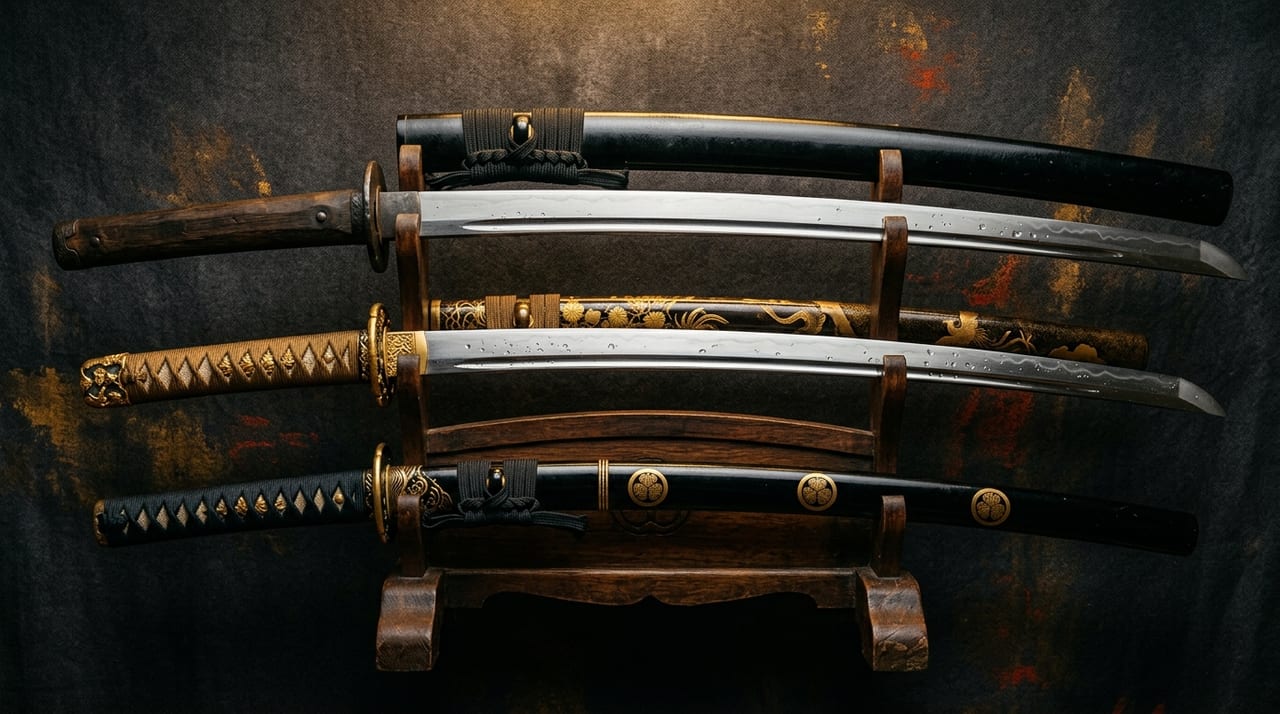 * Image is for illustrative purposes only.
Table of Contents
Sengoku Daimyo and Swords—A Tripartite of Politics, Military, and Culture
For feudal lords during the Sengoku period (approximately 1467–1615), the sword was far more than a mere weapon. The sword served as:
- Military Symbol: A daimyo's sword embodied the power of his army
- Diplomatic Gift: Functioning as the highest form of present during alliances and vassalage relationships
- Display of Cultural Authority: Possession of celebrated blades demonstrated a daimyo's cultivation and wealth
From these multifaceted roles, each Sengoku daimyo developed distinctive sword policies. This article examines three regions—Satsuma, Kaga, and Date—comparing the characteristics and historical contexts of their sword cultures.
Satsuma (Shimazu Clan)—Pragmatic Sword Culture
The Shimazu clan, headquartered in Satsuma Province (modern-day Kagoshima Prefecture), was among the Sengoku daimyo most notable for establishing a long-enduring samurai culture.
Characteristics of Satsuma Swords
The Concept of "Satsuma Swords" In the Shimazu domain, local swordsmiths produced blades collectively known as "Satsuma Shintos" (newly forged swords), which possessed a distinctive style. Key features of Satsuma swords:
- Long blade length: Satsuma samurai reportedly favored long swords.
- Functionality over ornamentation: Prioritizing actual cutting power over decorative carvings or elaborate fittings—a sturdy, utilitarian construction
- Gentle blade pattern: Rather than flashy clover-petal tempering, practical straight-edge or subtle wavy patterns predominated
Shimazu Clan's Sword Policy
Encouraging Quality Swords Among Retainers: The Shimazu clan managed the quality of swords among its retainers as official policy. Within the Shimazu domain, the ethos "A sword comes second only to life itself" became pervasive, creating an atmosphere where possessing quality blades was a samurai's obligation.
Connection to the Jigenryu School: The swordcraft school known as Jigenryu, developed in Satsuma, adopted tactics of deciding battles with a single opening strike. This martial art's characteristics reinforced Satsuma's sword philosophy that "blades must be practical."
Satsuma Sword Culture After Sekigahara: Even after the establishment of the Tokugawa shogunate, Satsuma domain maintained considerable independence from the Edo shogunate, with its samurai continuing to possess high-quality swords. This culture passed down to the "Satsuma patriots" of the late Edo period.
Representative Satsuma Swordsmiths
Masakiyo and Yasuyo: Mondo-no-sho Masakiyo and Ippei Yasuyo, who served the Shimazu in the mid-Edo period, are the leading smiths of Satsuma shinto.
The Naminohira School: A Satsuma-specific smithing tradition. Notable figures like Naminohira Yukiyasu represent a lineage with deep historical roots in Satsuma dating from the late Heian through Kamakura periods.
Kaga (Maeda Clan)—Named Blades as Cultural Authority
The Maeda clan, centered in Kaga Province (modern-day Ishikawa Prefecture) and boasting over one million koku in annual rice production, was renowned among Sengoku daimyo for its pronounced cultural orientation.
The Maeda Clan's Cultural Policy
Maeda Toshiie (c. 1537–1599), a trusted senior retainer of Toyotomi Hideyoshi and celebrated man of cultural refinement, was particularly renowned for his sword collecting. Maeda's Kaga sword collection possessed these characteristics:
Collections of Famous Blades: The Maeda clan actively collected celebrated swords from the Kamakura and Nanboku-cho periods. Several famous blades bear Maeda associations, including "Maeda Rai Kunimitsu" and "Maeda Ichimonji."
Swords as Cultural Diplomacy: In diplomatic exchanges with Toyotomi Hideyoshi and Tokugawa Ieyasu, the Maeda clan deployed supreme-quality famous blades as diplomatic gifts. The reputation of being "the clan that gives treasured swords" elevated Maeda's cultural brand.
Kaga's Aesthetic of Blades
Kaga developed an elegant and refined culture epitomized by phrases such as "Kaga beauties" and "Kaga's million-koku culture." In swordcraft, aesthetic value and ornamentation received greater emphasis than pragmatic function.
Kaga's Metal Engravers: After entering the Edo period, Kaga (modern-day Kanazawa) produced master metal engravers who specialized in decorative fittings, or "koshirae" (sword furniture). Works by Kanazawa's guard smiths and ornament makers earned nationwide acclaim as "Kaga pieces."
Maeda Clan's Official Smiths
The Maeda clan appointed official swordsmiths for Kaga domain during the Edo period. Representative official smiths:
Kanewaka: The Tsujimura Kanewaka line served the Kaga domain and is known as the leading school of Kaga shinto.
Date (Date Masamune)—The "One-Eyed Dragon's" Flamboyant Sword Sensibility
Date Masamune (1567–1636), first daimyo of Sendai domain (modern-day Miyagi Prefecture), lived through the Sengoku and early Edo periods, and his flamboyant personality manifested distinctly in his sword sensibility.
Date Masamune's Sword Philosophy
The Origin of "Datemono": The word "Date," meaning something showy or stylish, allegedly traces its etymology to Date Masamune. His characteristic style—black-lacquered armor with a golden crescent-moon helmet crest (maedate)—was reflected in his sword fittings.
Devotion to Decorative Fittings: Date Masamune brought distinctive sensibility to sword furniture. He favored striking combinations of black-lacquered and gilt-decorated scabbards and hilts, along with elaborate metalwork in guards and ornamental pieces.
Famous Blades of the Date Clan
"Tsurumaru Kuninaga": A tachi once owned by the Date clan; it is now an Imperial Collection piece (gyobutsu) maintained by the Imperial Household Agency.
Swordcraft of Oshu (the Northeast)
During the Date Masamune era, Sendai domain (Oshu) possessed distinctive swordsmiths. While incorporating techniques from major centers like Bizen and Yamashiro, Oshu smiths developed their own distinctive style.
Influence of the Yamato Tradition: Kunikane, retained smith of the Date clan, is known for carrying on the style of the Yamato Hosho school, which became the technical foundation of Sendai shinto.
Comparative Summary of the Three Regions
| Comparison Axis | Satsuma (Shimazu) | Kaga (Maeda) | Sendai (Date) |
|---|---|---|---|
| Primary Value of Swords | Functionality & Cutting Power | Artistic Value & Prestige | Ornamentation, Individuality & Appearance |
| Smithcraft Policy | Protection of Local Naminohira School | Official Smith System | Cultivation of Oshu Swordsmiths |
| Blade Pattern Tendency | Straight-edge & Subtle Waves | Celebrated Blade Imitations & Schools | No Specific Pattern |
| Cultural Context | Jigenryu & Warrior Ethos | Kaga's Million-Koku Culture | One-Eyed Dragon's Personality |
| Legacy to Modern Era | Satsuma Shinto Tradition | Kanazawa Metalwork & Sword Fittings | Sendai Samurai Culture |
Conclusion—Regional Identity and Diverse Sword Cultures
Medieval Japan did not experience uniform cultural diffusion from central regions (Kyoto and surrounding provinces); rather, each region developed with distinctive cultural identity.
Satsuma's pragmatism, Kaga's cultural policies, and Date's individualism demonstrate that the Japanese sword was not a single object with uniform aesthetic standards, but rather a cultural product bearing diverse meanings and values across time and region.
Among signed masterpieces that embody Satsuma's sword culture, the tachi forged by the Kamakura-period smith Naminohira Yukiyasu is especially renowned—see Sasanuki and the Naminohira School. Held by the Kyoto National Museum as an Important Cultural Property, it is a blade worth knowing together with the history of the Naminohira school, which continued in Satsuma for some 900 years.