Sayanurishi: The Art of Lacquering and Leather-Wrapping Sword Scabbards — A Specialist Craftsman World and Technical System
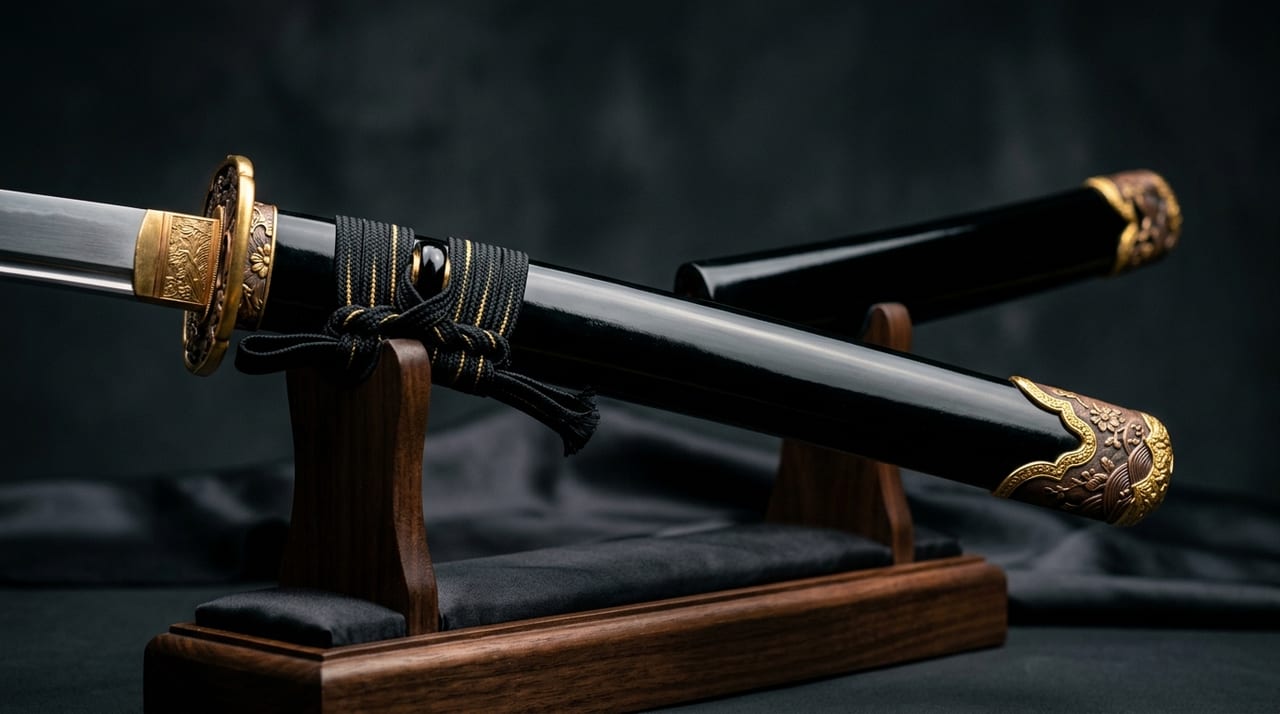 * Image is for illustrative purposes only.
Table of Contents
What Kind of Craftsman is a Saya Nuriishi?
The craftsmen who complete the saya (sheath) of a Japanese sword fall into two main categories. The sayashi carves wood such as Japanese horse chestnut to create the wooden base for a shirasaya or a finished saya, while the saya nuriishi handles the subsequent surface finishing.
The work of a saya nuriishi is not simple lacquering. It is an accumulation of specialized techniques requiring deep knowledge and years of experience, including the selection of lacquer types, ground preparation, sanding, sequencing of topcoats, and the selection and application of leather. During the Edo period, saya nuriishi centered in the three major cities of Edo, Kyoto, and Osaka formed independent craftsman guilds, but in modern times it is common for a single craftsman to work as both sayashi and saya nuriishi.
The complete koshirae consists of multiple components including the blade, saya, tsuka, tsuba, and metal fittings, each handled by specialist craftsmen in a division of labor—a comprehensive craft. The saya nuriishi plays the role of finishing the "exterior" of the saya, and conducts the lacquering work in harmony with the shape and curve of the wooden base prepared by the sayashi.
Types of Saya and Required Finishing
The finishing of a saya varies greatly depending on its purpose.
- Shirasaya: An unfinished wooden sheath for storage with no lacquer applied. This is because lacquering would impede the wood's breathing, making humidity control inside the sheath difficult. Shirasaya is the domain of the sayashi, and the saya nuriishi has no role here.
- Nuri saya: A finished koshirae sheath for practical and ceremonial use, completed with lacquer coating. Before the Edo period, "black lacquer finish" was the most common finishing method, and the black sheath displaying samurai status was an iconic accoutrement of the warrior class.
- Leather-wrapped saya: A sheath finished by wrapping materials such as shagreen or deer leather around the wooden base. It offers high practicality and creates visual unity in the entire koshirae when the leather matches that of the tsuka. Leather-wrapped saya were preferred in the Satsuma domain's "Satsuma koshirae."
Types of Lacquer and Lacquering Process
Lacquer comes in many varieties depending on the degree of refinement of the raw material, its origin, and its intended use. The main types of lacquer used by saya nuriishi are as follows.
- Ki urushi: Raw natural lacquer before refinement, used for primer coating. By allowing it to initially soak into the wooden base, it strengthens the wood while enhancing the adhesion of subsequent lacquer layers.
- Suki urushi: Refined semi-transparent lacquer used as an intermediate layer in red lacquer and black lacquer finishes. It is an important material that influences the color development of colored lacquers.
- Kuro urushi: Lacquer darkened by mixing in iron powder or charcoal powder. A standard finish for samurai sheaths, it is inexpensive and highly durable.
- Ro-iro nuri: A technique in which black lacquer and red lacquer are layered and then burnished with charcoal or whetstones to bring out a mirror-like deep luster. Due to the many steps and labor involved, it is frequently used for formal koshirae.
The basic lacquering process consists of three stages: "primer coat → intermediate coat → topcoat," but in the highest-quality finishes, the primer stage alone may involve multiple sandings, resulting in 10 to 15 or more steps. Allowing adequate drying time between each step—in the case of lacquer, a temperature and humidity-controlled room (a urushi-muro) is necessary—is key to quality. If drying is rushed, the lacquer may shrivel and lose its luster, so saya nuriishi must possess the judgment to proceed unhurriedly through each step.
Leather-Wrapped Saya Technique—Shagreen Selection and Application
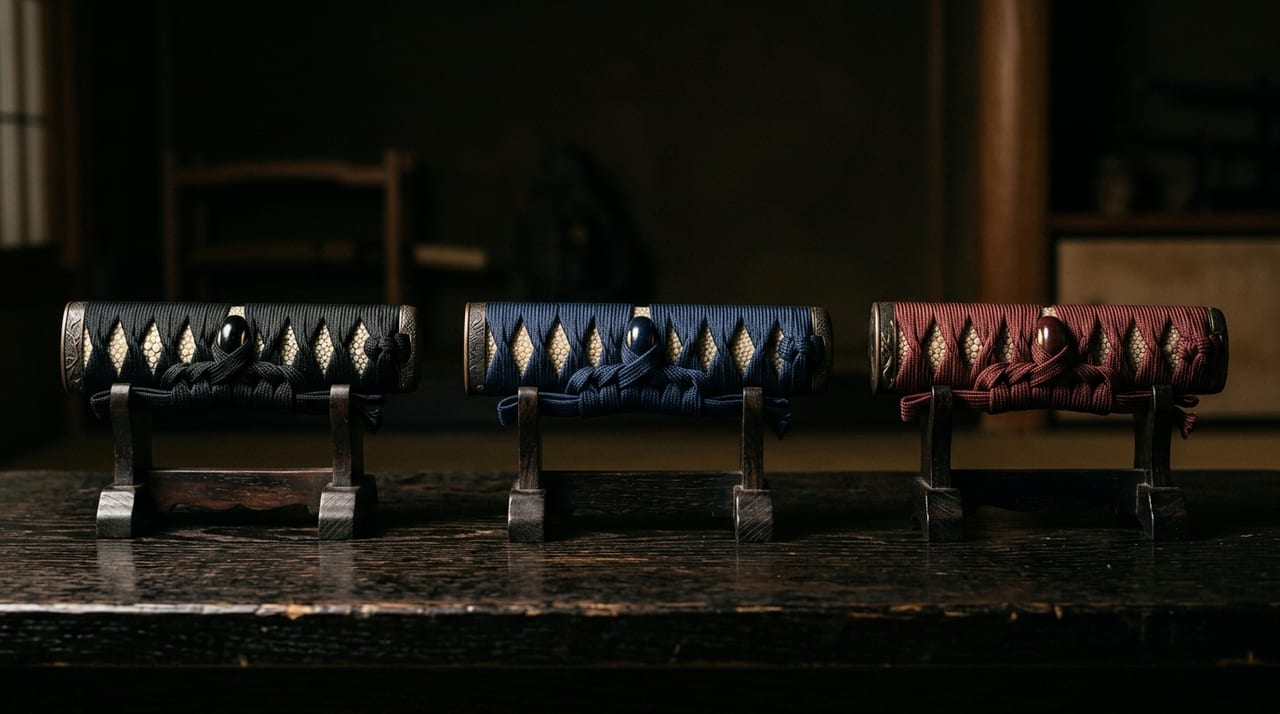
Shagreen (same-gawa) is known for being used as the wrapping base for the tsuka, but it is also sometimes used on parts of the saya. More precisely called "same-kawa," the countless small protrusions (shield scales or jun-rin) on the skin of rays and sharks function as an abrasive material and also provide slip resistance.
The basic technique for applying shagreen to a saya involves softening the leather with water, pressing it onto the wooden base, and then securing it as it dries and shrinks; however, the finishing of seams and smoothing of the surface require high skill.
Deer-leather wrapping is an iconic finish of Satsuma koshirae, with its natural light-brown color imparting a rustic, martial simplicity distinct from black-lacquered sheaths, and it gained considerable popularity among the warrior class from the late Edo period onward.
Care and Daily Handling of Lacquered Saya
While lacquered saya possess beautiful luster, they require careful daily handling. Direct sunlight and hot, humid environments cause lacquer deterioration and cracking, so sheaths should ideally be stored in shaded, well-ventilated locations. When sweat or skin oils accumulate on the surface, they should be promptly wiped away with a dry, soft cloth; cleaning agents containing organic solvents such as alcohol or thinner should be avoided as they damage the lacquer finish.
Keeping a blade sheathed for extended periods causes moisture to accumulate inside, potentially leading to saya cracking and blade rust. Periodically unsheathing the blade to inspect the interior, and considering temporary transfer to a shirasaya if necessary, is one practical preventive measure. With leather-wrapped saya, attention should be paid to leather hardening and cracking from dryness, and storage in extremely dry environments should be avoided.
Commissioning New Koshirae and the Process of Engaging a Saya Nuriishi
When commissioning new koshirae for a Japanese sword, engaging a saya nuriishi is built on coordination with multiple specialists including the sayashi, tsuka-wrapping artisan, and metal fittings craftsman. First, the sayashi finishes the wooden base to match the curve and length of the blade, and then the saya nuriishi applies either lacquer or leather-wrapping finishing to that wooden base.
Because the type of finish (black lacquer, ro-iro, leather wrapping, etc.) and the number of coating layers affect the work content and number of steps, it is helpful to convey to the artisan in advance the desired finishing aesthetic (luster intensity, color tone, etc.) when placing the commission. The time required for completion depends on the accumulated drying steps, so it is advisable to schedule the commission with adequate time allowance.
Modern Saya Nuriishi—Succession and Challenges
In modern times, craftsmen devoted exclusively to saya nuri work have become extremely rare. Among sword craftsmen registered with affiliated organizations of the Japanese Art Sword Preservation Society, those active as "saya nuriishi" number only dozens or so, and the aging of the profession and shortage of successors are severe problems.
To become a saya nuriishi, one typically learns the fundamentals of lacquer arts and woodworking, then undergoes long-term apprenticeship under an experienced craftsman. Work involving contact with lacquer requires gradual acclimatization while experiencing a skin condition called "urushi-kabure" (lacquer dermatitis), and the apprenticeship demands considerable perseverance.
The challenges facing modern saya nuriishi extend beyond technical succession. High-quality natural lacquer prices have surged (domestic lacquer costs several to dozens of times more than imported lacquer), skilled lacquer artisans are declining in number, and insufficient orders create business difficulties—the industry's sustainability as a whole is in question.
Conversely, growing interest in Japanese swords and efforts to preserve lacquer arts as Japanese cultural heritage have renewed attention to saya nuriishi work. The demand for traditional black-lacquered sheaths remains solid, and saya nuriishi continue to work producing koshirae that accompany the creations of contemporary sword smiths.
While saya nuriishi work receives less attention than blade polishing or sword forging, it is an essential specialized profession responsible for completing the "exterior finish" of Japanese swords as comprehensive craft works and deserves to be passed down to future generations.