Osafune Motoshige: The Bizen Master Who Fused Soshu and Bizen Styles
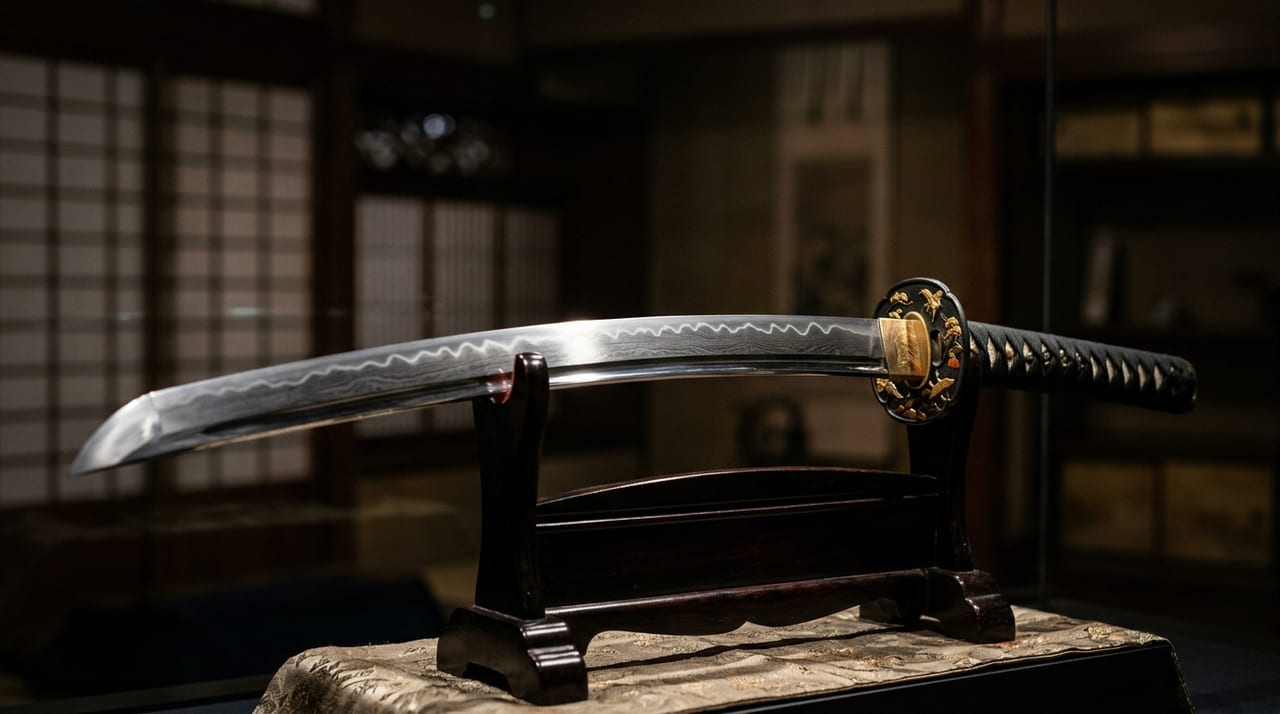 * Image is for illustrative purposes only.
Table of Contents
Who Was Osafune Motoshige?
Osafune Motoshige was a sword maker who worked in Osafune, Bizen Province during the Nanboku-chō period. While a member of the Bizen Osafune school, he is known for a style called "Sōden Bizen" that incorporated techniques from the Sōshū tradition, and is counted as one of the smiths who embodied the transition period where the Bizen and Sōshū traditions intersected. While famous makers such as Mitsutada, Nagamitsu, and Kanemitsu are representative of the Osafune school, Motoshige occupied a unique position among them, distinctly reflecting influence from the Sōshū tradition. Even within Bizen, a major production center, he is frequently cited as an excellent example demonstrating that individual smiths had a wide range of stylistic approaches.
The Historical Background of the Intersection of Sōshū and Bizen Traditions
From the late Kamakura period through the Nanboku-chō period, the Sōshū style, perfected in Sagami Province, exerted a major impact on the warrior society of the time with its vigorous jigane and blade pattern featuring strongly emphasized nie. Bizen Province had long flourished as a center of Japanese sword production, characterized by its calm, refined jigane and elegant choji blade pattern; Sōden Bizen was the style born when Bizen smiths influenced by Sōshū incorporated the vigorous nie of the Sōshū tradition into the original Bizen style. Motoshige is positioned as one of the representative smiths of this Sōden Bizen style.
The Nanboku-chō period was an era of repeated turmoil among warrior factions in various regions, and demand for swords increased. It is believed that smiths from different production centers naturally had more opportunities to interact and learn techniques from each other, and the birth of Sōden Bizen was rooted in this unique technical exchange of the turbulent period. Rather than having closed technical systems by production center, the willingness of smiths to flexibly incorporate techniques in response to the demands of the era led to the subsequent proliferation of diverse styles in Japanese sword history.
Characteristics of Motoshige's Style
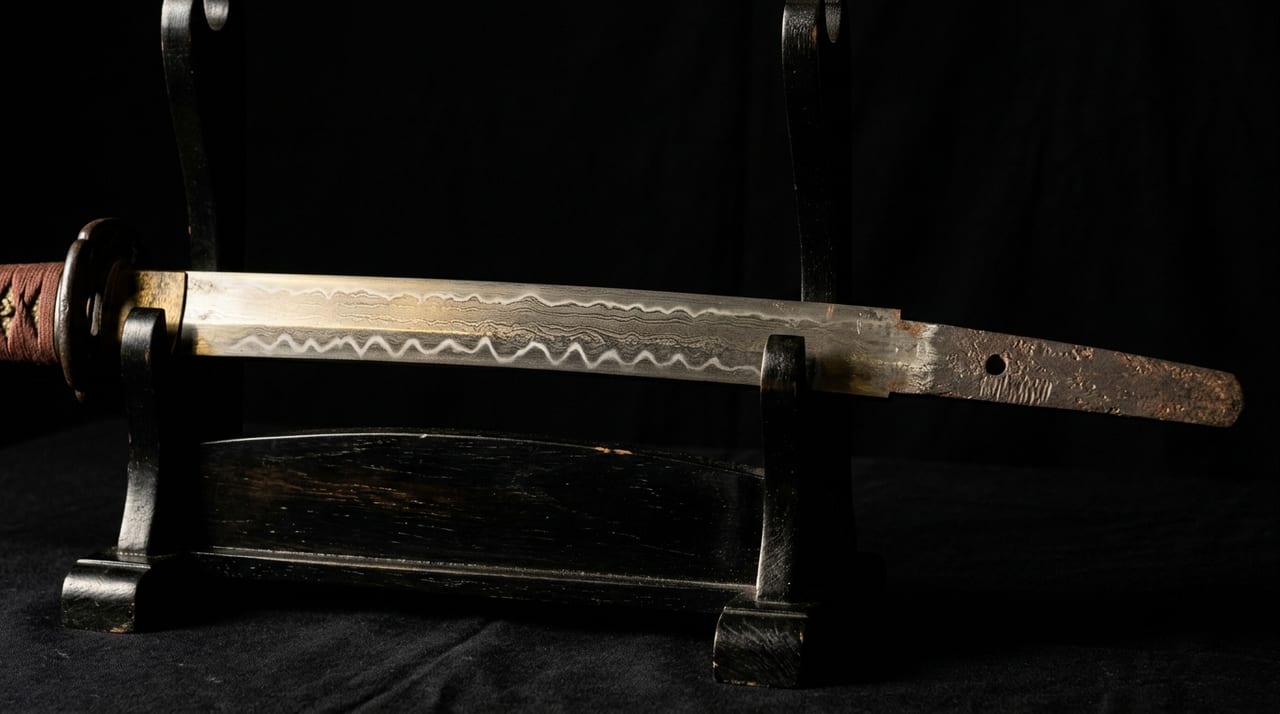
In Motoshige's works, the lineage of the Bizen tradition can be seen in the itame grain appearing in the jigane and the vivid reflection, while the blade pattern combines the elegant choji reminiscent of the Ichimonji school with the dignified character characteristic of Bizen. Some of his early works display blade patterns suggesting katakotoshi style, while some later works show a more subdued straight-blade character mixed with complex jigane, and the variation in style over time is also considered one of Motoshige's characteristics.
When organizing the evolution of his style, the following trends have been identified.
- Early works—elegant blade patterns reminiscent of the Ichimonji choji stand out
- Middle period onward—his jigane and edge evolved toward a more vigorous character, with strong consciousness of Sōshū nie
- Late works—he achieved a subdued style with straight-blade character mixed with complex jigane
This broad range suggests that Motoshige was a smith who continually sought his own style, not adhering to a single form but moving between the Sōshū and Bizen traditions. By tracing a single smith's body of work chronologically, we can see that style was not static but constantly evolving.
His Relationship with and Evaluation by Sadaie
Motoshige is said to have been a student of Sadaie, the perfector of the Sōshū tradition, and is sometimes counted as one of the so-called "Three Sages of Sadaie." His historical significance as a smith lies in the fact that he brought techniques learned directly from the celebrated Sōshū master back to Bizen and fused them with local traditional forging techniques. In sword rankings, Motoshige is positioned as one of the top-tier smiths and has been highly regarded from the perspective of cutting ability. The fact that he did not merely imitate his master's techniques but synthesized them with tradition rooted in Bizen to create his own distinctive style can be considered an achievement unique to the Nanboku-chō period, an era of active technical exchange.
The Broadening of Sword History Exemplified by Sōden Bizen
Sōden Bizen as a style is a phenomenon seen in multiple Bizen smiths including Kanemitsu in addition to Motoshige, and represents an excellent example of the dynamism of Japanese sword history, showing how one school flexibly incorporated techniques from another school while building its own distinctive style. Following the process of technological dissemination and fusion that does not complete within a single production center or school is an essential perspective for understanding the depth of Japanese sword as a craft.
By using the style of a single smith, Osafune Motoshige, as a clue, we can trace the intersection of the two major streams of Bizen and Sōshū traditions. Rather than classifying swords only by production location or school name, focusing on the technical background under which individual smiths formed their styles allows our perspective on Japanese sword appreciation to deepen. Behind each signature and each blade pattern lies the great historical flow of era turmoil and technical exchange.
Motoshige's Position in Contemporary Sword Appreciation
In contemporary sword appreciation, works by Osafune Motoshige serve as excellent teaching materials for learning the relationship between the Bizen and Sōshū traditions. There are not many examples where one can simultaneously read the Bizen tradition in the jigane reflection and the Sōshū influence in the blade pattern's nie, and the academic interest of Motoshige's works lies in the ability to compare the characteristics of both traditions within a single blade. When learning about Japanese sword schools, it is common to organize using the framework of the Five Traditions—Bizen, Sōshū, Yamato, Yamashiro, and Mino—but the existence of smiths like Motoshige teaches us that this framework is not fixed but has continually fluctuated and changed according to era and interaction. When appreciating works, by not fixating solely on production center or school names but also considering the historical context and master-student relationships in which individual smiths lived, we can read far more historical information from a single blade.