The Complete Guide to Japanese Sword Online Auctions | Practical Strategies from Bidding to Authenticity Appraisal
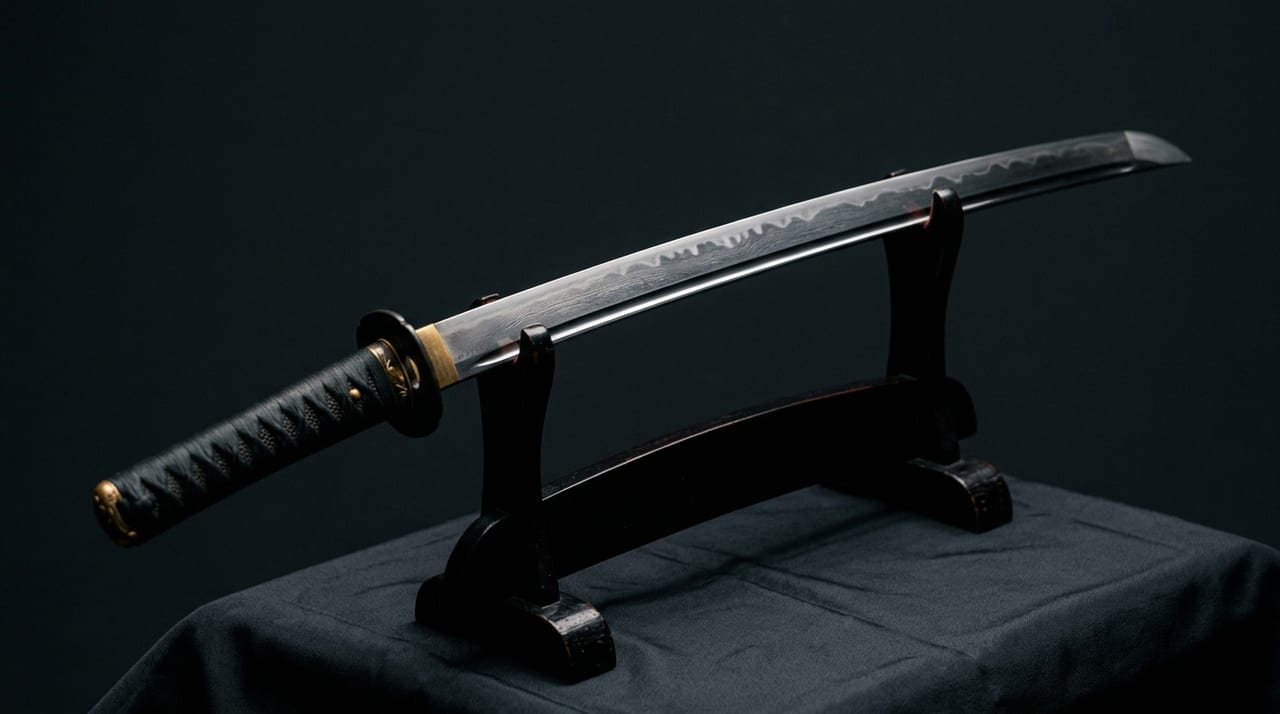 * Image is for illustrative purposes only.
Table of Contents
Introduction: Online Auctions as the Main Battleground of the Nihontō Market
The distribution channels for nihontō have changed dramatically over the past decade or more. Whereas sword dealers' shops and antique markets were once the mainstream, online auctions now play a central role in the market. Yahoo! Auctions, the largest general-purpose domestic platform, sees hundreds of sword-related listings every day, while internationally, auction houses such as Christie's and Bonhams hold dedicated nihontō sales on a regular basis.
However, risks unique to the online environment do exist. Judging authenticity without being able to handle the piece in person, assessing a fair price, and completing the legally required procedures — only by understanding all of these correctly does an auction become a powerful tool for sword collecting.
Comparison of Major Domestic and International Platforms
| Platform | Features | Points to Note |
|---|---|---|
| Yahoo! Auctions (Yahoo! Auction) | Japan's largest general-audience auction site. Listings are plentiful and span a wide price range. | The level of seller expertise varies considerably, so it is essential to confirm ancillary information such as the presence of togi, a registration certificate, and a Hozon Tōken kanteisho. Adding keywords such as "torokusho tsuki," "Hozon Tōken," and "NBTHK" to searches improves precision. |
| Specialist Nihontō Auctions (organized by domestic dealers) | Non-public or members-only auctions organized by leading domestic sword dealers, with relatively high quality control over the lots offered. | Participation often requires advance registration or an introduction, which can make them less accessible to beginners. |
| Christie's and Bonhams (major international houses) | Specialist sales of Japanese art and arms and armor are held several times a year; each lot comes with a detailed catalog description and expert commentary, making them highly reliable. | It is important to note that a buyer's premium is charged on top of the hammer price (check the rate in each house's terms and conditions), and that verifying import and export regulations is essential when purchasing nihontō from overseas. |
| eBay (general international) | Many sellers are based in the United States and Europe, and guntō and koshirae from the Meiji and Taisho periods that are difficult to obtain in Japan sometimes appear. | The risk of counterfeit and altered pieces in circulation is higher than on domestic platforms, so caution is advised for those with limited experience. |
Preparation and Strategy Before Bidding
Researching Prices in Advance
The cardinal rule before participating in an auction is to check multiple past sale results. Yahoo! Auctions has a "Look up winning bid prices" feature that lets you see the price range at which works by the same tōkō from the same period have settled. The grading standards of NBTHK (Society for the Preservation of Japanese Art Swords), a public-interest foundation, published in their nihontō illustrated catalogs, along with appraisal classifications such as Hozon, Jūyō Hozon, and Tokubetsu Jūyō Hozon, serve as useful references for a tōkō's standing.
Setting a Maximum Price
Before bidding, decide calmly how much you are willing to pay for a given sword. Overpaying driven by the heat of an auction — the so-called psychology of not wanting to lose a bidding war — is a common mistake among beginners. Once a maximum price is set, the discipline of never changing it is critical.
Bid Timing
Bids tend to concentrate in the final few minutes before an auction ends. There is a tactic of entering a high amount early to psychologically deter competitors, but in formats like Yahoo! Auctions that use automatic extension (where the closing time extends if a bid is placed), the effect is limited, so keeping to one's maximum price should be the top priority.
How to Avoid Authenticity Risks
Verifying the Registration Certificate
The "firearms and swords registration certificate" (torokusho) issued by a Board of Education is the document showing that the sword has been registered; nihontō must be transferred together with the registration certificate (Act for Controlling the Possession of Firearms or Swords and Other Such Weapons (Jūtōhō) (e-Gov Legal Search), Article 18). A sword without a registration certificate may be unregistered, and unregistered swords and blades cannot in principle be possessed (same Act, Article 3, Paragraph 1), so it is essential that the listing states the presence of a registration certificate — and ideally that an image of it can be confirmed.
The Significance of NBTHK Kanteisho
Kanteisho issued by NBTHK fall into the following four grades.
- Hozon Tōken
- Tokubetsu Hozon Tōken
- Jūyō Tōken
- Tokubetsu Jūyō Tōken
Swords accompanied by a kanteisho have already undergone specialist evaluation of authenticity and quality, substantially reducing risk. Swords without a kanteisho are lower in price but require the buyer — or a trusted specialist — to make their own judgment on authenticity.
What to Read from Photographs
Online, photographs of the blade, nakago, and mei are a lifeline. A conscientious seller will post multiple images: the full nakago, a sharp close-up of the mei, and detailed shots of the hamon. Listings with few photographs, soft focus, or no nakago image should be treated as risk factors in themselves.
Consulting a Specialist in Advance
When considering a high-value bid (as a rough guideline, anything over 500,000 yen), it is strongly recommended to send images to a sword dealer or an NBTHK-certified appraiser and seek their opinion before winning the lot. A consultation fee of a few thousand yen may allow you to avoid a risk of several hundred thousand yen.
Procedures After Winning
For Domestic Wins
A person who has received a sword with a registration certificate must notify the Board of Education of the prefecture in which the sword was registered of the change of ownership within 20 days (Act for Controlling the Possession of Firearms or Swords and Other Such Weapons (Jūtōhō), Article 17, Paragraph 1). The notification is made to the Board of Education named on the registration certificate, not to a police station. Delivery by courier is permitted, but packaging must be done carefully to ensure the blade does not shift.
For Wins at Overseas Auctions
Importing a nihontō from overseas involves procedures under both the Act on Protection of Cultural Properties and the Act for Controlling the Possession of Firearms or Swords and Other Such Weapons (Jūtōhō). After importation, a registration examination must be promptly undergone at a Board of Education to obtain a registration certificate. Confirming the steps required before importation is complete and making use of a customs broker or specialist import agent will make the process smoother.
How to Read Market Prices
A Tōkō's Standing and Price Range Benchmarks
The evaluation of a tōkō varies greatly depending on period, school, and individual skill. Works by tōkō whose pieces are designated as kokuhō (National Treasure) or jūyō bunkazai (Important Cultural Property) can reach several million to tens of millions of yen or more, while mumei works by provincial tōkō of the Edo period or sue-kotō pieces can appear on the market from tens of thousands to around 100,000 yen. Top-grade shintō works with kanteisho (for example, works by prominent tōkō of the shintō period) have a rough market benchmark of 1,000,000–3,000,000 yen, though this varies widely depending on quality, condition, and accessories.
Factors That Determine Price
The main price-determining factors can be summarized in the following six points.
- A tōkō's grade and standing
- The grade and evaluation of the kanteisho
- Dimensional completeness such as nagasa and sori
- The quality and condition of the hamon and jihada
- The presence and quality of koshirae (mountings)
- The condition of the nakago (presence of rust or shortening)
By evaluating these factors in combination and comparing them against past winning bid results, one's accuracy in assessing fair value will steadily improve.
Reading the Market's "Season"
Nihontō prices move in tandem with collecting enthusiasm both at home and abroad. In recent years, demand from overseas — particularly from Western countries and Southeast Asia — has grown, and the price level for Edo-period swords in good condition and works by noted tōkō has risen compared to 10–15 years ago. Continuously recording and observing auction results to develop one's own sense of the market is, over the long term, the most reliable strategy of all.