Returns on Japanese Sword Investment: The Asset Value of Nihontō Through the Lens of Currency Risk and Domestic Price Trends
 * Image is for illustrative purposes only.
Table of Contents
Can Japanese Swords Be an Asset? — Their Potential as an Investment
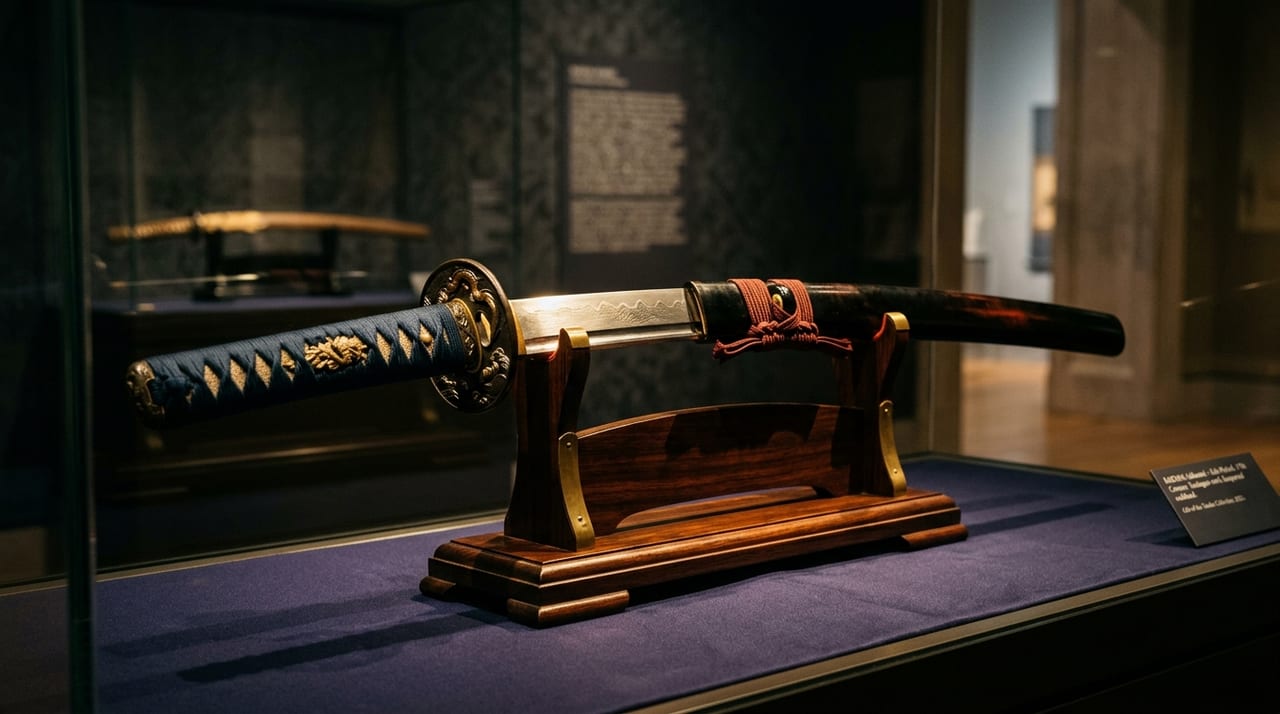
In recent years, Japanese swords have attracted increasing attention as a category of fine-art investment. Their price movements show low correlation with traditional assets such as equities, real estate, and gold, and they also possess characteristics suitable for an inflation hedge. In particular, rising demand from overseas investors coinciding with yen depreciation has driven prices upward, especially for celebrated swords of kokuhō (National Treasure) and jūyō bunkazai (Important Cultural Property) caliber.
That said, Japanese sword investment has a risk-return structure that differs markedly from ordinary financial products. Drawing on actual transaction data and market trends, this article explains the real-world returns on Japanese sword investment and the key points to keep in mind.
Price Trends at Overseas Auctions
Japanese swords began appearing in earnest in international auction markets from the 1980s onward, with Bonhams (UK), Christie's (UK/US), and Heritage (US) serving as the principal venues.
Notable examples of price increases:
- Tachi of kokuhō (National Treasure) caliber (Nanbokuchō period): from valuations around 100,000,000 yen in the 1990s, appraisals in the 300,000,000–500,000,000-yen range have emerged in the 2020s
- Swords designated jūyō bunkazai (Important Cultural Properties) (Kamakura period): foreign collector demand has pushed prices to two to three times their 1990s levels
- Jūyō Tōken (Edo-period shinshintō): examples in good condition have sold overseas at prices 20–30% above domestic levels
These figures represent trends at the very top of the market; one should note that prices for ordinary swords have not risen in the same way.
Yen Depreciation and Japanese Sword Prices — The Two Sides of Currency Risk
Yen depreciation affects Japanese sword prices in two directions.
Positive Effects of Yen Depreciation
For foreign buyers, yen depreciation makes Japanese art objects comparatively inexpensive. For example, a sword priced at 1,000,000 yen costs approximately 769 dollars when the rate is 130 yen to the dollar, but only approximately 645 dollars when the rate moves to 155 yen. This price advantage boosts foreign demand and has the effect of pushing up selling prices in the domestic market as well.
Negative Effects of Yen Depreciation (for Japanese Investors)
Conversely, when Japanese investors purchase at overseas auctions, yen depreciation drives up procurement costs. Moreover, even if the yen-denominated valuation remains unchanged, the real value in dollar terms erodes in tandem with yen depreciation. In an environment of sustained long-term decline in the yen's purchasing power, one must determine whether the rise in a sword's yen-denominated price represents genuine asset growth or merely a reflection of yen-driven inflation.
Methods of Currency Hedging
Currency hedging in Japanese sword investment is, in practice, difficult. Partial hedging through FX or currency futures is possible, but complete hedging is impractical because the timing of a sword's sale cannot be predicted. For those intending long-term holding, it is necessary to recognize currency fluctuation as a risk to be accepted and to make decisions accordingly.
Domestic Price Trends — Market Prices by NBTHK Rank
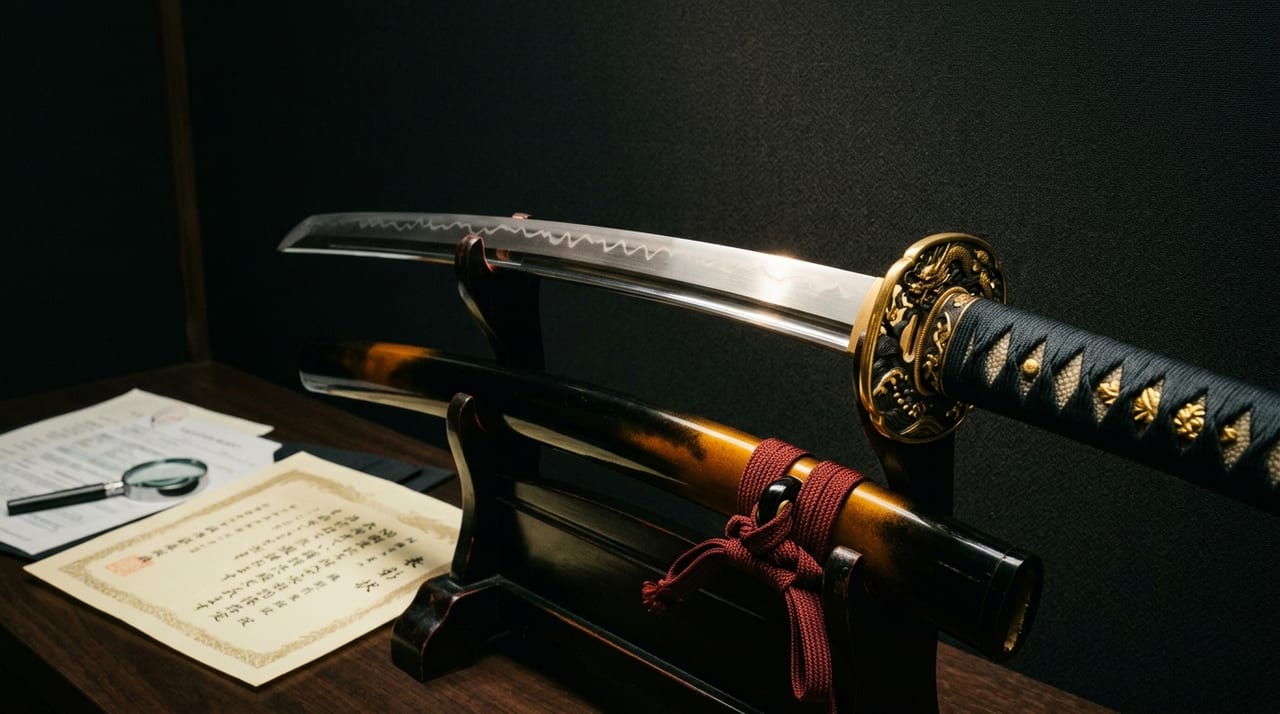
In the domestic market, the kanteisho (appraisal certificate) rank issued by NBTHK (Society for the Preservation of Japanese Art Swords) is a major indicator that determines price.
| NBTHK Rank | Typical Price Range (Good Condition) | Price Trend (Past 10 Years) |
|---|---|---|
| Tokubetsu Jūyō Tōken | 5,000,000 yen to tens of millions of yen | +30–50% (top works) |
| Jūyō Tōken | 1,000,000–5,000,000 yen | +15–30% |
| Tokubetsu Hozon Tōken | 300,000–1,500,000 yen | +10–20% |
| Hozon Tōken | 100,000–500,000 yen | ±5–10% (roughly flat) |
| Unappraised | Approximately 50,000–200,000 yen | Depends on supply and demand |
Particularly among the Tokubetsu Jūyō Tōken class, swords bearing the mei (signature) of celebrated tōkō (swordsmiths) — Masamune, Sadamune, Ichimonji, Ko-Bizen, and others — stand out for their rarity, and there are examples where prices have doubled or tripled over the past 10 to 15 years.
Calculating Real Returns — After Deducting Storage and Maintenance Costs
When calculating the real return on Japanese sword investment, the following maintenance costs must be deducted.
Storage costs (annual):
- Dedicated sword bag and sword box: initial cost 50,000–300,000 yen (depending on materials)
- Humidity control (dehumidifying cabinet, air conditioning): 30,000–100,000 yen per year including electricity
- Uchiko (polishing powder), oil, and maintenance tools: 10,000–30,000 yen per year
- Fire and theft insurance premiums
Transaction costs:
- At purchase: dealer's margin and auction buyer's premium
- At sale: consignment commission and dealer's margin on buyouts
- For export: preparation of the Agency for Cultural Affairs export inspection certificate for antique art objects (Agency for Cultural Affairs "Antique Art Objects Export Inspection Certificate"); if fittings contain regulated materials, a CITES export permit; packaging and shipping costs
Appraisal and registration costs:
- NBTHK examination fee: approximately 10,000–30,000 yen per sword (depending on rank)
- Firearms and Swords Control Act (Jūtōhō) registration with the Board of Education: a fee of several thousand yen
Taking all of these into account, there are costs during the holding period that cannot be ignored. Even if a sword sells for more than its purchase price, after deducting transaction fees and maintenance expenses the profit that remains in hand is smaller than the paper appreciation. And since price appreciation is not guaranteed, it cannot be called a certain investment.
Liquidity Risk — Can You Sell When You Want to?
One of the greatest risks in Japanese sword investment is low liquidity.
Unlike equities, Japanese swords offer no guarantee of being able to sell immediately when desired. Liquidity falls especially sharply in the following cases.
- Unsigned mass-produced swords (kazuuchimono): demand is limited and buyout prices fall significantly below the purchase price
- Swords in poor condition: value drops dramatically when there are flaws, rust, or edge chips
- Swords with unknown provenance: when provenance affects value, an inability to prove it will not be reflected in the price
By contrast, the Tokubetsu Jūyō Tōken class benefits from demand among enthusiasts, collectors, and museums, making sale at a fair price comparatively achievable. That said, it is not unusual for the sale to take six months to over a year to complete.
Sound Investment Strategy — The Importance of Long-Term Holding and Selection
To achieve meaningful returns from Japanese sword investment, the following strategies are considered effective.
- Prioritize quality: restrict purchases to swords ranked Jūyō Tōken or above by NBTHK. Unappraised swords and the Hozon Tōken class are unsuitable for investment purposes.
- Focus on celebrated smiths: authentic works by renowned tōkō (swordsmiths) — Masamune, Osafune, Ichimonji lineages, and others — maintain high price stability owing to their rarity.
- A long-term horizon of 10 or more years: profits evaporate in short-term trading due to transaction costs. Plan on holding for a minimum of 10 years.
- Ability to enjoy it as a hobby: approaching ownership with the joy of possession as the premise, rather than as a purely investment-driven purpose, makes low liquidity far less burdensome.
- As part of a diversified portfolio: treat Japanese swords as a guideline of no more than 5–10% of total assets, combined with other asset classes.
Conclusion — A Realistic Assessment of Japanese Sword Investment
Japanese swords are most accurately understood not as an investment product that will certainly appreciate in value, but as a special long-term asset that combines cultural value with asset value.
The tailwinds of yen depreciation, growing overseas demand, and heightened awareness of cultural property preservation are real, but maintenance costs, liquidity risk, authenticity risk, and legal regulation under the Firearms and Swords Control Act (Jūtōhō) are also factors that cannot be ignored. When considering Japanese swords for investment purposes, it is strongly recommended to consult the expertise of specialists — sword dealers and NBTHK examination committee members — and to make decisions on the basis of sound knowledge.