Complete Guide to Exporting Nihontō Overseas — Practical Procedures for the Antique Art Export Inspection Certificate, Return of Registration Certificates, Customs HS Codes, and CITES (Washington Convention)
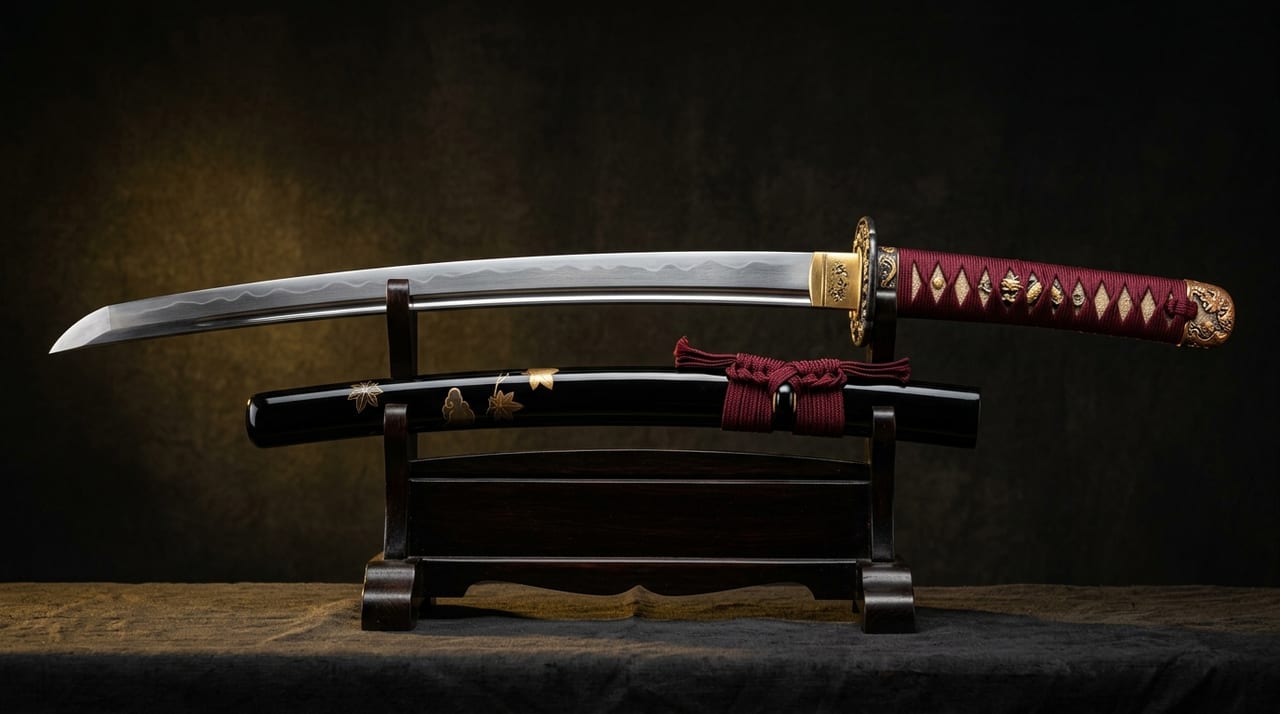 * Image is for illustrative purposes only.
Table of Contents
Overview of Nihontō Export — Three Legal Hurdles
When exporting nihontō overseas, it is necessary to pass through the following three legal hurdles in order.
- Application for the "Antique Art Export Inspection Certificate" with the Agency for Cultural Affairs
- Procedure for returning the registration certificate to the Board of Education
- Confirmation of CITES (Washington Convention) requirements and preparation of necessary documents
The order in which these are handled is important; if the steps are carried out incorrectly, the procedures must be started over, so it is essential to understand the overall flow before beginning. It should be noted that under the Foreign Exchange and Foreign Trade Act and the Export Trade Control Order, ministerial approval from the Minister of Economy, Trade and Industry is required for the export of nihontō only in the case of kokuhō (National Treasures), jūyō bunkazai (Important Cultural Properties), jūyō bijutsuhin (Important Art Objects), and similar items (Item 43, Appended Table 2 of the said Order), and for nihontō destined for Russia (as a sanctions measure). There is no procedure to apply to the Ministry of Economy, Trade and Industry (METI) for export approval or authorization when sending an ordinary registered nihontō to a general country (Export Trade Control Order (e-Gov Laws & Regulations Search)).
Step 1: Application for the Agency for Cultural Affairs' "Antique Art Export Inspection Certificate"
For the export of art nihontō with registration certificates, the primary procedure is obtaining the "Antique Art Export Inspection Certificate" issued by the Agency for Cultural Affairs. Since kokuhō (National Treasures), jūyō bunkazai (Important Cultural Properties), jūyō bijutsuhin (Important Art Objects), and similar items are in principle prohibited from export under the Act on Protection of Cultural Properties and other laws, customs may require confirmation that the nihontō being exported does not fall into any of these categories. The Antique Art Export Inspection Certificate is the certificate issued upon application by the owner or another party for this purpose (Agency for Cultural Affairs, "Antique Art Export Inspection Certificate"). Prefectural Boards of Education advise that this certificate be obtained when exporting registered nihontō (Tokyo Metropolitan Board of Education, "When Exporting Firearms and Swords").
The procedure is as follows.
- Confirm application guidelines: Check the forms, required documents, and submission address on the Agency for Cultural Affairs website (the Agency has announced that it changed the application form format following an organizational restructuring).
- Submit the inspection application form: Apply by mail, attaching photographs of the entire blade and nakago (tang) and a copy of the front of the registration certificate.
- Receive the inspection certificate: After review, the certificate is issued. This document is required at the time of export customs clearance.
Important note: Nihontō designated as kokuhō (National Treasures), jūyō bunkazai (Important Cultural Properties), or jūyō bijutsuhin (Important Art Objects) are in principle prohibited from export and are not eligible for the inspection certificate.
Step 2: Procedure for Returning the Registration Certificate to the Board of Education
Nihontō held within Japan come with a Firearms and Swords Registration Certificate (hereinafter "registration certificate"). This is a document issued by the prefectural Board of Education and certifies legal possession within Japan.
The registration certificate becomes invalid at the point when the nihontō is taken out of the country. An invalidated registration certificate must be returned to the prefectural Board of Education where the nihontō was registered (Tokyo Metropolitan Board of Education, "When Exporting Firearms and Swords" · Saitama Prefecture, "Exporting Firearms and Swords (Taking Them Overseas)"). The procedure is as follows.
- Contact the Board of Education before export: Inquire with the prefectural Board of Education that issued the registration certificate for the nihontō.
- Confirm the return procedure: Since the forms and procedures differ by Board of Education, confirm in advance.
- Return after export: Return the registration certificate, which has been invalidated by taking it out of the country, to the Board of Education where it was registered.
Important note: Short-term removal for exhibitions or demonstrations also constitutes "export," and the registration certificate likewise becomes invalid. It is also worth bearing in mind that a nihontō brought back into Japan must be re-registered with the prefectural Board of Education in the owner's place of residence.
Step 3: HS Codes and Import Duties in the Destination Country
When exporting nihontō, it is also essential to confirm the customs code (HS Code: Harmonized System Code). The main HS codes for nihontō (swords and blades) are as follows.
| Category | HS Code | Notes |
|---|---|---|
| Nihontō made within 100 years of manufacture (gendaitō, etc.) | 9307.00 | Swords, cutlasses, bayonets, lances, and similar arms |
| Nihontō more than 100 years but not more than 250 years from manufacture | 9706.90 | Antiques (excluded from Chapter 93) |
| Nihontō more than 250 years from manufacture | 9706.10 | Antiques (excluded from Chapter 93) |
The notes to Chapter 93 exclude collectors' items and antiques. Heading 97.05 (9705.10) is the code for collections of archaeological, ethnographic, or historical interest and does not apply to ordinary art nihontō (Japan Customs, "Tariff Schedule Commentary," Chapter 93 · Chapter 97).
Kotō that can be declared as antiques (over 100 years old) may be exempt from or subject to reduced import duties, depending on the destination country. However, since the duty rate changes significantly if the destination country's customs authorities classify them as "weapons," advance confirmation with the import agent is important.
Step 4: Responding to CITES (Washington Convention) — The Most Critical Checkpoint
What is often overlooked in the export of nihontō is compliance with the CITES (Convention on International Trade in Endangered Species of Wild Fauna and Flora, also known as the Washington Convention).
The nihontō itself (the steel blade) is not subject to CITES regulations, but if regulated materials are used in the sword's fittings (koshirae), a CITES permit is required for export.
Materials that are frequently regulated:
Samegawa (Ray Skin) — The Wrapping Material of the Tsuka
The tsuka (hilt) of a nihontō traditionally uses samegawa, a material called "shark skin" in Japanese, though in practice the skin of rays (genus Dasyatis, etc.) is most commonly used. Among rays, some species — such as certain South American freshwater rays (genus Potamotrygon, etc.) — are listed on the Convention's Appendices, but the genus Dasyatis (Dasyatis · Hemitrygon) is not listed (Species+).
The specific points to verify are as follows.
- Whether the tsuka material is genuine samegawa (or regulated ray skin) or an artificial material (leather, etc.)
- If the species used is known, whether it is listed on the Convention's Appendices (this can be verified on Species+)
Ivory Hilts and Whale Bone Fittings
In nihontō from before the Edo period, ivory may be used in decorative elements of the pommel or tsuba (hand guard). The Asian elephant is listed on Appendix I, and the African elephant, except for populations in certain countries, is also listed on Appendix I, with the ivory from those populations also treated in principle as an Appendix I species (Species+). International commercial trade in items containing ivory is in principle prohibited. Confirm with the Ministry of Economy, Trade and Industry (METI) (see below) before export, including whether the transaction qualifies for exceptional treatment.
It should also be noted that tōsōgu (sword fittings) using whale bone may similarly be subject to CITES regulations.
How to Obtain a CITES Permit
In Japan, the authority to which one applies for a CITES export permit is the Ministry of Economy, Trade and Industry (METI) (Wild Fauna and Flora Trade Review Division, Trade Control Department, Trade and Economic Security Bureau) (Ministry of Economy, Trade and Industry, "Washington Convention (CITES)"). The procedure can be confirmed on the Ministry's website.
Pre-Export Checklist
Confirming the following in advance can prevent procedural delays and complications.
- Has the application for and receipt of the Agency for Cultural Affairs' "Antique Art Export Inspection Certificate" been completed?
- Has the procedure for returning the registration certificate to the Board of Education where it was registered been confirmed?
- Has it been confirmed that the tsuka wrapping material is not subject to CITES regulations?
- Has it been confirmed that there are no fitting materials such as ivory or whale bone?
- Has the import regulations of the destination country (weapons laws, sword possession restrictions) been confirmed?
- Does the overseas shipping company handle international transportation of nihontō? (FedEx may restrict the transportation of nihontō)
- Has appropriate packaging (blade protection, specialized case) been prepared?
The overseas export of nihontō involves complex procedures, but if the steps are followed in the correct order, the process can be completed legally. It is advisable to make appropriate use of the support of specialized nihontō export agents and customs advisors to carry out the procedures reliably and efficiently.