Japanese Sword Auctions: Market Prices and Winning Bids — Price Data Analysis from Bonhams, Christie's, and Osaka Art Club
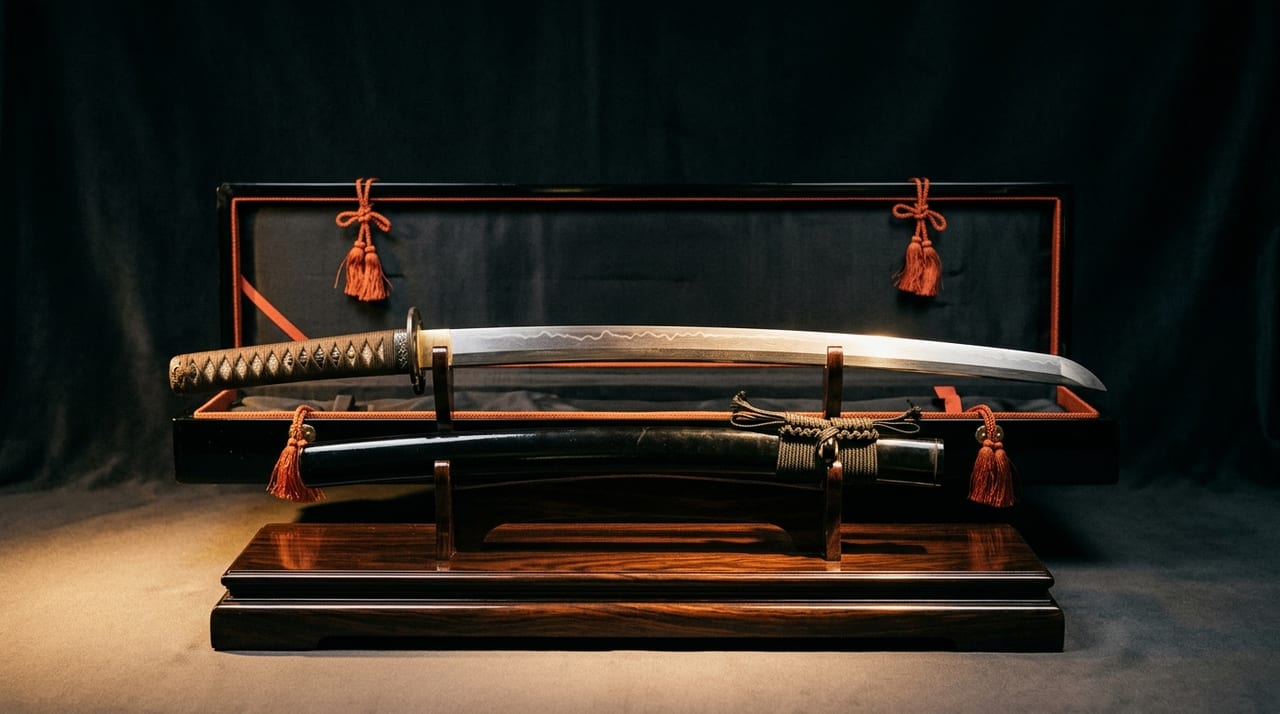 * Image is for illustrative purposes only.
Table of Contents
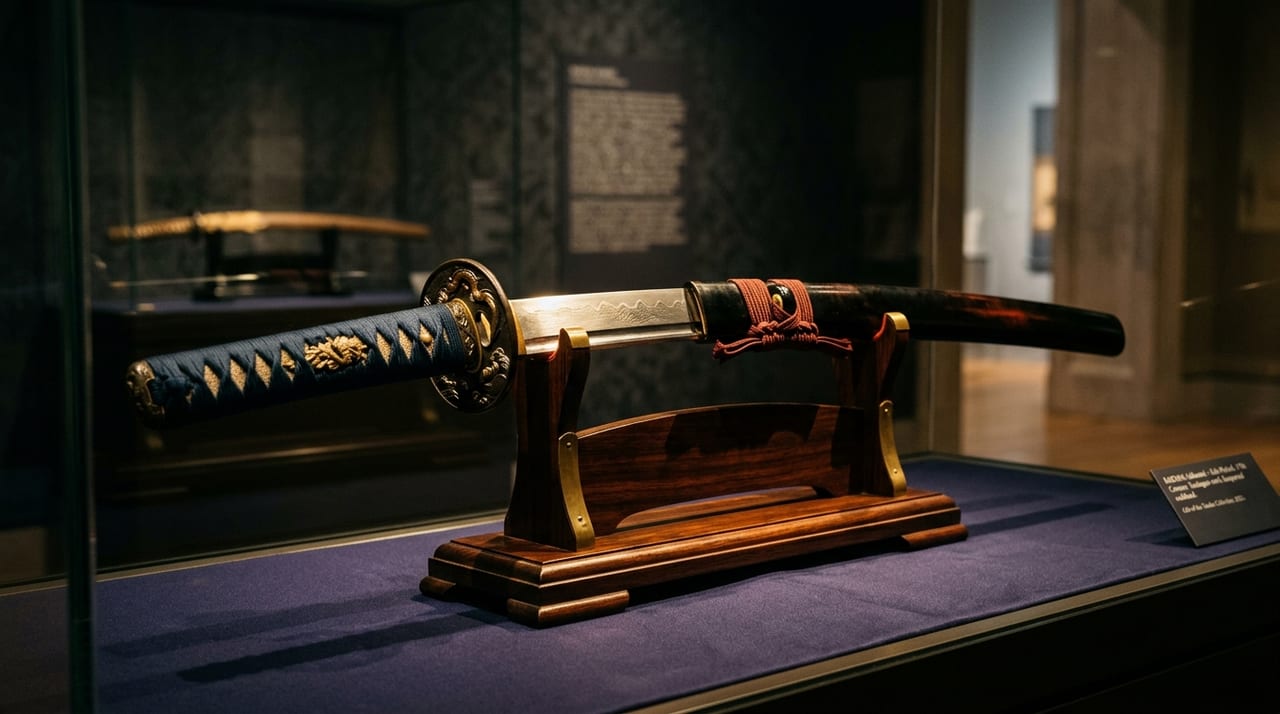
Japanese swords have recently become a category of fine art that attracts high attention in the international art market. Major auction houses such as Bonhams, Christie's, and Sotheby's regularly hold Japanese sword sales, while domestically in Japan, specialized auction institutions such as the Osaka Fine Art Club conduct active transactions. This article provides a concrete explanation of successful bid examples and market trends for each major auction house.
Bonhams Japanese Sword Sales—The Japanese Sword Market from Britain
Bonhams is one of the world's leading auction houses headquartered in London (101 New Bond Street), and has a track record of regularly holding sales that include Japanese swords in its Japanese Art department.
As a recent notable example, a Bizen Osafune Kanemitsu from the early Edo period (estimated 17th century) was sold for approximately 12,000 British pounds (approximately 2.4 million yen). In Bonhams' London headquarters sales, matched sets of classical swords and sword fittings tend to be evaluated favorably, and when tachi from the late Kamakura through Muromachi period are offered together with their accompanying tachi koshirae, there is a tendency for them to receive valuations 20-40% higher than individual pieces.
Bonhams' successful bid prices generally range from 500 to 50,000 British pounds (approximately 1 million to 100 million yen), and swords with certificates from the NBTHK (Society for Preservation of Japanese Art Swords) tend to concentrate in the upper price ranges among comparable pieces. In particular, catalog descriptions that detail the quality of the blade steel and the individuality of the hamon are said to directly contribute to gaining the trust of European buyers.
Christie's Japanese Sword Sales—Examples of World-Class Successful Bids
Christie's boasts world-class credentials in Japanese art, and has seen successive high-value sword sales particularly in New York and Paris.
A notable example is a tachi from the late Kamakura through Northern and Southern Dynasties period (unsigned, old Bizen) that sold for approximately 85,000 US dollars (approximately 13 million yen) at a New York sale. At Christie's Paris sale, a fine Edo-period uchi-gatana with its certificate, shirasaya, and koshirae as a three-piece set received an evaluation of approximately 35,000 euros (approximately 5.6 million yen).
A distinctive feature of Christie's is its extremely high evaluation of provenance. When a sword can be confirmed to have come from a European aristocratic collection or to have been in the former possession of a renowned sword researcher, successful bids reaching 2-3 times the estimated price have been recorded. Tachi brought back to the West by 19th-century British explorers or diplomats during the Meiji period are recognized as having special rarity value as "Japanese swords from Western provenance," and in some cases receive special status in Christie's catalogs.
Additionally, since 2023, Christie's has been continuously expanding Japanese sword offerings on its online sales platform (Christie's Online Marketplace), making entry-level priced swords (5,000-30,000 US dollars) more accessible to overseas buyers. This movement is broadening the international base of Japanese sword collectors.
Osaka Fine Art Club—Japan's Largest Specialized Japanese Sword Auction
Domestically, the Osaka Fine Art Club is known as the most authoritative Japanese sword auction house. The club is an established auction house continuing from the Meiji period, with hundreds of swords traded annually, especially in the sword department.
Price ranges at the Osaka Fine Art Club are broad, with Edo Shinto period wakizashi in good condition with registration certificates selling for around 500,000 to 1 million yen, while Important Sword designations and classical masterpiece-class blades reach 5 million to over 50 million yen. At a major 2024 sale, a tanto traditionally attributed to the Masamune school (with a certificate from the Honami family) sold for 28 million yen, attracting industry attention as a high-value transaction example in the domestic market.
A characteristic of the club is that pieces with hakogaki (inscriptions on the storage box) that record the authentication and provenance of the former owner tend to have stable valuations. Additionally, when accessories such as habaki, saya, and tsuka are complete alongside the blade, valuations are said to rise 1.5-2 times compared to disassembled pieces.
Regarding buyer's premiums, typically 10-15% of the successful bid price is borne by the buyer (standard both domestically and internationally). At the Osaka Fine Art Club, the typical arrangement is for sellers to pay approximately 8-12% of the sale price, with a tiered fee structure where higher-value items pay lower percentage fees.
Key Factors Influencing Successful Bid Prices—Evaluation Criteria Read from Real Examples
When analyzing successful bid data across multiple auction houses, common evaluation criteria that form prices become evident.
- ① Presence and Rank of Certificates: Certificates from the NBTHK (Specially Important Sword, Important Sword, Preservation Sword) or the Honami family significantly raise prices compared to equivalent pieces without certificates. For Specially Important Sword-class blades, successful bid prices can reach 3-5 times those of uncertified pieces.
- ② Reputation of Swordsmith and School: Well-known swordsmiths such as Masamune, Mitsutada, the Ichimonji school, and Seki no Magoro are recognized in international markets, and tend to attract intense bidding competition at Bonhams and Christie's. Conversely, unsigned works by regional swordsmiths are often better suited to domestic auctions.
- ③ Condition (Blade Damage, Rust, Polishing Quality): Even minor blade damage near the hamachi can reduce successful bid prices by 30-50%. Conversely, blades with confirmed finishing by renowned polishers tend to receive higher valuations.
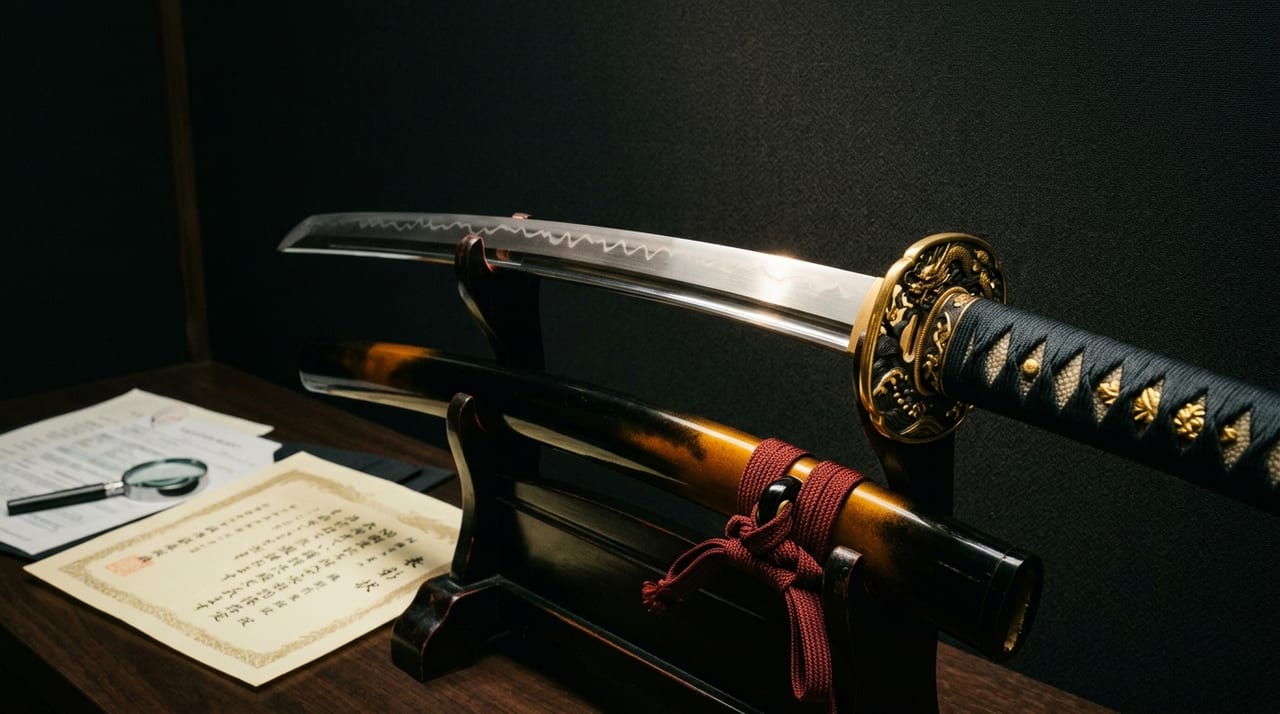
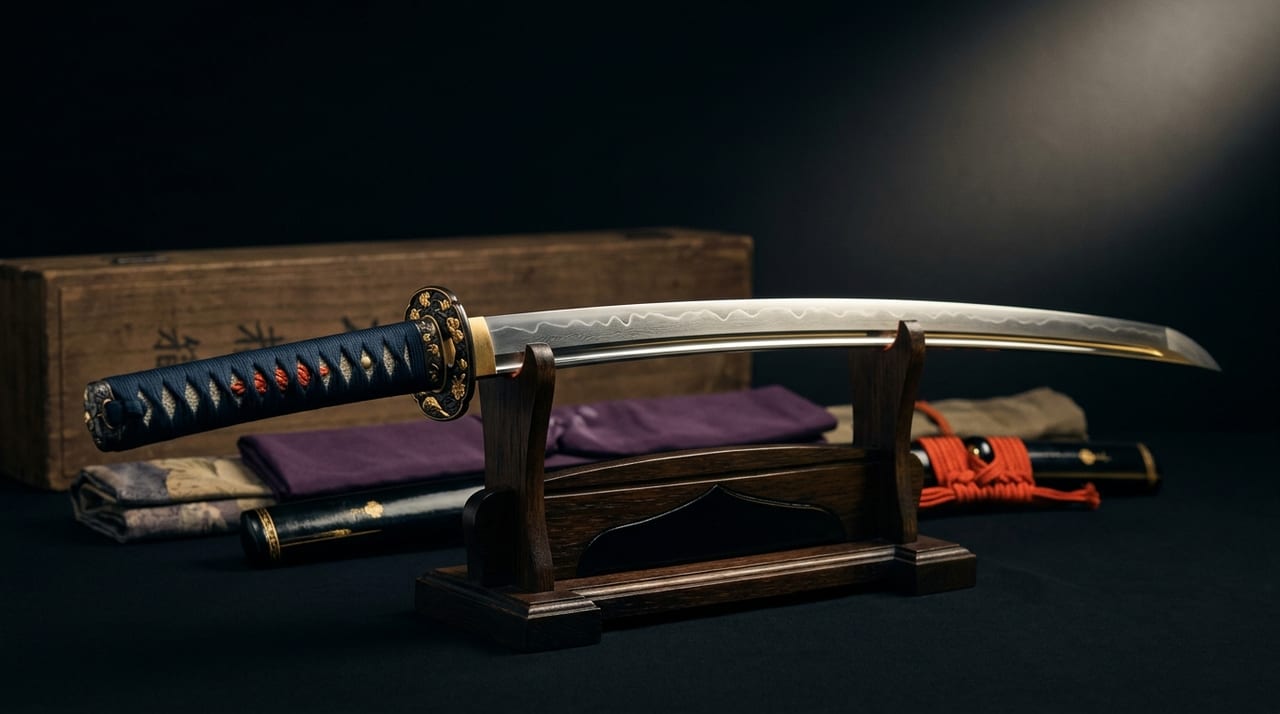
- ④ Completeness of Accessories: "Complete" pieces with intact shirasaya, saya, tsuka, habaki, certificate, hakogaki, and provenance documentation (records from former owners) are evaluated higher than pieces with separated components.
Price Differences Between Domestic and International Markets—Where Should You Buy or Sell?
The price difference between domestic and international markets for Japanese swords cannot be ignored. As a general trend, high-quality classical swords tend to receive higher valuations in Western markets, and successful bid prices at Christie's or Bonhams sometimes exceed those of domestic auctions. This is because Western collectors place strong premiums on "rarity" and "the narrative quality of provenance."
Conversely, works by swordsmiths from the Late Shinto period (Bakumatsu), Showa-period blades, and uchi-gatana with practical koshirae tend to receive more appropriate valuations from domestic specialists (sword dealers and collectors). Overseas, there is a risk of undervaluation for swords from the late Edo period onward due to difficulty in distinguishing period and form characteristics.
Practical guidance for those considering sale is as follows.
| Item Condition | Recommended Sales Venue |
|---|---|
| Estimated price 2 million yen or higher; has certificate; classical sword or earlier | International auction appraisal is a viable option |
| 1 million yen or lower; Shinto period or later; few accessories | It is more cost-effective (in terms of shipping, customs, and fees) to sell quickly through domestic sword dealers or auction houses |
Conclusion—Understanding the Market Is the Starting Point for Collecting
Japanese sword auction prices fluctuate significantly based on certificate rank, swordsmith reputation, condition, provenance, and completeness of accessories.
| Auction House | Successful Bid Price Range |
|---|---|
| Bonhams | 1-100 million yen |
| Christie's | 5 million to tens of millions of yen |
| Osaka Fine Art Club | 2 million to over 50 million yen |
Price ranges are widely distributed in this manner, and the choice of auction house directly determines the final successful bid price.
When considering the sale of collected pieces, requesting appraisals from multiple institutions is recommended, and when purchasing, it is important to develop market sense by referring to historical successful bid price databases (each company's auction results pages on their websites). Japanese swords are unique collectibles with the dual nature of "fine art" and "martial equipment," and accurately understanding market prices is the first step in raising the quality of one's collection.