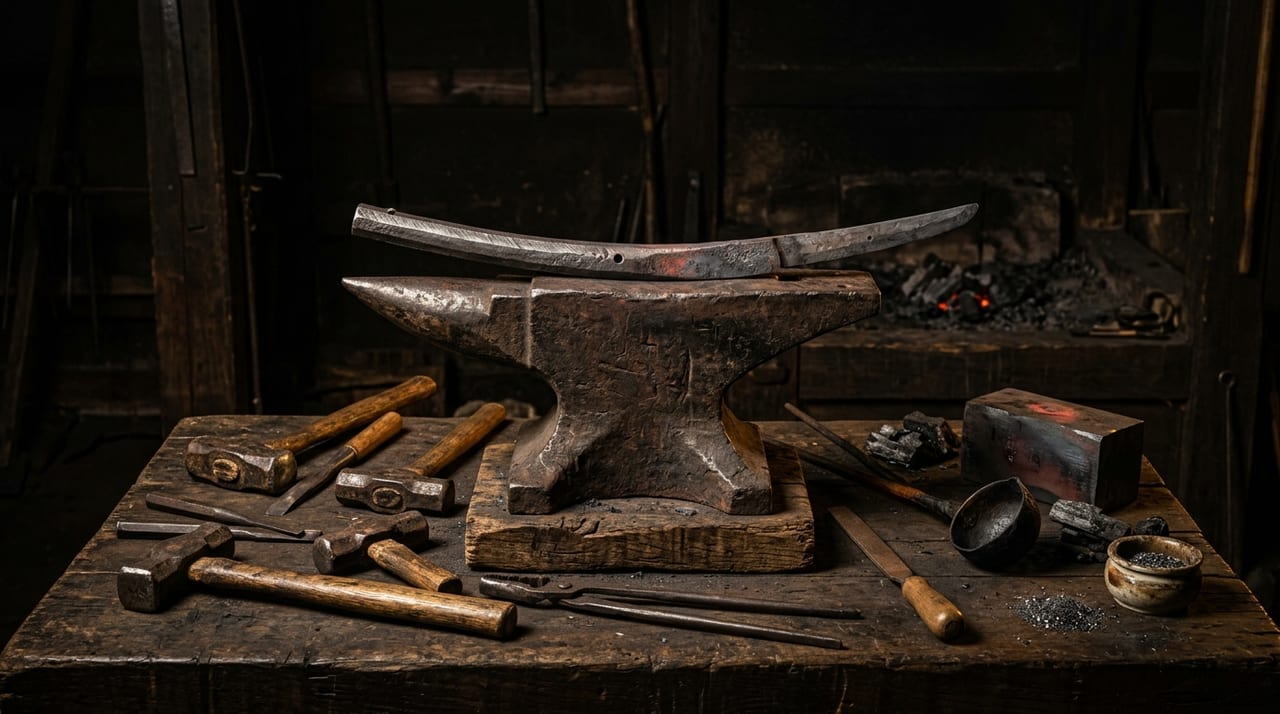
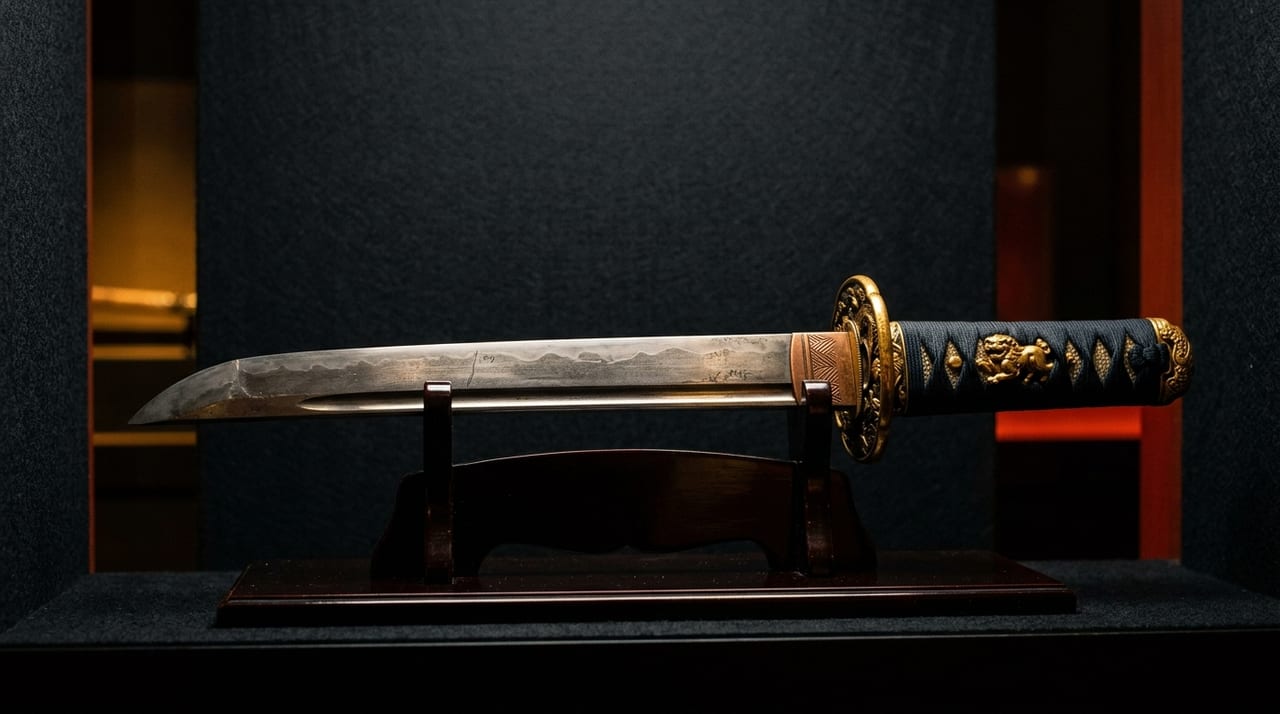
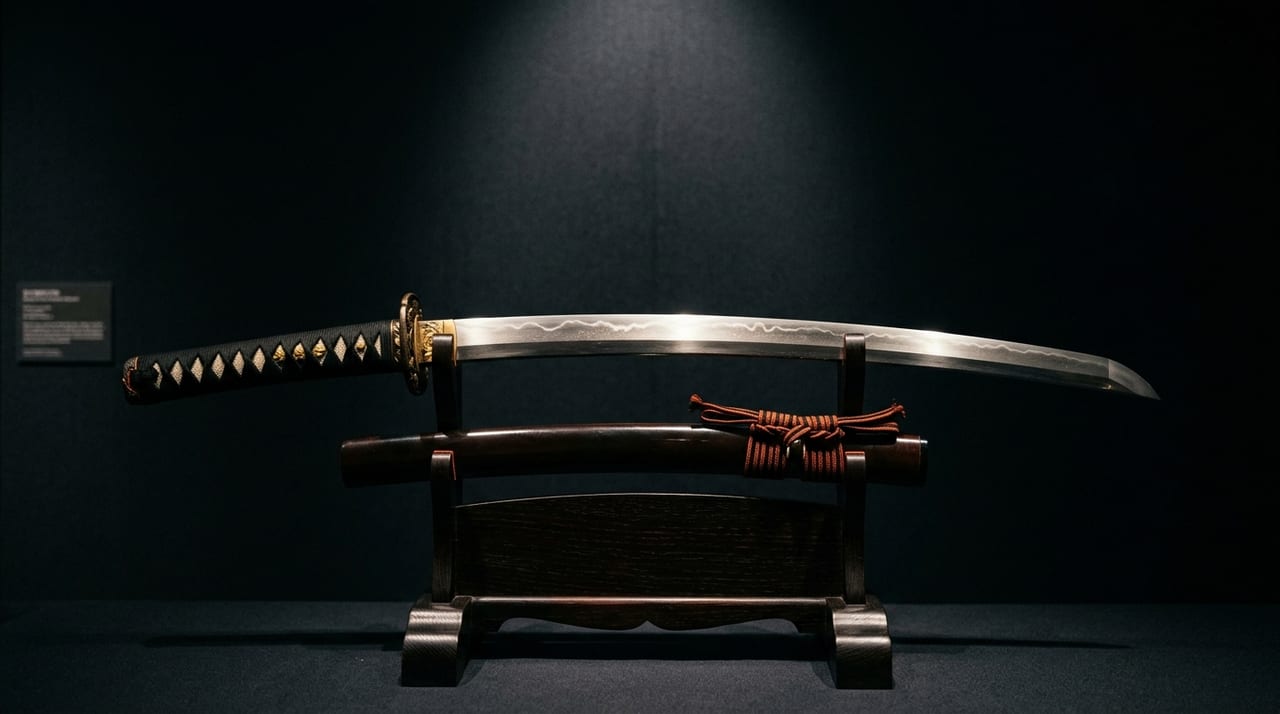
The Morioka Domain and Swords in the Bakumatsu Period — Sword Production in a Provincial Domain as Seen through a Single Sword by Retained Kaji Miyakawa Hidekazu
 * Image is for illustrative purposes only.
Table of Contents
During the Edo period, swords were sometimes made through a system in which the shogunate and domains employed tōkō (swordsmiths) to produce them. The Morioka domain was one such region that maintained its own retained kaji (smiths). Using as our guide a sword by Miyakawa Hidekazu that survives in the records of the Iwate Prefectural Museum, we look at sword production in the Morioka domain during the Bakumatsu period.
Miyakawa Hidekazu, Retained Kaji
The digital archive of the Iwate Prefectural Museum makes available records of a sword attributed to Miyakawa Hidekazu (https://jmapps.ne.jp/iwtkhk/det.html?data_id=16890). The maker, Miyakawa Hidekazu, was from present-day Hanamaki city, and his common name was Shōemon. Toward the end of the Edo period he became a retained kaji of the Morioka domain, and together with his son Miyakawa Morikazu left behind many works.
A Sword from Keiō 3
The mei (signature) on the record reads "I mochitetsu Morioka-jū Miyakawa Gen Hidekazu saku, the 8th month of Keiō 3," and the nagasa (blade length) is 69.5 centimeters. It was made in Keiō 3 (1867), and the commentary in the record states that this falls within the most active period of the maker's career.
In the record's heading the maker's name is given as "Gen Hidekazu," while the commentary writes it simply as "Hidekazu," and the two are inconsistent. The meaning of the term "i mochitetsu" in the mei also cannot be confirmed from this record alone.
The Difficulty of Researching the Morioka Domain's Tōkō
From this record it is not possible to confirm the circumstances under which the Miyakawa family came to be retained by the Morioka domain, nor whether there were tōkō making swords in the domain during the early Edo period. No records describing Miyakawa's style — the jigane (steel of the blade surface) and hamon (temper line) — have been found here either.
An April 2019 article in the Iwate Nichinichi Shimbun introduced a special exhibition at the Kitakami City Museum titled "The Aida Collection and Swords of the Border." Its opening states that the exhibition centered on swords made by the retained tōkō of the Morioka and Sendai domains, which bordered each other during the Edo period, displaying approximately 20 swords (https://www.iwanichi.co.jp/2019/04/10/309461/).
Swords Passed Down in the Domain
The Morioka Nanbu family also has a tachi handed down bearing the mei of Sadaie of Bizen Osafune. The mei reads "Bishū Osafune Sadaie, the 2nd month of Ōei 28," with a date of Ōei 28 (1421). It is a designated cultural property of Morioka city and is not the work of a domain tōkō (https://online.bunka.go.jp/heritages/detail/216987). This tells us that among the swords handed down within a domain, there were also swords not produced within that domain.
Further Reading
How the handling of swords and the patronage of tōkō differed from domain to domain can be found in the article comparing sword culture across domains and the patronage system for tōkō in the Satsuma domain.
View Works Online
The TOUKENZA online catalog lets you browse listed swords and proceed to purchase. If you have questions about listings or purchases, please contact us via the inquiry form.