Modern Swordsmith Certification: Understanding Mukansa, Living National Treasures, and Other Recognition Systems
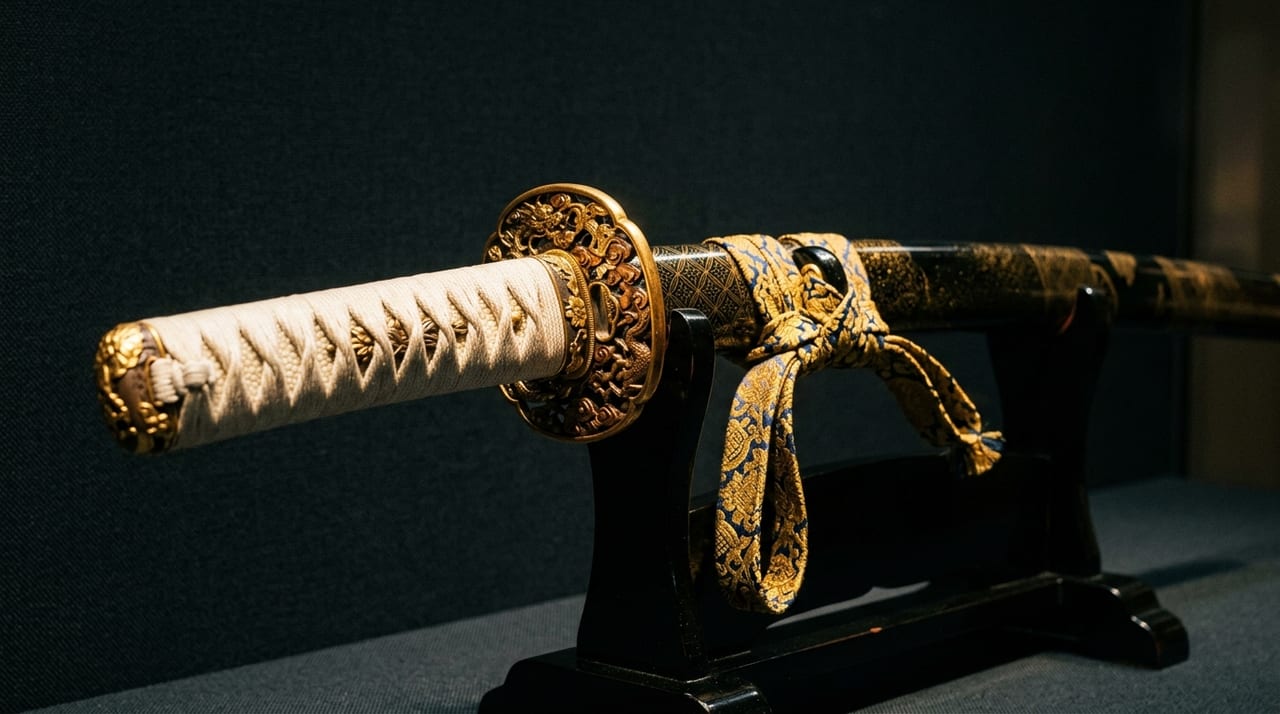 * Image is for illustrative purposes only.
Table of Contents
Multiple Criteria for Evaluating Contemporary Sword Makers
When evaluating contemporary sword makers (tosho), "which certifications they hold" serves as an important reference indicator. However, multiple systems exist, each operated by different organizations under distinct evaluation axes and purposes, making this a field prone to confusion. This article organizes the major certification systems that sword collectors should understand, explaining their significance and market implications.
The New Swords of Great Craftsmanship Exhibition and Mukansha Qualification
The "New Swords of Great Craftsmanship Exhibition (Shinsakumeito-ten)" is the sword-making open call exhibition that the Public Interest Incorporated Foundation Japan Art Sword Preservation Society (NBTHK) has organized; today it is held as the "Gendai Tōshoku-ten" (Contemporary Sword Craftsmen Exhibition) (NBTHK, "Gendai Tōshoku-ten (Sword-Making Division)"). Since its founding in 1965 (Showa 40), when it took over from the earlier sword-making technique exhibition (Tokyo National Research Institute for Cultural Properties, "Sumitani Masamine"; "Ōsumi Toshihira"), it has been positioned as the gateway for the modern sword world.
The Examination System
Entries are divided into the "tachi, katana, wakizashi, naginata and yari" division and the "tantō and ken" division; in both, works not made with traditional techniques and materials are excluded from judging. Non-members of the society may also enter (NBTHK, "Gendai Tōshoku-ten (Sword-Making Division)").
Types of awards: The results list for the sword-making division in fiscal 2026 includes the Takamatsunomiya Memorial Prize, Kunzan Prize, Kanzan Prize, NBTHK Chairman's Prize, Excellence Prize, Effort Prize, Newcomer Prize and Selection (2026 Gendai Tōshoku-ten, Sword-Making Division: List of Mukansa Entries and Results). The entry guidelines set prize money for the Special Prize, Excellence Prize and Effort Prize. At the former Shinsaku Meitō-ten, the Masamune Prize was the highest award for all entrants, including mukansa smiths (Tokyo National Research Institute for Cultural Properties, "Amata Akitsugu").
What is Mukansha?
"Mukansha" literally means "without examination" – a qualification allowing entry without being subject to evaluation. Sword makers who have accumulated awards have become mukansa; Ōsumi Toshihira, for example, became mukansa in 1972 after repeatedly winning prizes including the special Honorary Chairman's Prize (Tokyo National Research Institute for Cultural Properties, "Ōsumi Toshihira"). Works entered as mukansa are not excluded from awards: Amata Akitsugu entered as mukansa in 1977 and received the Masamune Prize, the highest award for all entrants including mukansa smiths (Tokyo National Research Institute for Cultural Properties, "Amata Akitsugu").
Living National Treasure – The Highest Honor for Sword Makers
The "Holder of Important Intangible Cultural Property" – commonly called "Living National Treasure (ningen-kokuhou)" – is a system of certification by the Minister of Education, Culture, Sports, Science and Technology under the Cultural Properties Protection Law (Cultural Properties Protection Law (e-Gov Law Search), Article 71). It honors individuals with exceptional skill in Japan's traditional crafts and performing arts at the national level. Alongside ceramics, dyeing, textiles, and other craft disciplines, sword smithing is included as a recognized field.
Among the swordsmiths certified by the state as holders of the Important Intangible Cultural Property "Nihontō", the five below are those whose year of certification can be confirmed in the obituaries of the Nihon Bijutsu Nenkan published by the Tokyo National Research Institute for Cultural Properties ("Miyairi Yukihira", "Gassan Teiichi", "Sumitani Masamine", "Amata Akitsugu", "Ōsumi Toshihira").
- Miyairi Yukihira (1913–1977): Born in Sakaki, Nagano Prefecture. His style is described as a bold and solid Sōshū-den, and in 1963 he became the second swordsmith certified as a holder
- Gassan Teiichi (1907–1995): Of the main line of the Gassan family of Osaka. He carried on the forging methods of the five traditions and the Gassan family's own surface pattern "ayasugi-den", and was certified in 1971
- Sumitani Masamine (1921–1998): Excelled at the Kamakura-period Bizen-den forging method and was certified in 1981
- Amata Akitsugu (1927–2013): Born in Niigata Prefecture. Known for forged surfaces from his own iron smelting and for Sōshū-den ōmidare and Yamashiro-den suguha hamon; certified in 1997
- Ōsumi Toshihira (1932–2009): Known for suguha that took the late-Kamakura Rai school and the Bitchū Aoe school as its ideals; certified in 1997
When all holders have died, the designation of an Important Intangible Cultural Property is deemed to have been lifted (Act on Protection of Cultural Properties (e-Gov Law Search), Article 72, Paragraph 4). A search for "Nihontō" in the Agency for Cultural Affairs' Database of National Cultural Properties shows no designation of "Nihontō" as an Important Intangible Cultural Property; the sword-related one that appears is "Tōken Kenma" (sword polishing; holder: Hon'ami Kōshū) (Agency for Cultural Affairs, "Database of National Cultural Properties": Tōken Kenma). The history of the system and the certified swordsmiths are covered in detail in Living National Treasure Swordsmiths.
NBTHK (Japan Art Sword Preservation Society) Sword Appraisal
The Public Interest Incorporated Foundation Japan Art Sword Preservation Society (NBTHK) appraises swords at four levels: Hozon, Tokubetsu Hozon, Jūyō and Tokubetsu Jūyō. Only swords that have passed the Tokubetsu Hozon examination can be submitted for the Jūyō examination, and only those that have passed the Jūyō examination can be submitted for the Tokubetsu Jūyō examination (NBTHK, "Examination Process"). Under the examination criteria, works by living artists are not eligible for examination (NBTHK, "Examination Criteria under Article 17(1) of the Examination Regulations").
Significance of Each Evaluation Category:
Hozon Tōken and Tokubetsu Hozon Tōken: Hozon Tōken covers correctly signed works of every period and school up to the Edo period, or unsigned works whose period, province and lineage can be identified; works by swordsmiths of the Meiji period or later are limited to signed pieces of good workmanship. Tokubetsu Hozon Tōken covers Hozon Tōken of even better workmanship and in good condition.
Jūyō Tōken (Important Sword): Tokubetsu Hozon Tōken of particularly excellent workmanship and in good condition, judged to be equivalent to a nationally certified Important Art Object (jūyō bijutsuhin). Works from the Muromachi period onward must be signed, and works from the Edo period onward are, in principle, signed blades with an unaltered tang (ubu nakago).
Tokubetsu Jūyō Tōken (Especially Important Sword): Jūyō Tōken of still more outstanding workmanship, in excellent condition and of extremely high documentary value, judged to be equal to a nationally certified Important Art Object or of a value comparable to a nationally designated Important Cultural Property (jūyō bunkazai).
This appraisal is a separate system from mukansa status at the Gendai Tōshoku-ten and from recognition as a Living National Treasure. Works by living swordsmiths are not eligible for this examination.
The Relationship Between Certification and Market Price
The price of a contemporary sword varies widely with the quality and condition of the individual blade as well as factors such as the presence or absence of koshirae (mounting), polish quality, clarity of the signature (mei), and provenance (who previously owned it). It is not determined by certifications or award history alone, and because we could not confirm price-range data that can be cited, this article does not include a price table. Certification systems are merely the foundation of evaluation.
The Importance of Connoisseurship Beyond Certification Systems
Certification systems are important objective indicators of a sword maker's skill and reputation, yet relying solely on institutional frameworks for purchase decisions carries risks. Among young tosho without mukansha qualifications, there are not few promising talents expected to gain high evaluation in the future. Conversely, it is not uncommon for works by titled tosho to vary in quality.
What matters is using certification systems as a "filter" while also building the habit of examining actual works in hand, confirming the quality of jigane, the variation of the hamon, and the proportions of the sugata with your own eyes. Establishing lasting relationships with trusted sword dealers and scholars is also an indispensable element in long-term collection building.
Conclusion – Understanding Certification Systems Deepens Your Collection
Understanding contemporary sword maker certification systems systematically is essential for a Japanese sword collector to accurately grasp "why this sword carries this price" and "why this maker is valued." The New Swords Exhibition, mukansha, Living National Treasure, and NBTHK evaluation systems each illuminate the value of makers and works from different perspectives. By combining multiple evaluation axes to judge comprehensively, a collector's eye develops that is not swayed by mere "famous names." Understanding these systems is foundational cultural knowledge for enriching dialogue with Japanese swords.