Military Swords in Meiji to Showa Japan: The Conflict Between Industrial Production and Traditional Swordsmiths
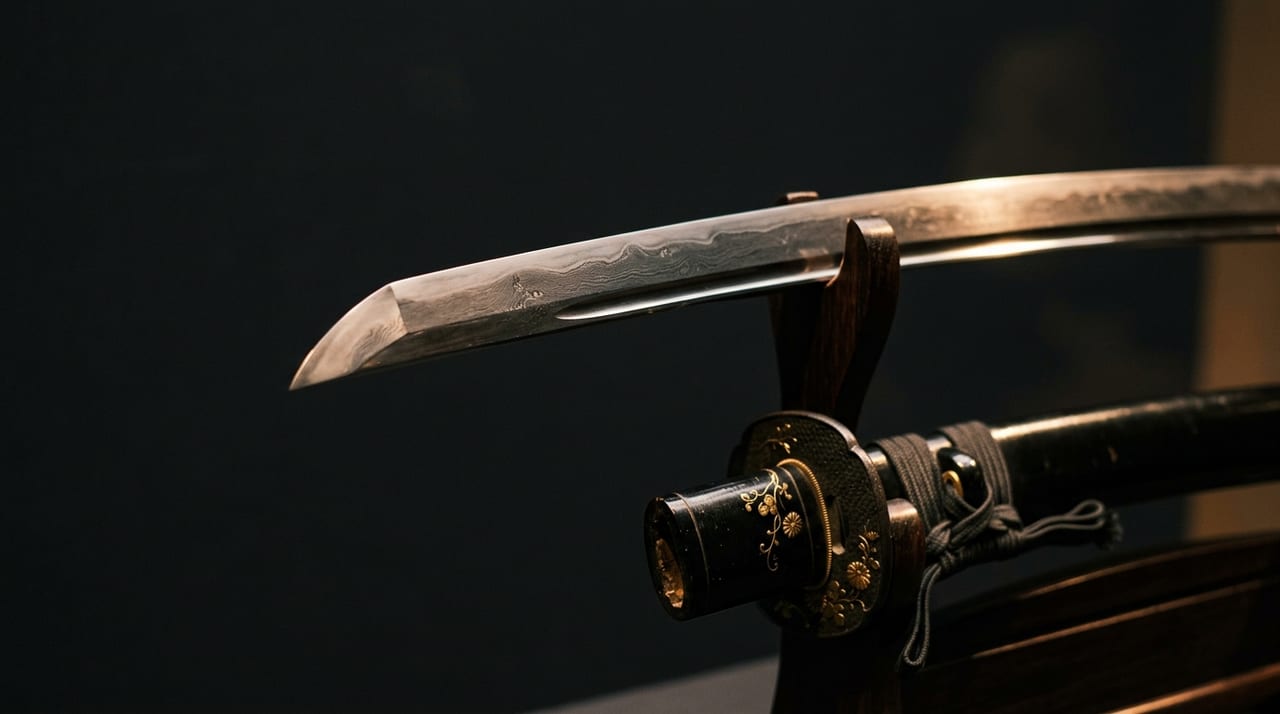 * Image is for illustrative purposes only.
Table of Contents
Military Sword Demand That Persisted After the Haitorei Edict
The Haitorei Edict of 1876 (Meiji 9) prohibited commoners from carrying swords, but exceptions were made for military officers and police. Even as the Imperial Army and Navy modernized, the sword (military sword) continued to be maintained as a symbolic piece of officer equipment. This was not merely a custom, but also an institutional mechanism that visualized officer authority and spirituality.
The implementation of the Haitorei Edict delivered a devastating blow to sword smiths in towns. Records remain showing that sword smiths, who numbered in the thousands throughout the country during the Edo period, declined to only a few hundred by the mid-Meiji period. However, military demand prevented the complete annihilation of the sword industry, and ironically, it was "military sword demand" that became one factor allowing traditional sword smiths to survive through the Meiji and Taisho periods.
From Western-Style Military Swords to the Kyujuyon-shiki Type—The Background of Stylistic Change
The Meiji-era military imitated French military systems and adopted European-style sabre-type military swords called sentou. The blades were Western in style, with straight or gentle curves, and the wearing method was also Western. The Navy similarly adopted Western-style short swords and military swords modeled on the British Navy.
The turning point came from the actual combat experience of the First Sino-Japanese War (1894–1895) and the Russo-Japanese War (1904–1905). During close combat in Manchuria and the Korean Peninsula, voices from the field grew louder arguing that "curved Japanese sword forms were superior for cutting strikes." Combined with a rise in nationalism, there also emerged momentum to restore the Japanese sword form as a "uniquely Japanese weapon" to military swords.
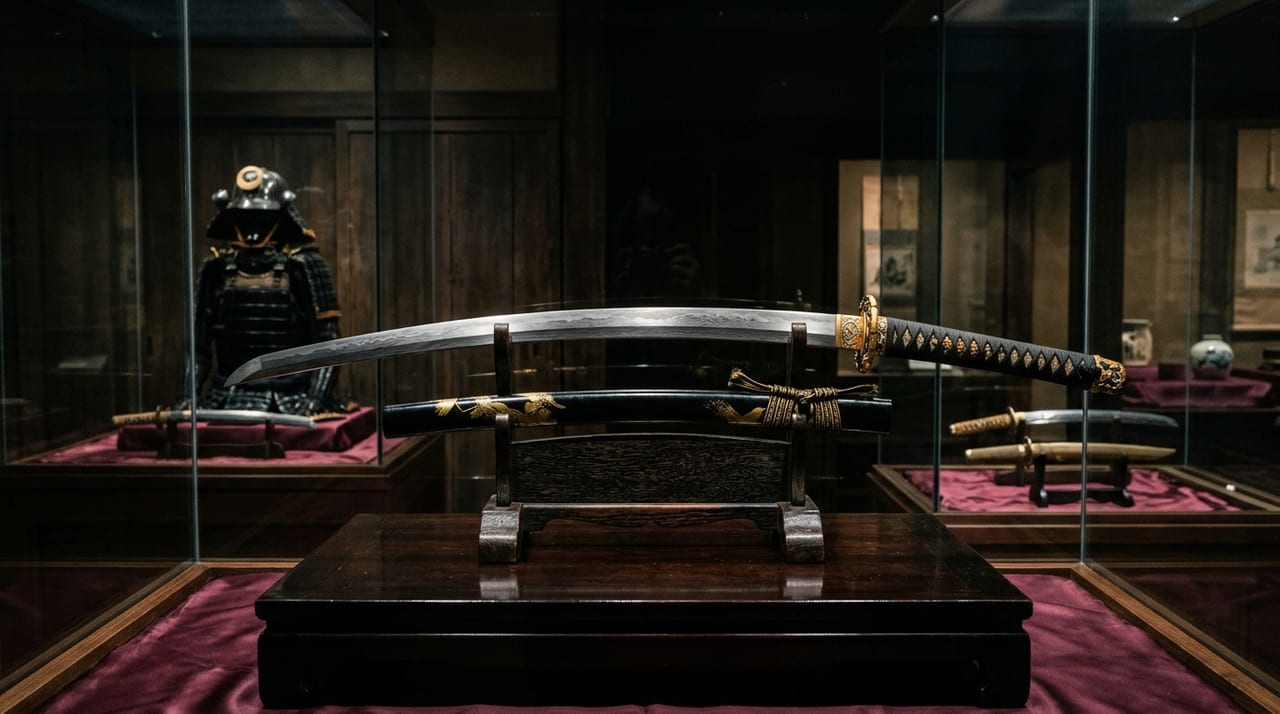
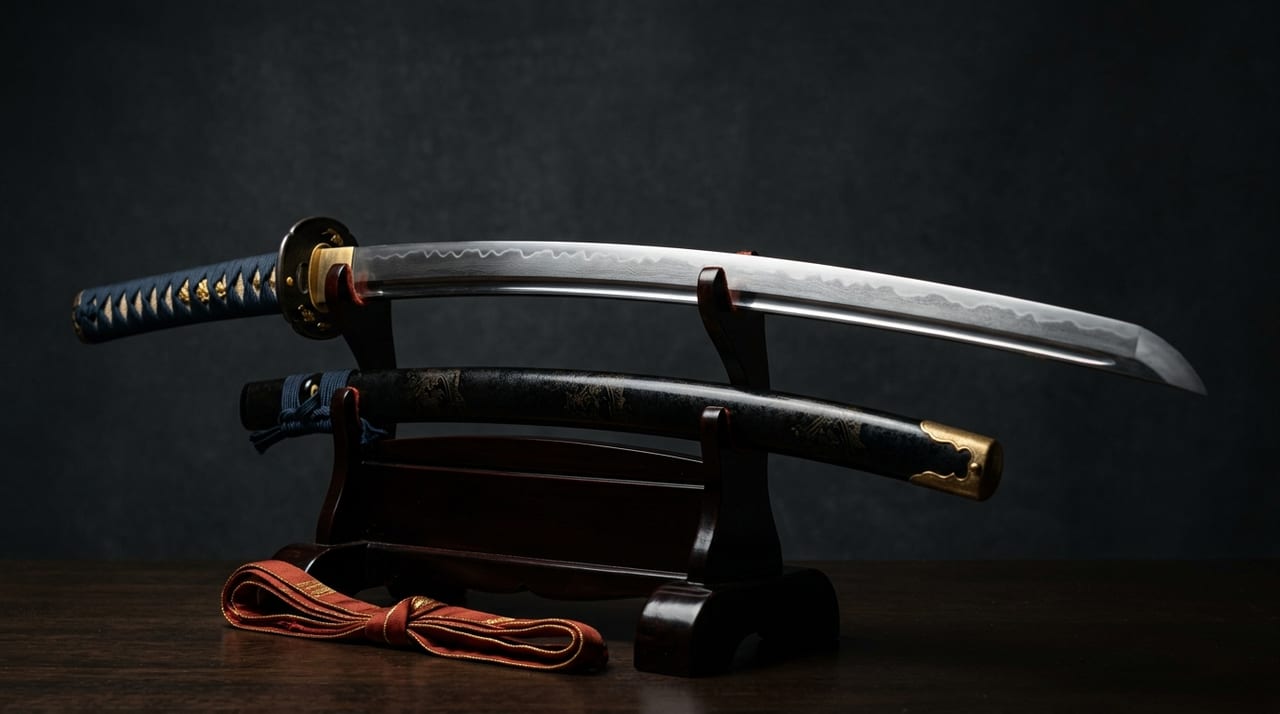
Against this background, the 94th Year Type Military Sword (Kyujuyon-shiki military sword) was formally adopted by the Army in 1934 (Showa 9). While adopting a Japanese sword form mimicking tachi fittings in appearance, the blade was designed with standardized factory production in mind, embodying from the start a character of compromise between tradition and modern industry.
The Reality of Mass-Produced Military Swords—Materials and Methods of "Showa Swords"
During the Pacific War period (1941–1945), all officers were required to carry military swords, and demand surged dramatically. Hundreds of thousands of military swords, it is said, were manufactured in a short time by the combined Army and Navy, but it was utterly impossible for traditional sword smiths to support this.
The military swords mass-produced in this way became known colloquially as showa-to (Showa swords). Their methods and materials were fundamentally different from traditional Japanese swords.
| Item | Traditional Japanese Sword | Showa Sword (Mass-Produced Military Sword) |
|---|---|---|
| Blade Material | tamahagane | Western rolled steel, electric furnace steel, special military sword steel (colloquially "muku steel") |
| Forging and Manufacturing Process | Folded forging, hammer work by hand of sword smiths | Primarily machine rough-grinding and polishing |
| Expression of jihada and hamon | "jigane grain" (fibrous patterns in the steel base) and intricate hamon | Omitted and simplified |
| Fitting Hardware | Hardware with metal carving | Cast zinc alloy or iron |
| Appreciation Elements | jihada activity, hamon variation, beauty of forged skin | Practical item lacking these |
While these were easily obtained in large quantities, they were materials incompatible with folded forging, which creates the complex carbon distribution unique to Japanese swords. As a result, most showa swords, while maintaining the form of a Japanese sword, became practical items lacking in appreciation elements as works of art—the jihada activity, the variation of hamon, the beauty of forged skin.
In the modern Japanese sword world, it is established consensus that "they are classified as swords, but their evaluation as works of art is limited," and in NBTHK (the Japan Sword and Art Preservation Society) appraisals, showa swords are often treated as outside the normal scope of evaluation.
The Choice of Traditional Sword Smiths—The Japanese Sword Forging Society and "Hand-Forged Military Swords"
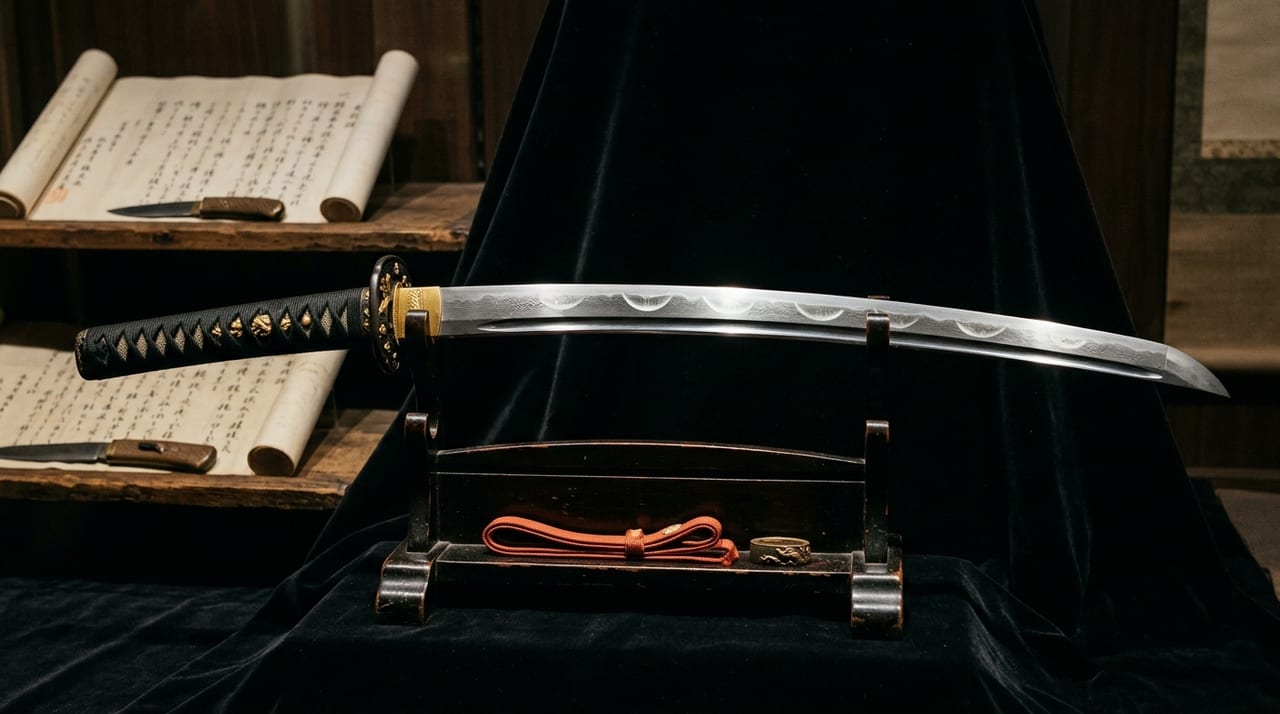
On the other hand, traditional sword smiths who continued to preserve their craft after the Haitorei Edict were also deeply involved in military sword manufacturing. The Japanese Sword Forging Society (Nihon Katana Tanren-sho), established in 1933 (Showa 8) within the grounds of Yasukuni Shrine, was its symbolic embodiment. Organized under the initiative of Army Minister Araki Sadao and developed under state direction, this organization included leading master sword smiths of the era such as Miyairi Akihira and Gassan Sadakazu II, who created military swords using traditional methods of tamahagane and folded forging. These are colloquially called "hand-forged military swords" or "traditionally-forged military swords," and possess hamon and jihada quality equivalent to normal works of art swords.
However, this movement brought complex conflict to the sword smiths. The sword is originally a craft object created by the sword smith with spirit poured into each individual blade. It is said there was not insignificant resistance to supplying them in mass production according to military demand. The contradiction of being incorporated into militarism under the pretense of "preserving tradition"—this conflict is an inescapable historical issue when discussing postwar sword culture.
In modern times, hand-forged military swords are often evaluated separately from showa swords, and those with clear signatures, era, and provenance become subjects of NBTHK appraisal, with award-winning examples also existing.
Postwar Loss—Confiscation by GHQ and Overseas Dispersal
After Japan's defeat in 1945, GHQ (Supreme Commander of the Allied Powers) ordered the confiscation of all swords as part of disarmament. The targets included not only military swords but all bladed weapons—swords, naginata, spears, and such—possessed by ordinary citizens, carried out under the policy that "swords are weapons and their possession is not permitted."
In this process, large numbers of military swords and works of art swords were discarded and destroyed. Some of the confiscated swords were taken back by American servicemen as "war trophies" to their home country, and many are still held in private collections and museums in the United States and Europe. There are cases where famous blades made before the Edo period were remodeled with military sword fittings and removed, and the scale of lost cultural assets is incalculable.
Moved by concern over this critical situation, sword enthusiasts and sword smiths took the lead in establishing the predecessor organization of the Japan Sword and Art Preservation Society in 1948 (Showa 23). This movement, which redefined the sword not as a "weapon" but as an "artwork and cultural property" and appealed to GHQ for preservation, can be said to be the origin of modern sword appreciation culture. In recent years, requests for return to Japan from descendants of returning servicemen have increased, and cases where dozens of swords have actually returned home have been recorded. Such efforts continue to the present day in 2026.
The Legacy of Military Swords—In the Space Between "Artwork" and "Weapon"
The history of military swords continues to pose fundamental questions about the Japanese sword. Is the sword a weapon, an artwork, or a symbol of spirit?
The military sword industry from Meiji through Showa was a product of a unique era when traditional techniques and modern industry clashed intensely. Mass-produced showa swords scattered across battlefields as "practical items," while hand-forged military swords continue to be subjects of appraisal and collection as the "inheritance of traditional technique." Under the same name "military sword," factory mass-produced items and the single blades of master smiths coexisted—this duality lies at the heart of modern Japanese sword history.
Collecting and researching military swords in the modern era is not merely tracing the provenance of individual swords, but also an act of questioning the path modern Japan chose and what it lost. Today's discussions surrounding appraisal, preservation, and repatriation quietly continue along the extension of that question.