An Introduction to Sword Collecting — The Art of Building a Collection You Will Not Regret in Ten Years
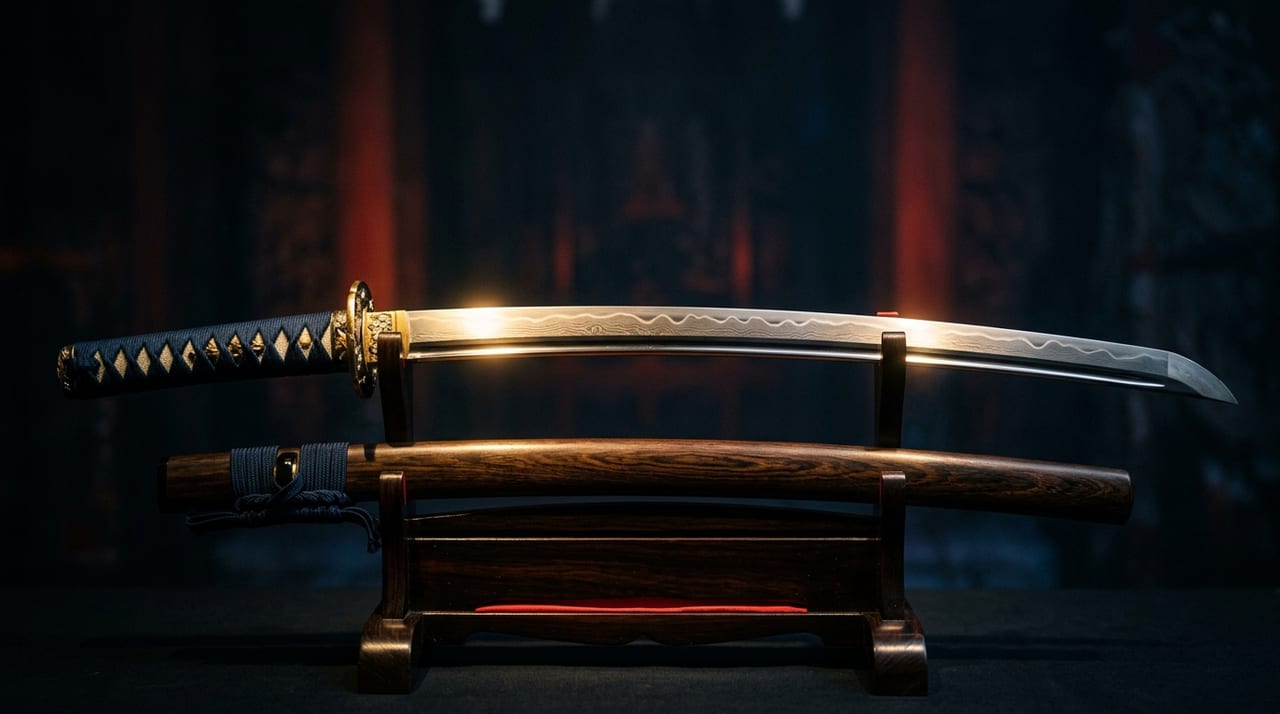 * Image is for illustrative purposes only.
Table of Contents
A Japanese sword collection, pursued in a planned and strategic manner, can grow into a body of works with mature value over many years. Building a collection that you will be truly satisfied with ten or twenty years from now requires careful policy and continuous learning from the moment you acquire your very first sword. This article presents practical guidance useful to every collector, from beginner to intermediate.
Theme Setting — Building a Coherent Collection
The first question in sword collecting is setting a theme — deciding what to collect. Examples of themes include:
- "Focus exclusively on tachi of the Bizen-den tradition"
- "Specialize in tantō"
- "Pursue tōkō (swordsmiths) from the Bakumatsu period through the early Meiji era"
- "Collect tōsōgu (sword fittings) by Higo metalworkers"
Defining a theme that matches your interests and the scope of your knowledge gives your collecting a clear direction.
The benefits of having a theme go beyond mere coherence. Individual purchasing decisions become easier, and you gain the ability to make swift and accurate judgments about pieces you encounter on the market. Furthermore, by delving deeply into a specific field, you naturally absorb the characteristics of swordsmith lineages, jigane (steel of the blade surface), and hamon (temper line), and your eye for distinguishing forgeries and overvalued pieces is sharpened. A collection with a clear theme also has the potential to carry high scholarly value over the long term.
Detailed Records and Documentation — The Foundation of Value Management
Keeping detailed records of every sword you acquire is a fundamental duty for any collector. Items that should be recorded include:
- Date of purchase
- Purchase price
- Issuer and certificate number of the kanteisho (appraisal certificate)
- Condition of the sword (location and extent of chips and rust)
- Maintenance history (date of commission to a togishi (polisher) and cost)
Photographic records are equally essential. Ideally, you should photograph the mei (signature), hamon (temper line), and bōshi (temper line in the point) in high resolution, and save multiple detail images of the nakago (tang) and jigane (steel of the blade surface) in addition to full-length views. These records carry decisive importance when confirming appraised value in later years or filing insurance claims. Backing up your digitized files in multiple locations ensures that the record of your collection survives in the event of fire or theft. Maintaining detailed records also provides material for objectively reviewing your collecting history and contributes to more accurate long-term investment decisions.
Building a Network of Trustworthy Advisors
The world of swords is one in which trust and personal connections determine the success or failure of collecting. Building ongoing relationships with trustworthy sword dealers and multiple appraisers forms the foundation for long-term collecting success. Having ties to high-quality dealers and appraisers makes it easier to learn about fine pieces before they are offered to the wider market.
Having an advisor to consult about your collecting policy also prevents impulse purchases and allows you to exercise judgment from a long-term perspective. Attending exhibitions and sale events regularly is equally important. Your eye sharpens steadily as you handle a wide variety of swords firsthand and accumulate comparative observations. Cultivating relationships of trust takes years, but the accumulated effort will surely bear rich fruit.
Qualitative Advantage — Optimizing Investment Efficiency
"Quality over quantity" — this principle is especially important in sword collecting. Rather than acquiring ten inexpensive swords without kanteisho (appraisal certificates), carefully selecting a single sword certified at the Jūyō Tōken level or above by NBTHK (Society for the Preservation of Japanese Art Swords) will greatly improve the overall value of your collection over the long term.
Insisting on certification rank is also essential. The higher the grade in the following sequence, the more stable the market valuation and the lower the risk of value decline.
- Hozon Tōken
- Tokubetsu Hozon Tōken
- Jūyō Tōken
- Tokubetsu Jūyō Tōken
Even if the initial investment is somewhat higher, choosing swords with superior certification ranks will let you feel, in later years, that you made a wise purchase at the time. Furthermore, swords of high artistic accomplishment are more likely to attract the attention of researchers, and increased opportunities for inclusion in catalogues and academic papers raise both their monetary and cultural value.
Setting Up a Proper Storage Environment — A Prerequisite for Asset Protection
Establishing an appropriate storage environment before purchasing is a collector's responsibility. Japanese swords are sensitive to sudden changes in humidity and temperature; placed in an unsuitable environment, they can develop rust within a few years, causing irreparable damage. Ideal storage conditions are humidity maintained at 45–55% throughout the year in an environment with gradual temperature changes. For home storage, the use of sword boxes or dedicated cases equipped with humidity and temperature control is recommended.
Preparation against theft and fire is also indispensable. In addition to installing a security system, if maintaining an appropriate storage environment at home is difficult, making use of a specialist storage service (such as a safe-deposit box at a financial institution) is an option. It is important to be covered against any potential damage not only through fire insurance but also through personal property insurance specialized for swords. Setting up a proper storage environment requires an initial outlay, but please regard it as an essential investment in protecting your collection.
Continuous Learning and the Growth of Knowledge
Continuously deepening your understanding of tōkō (swordsmiths), schools, and historical background throughout the collecting process directly improves your discernment as a collector. It is important to build up knowledge systematically through careful reading of specialist books and catalogues, firsthand observation of actual swords at exhibitions, and exchanges with researchers. The knowledge accumulated in this way comes to fruition as the power to make immediate and appropriate judgments when you encounter a fine piece on the market.