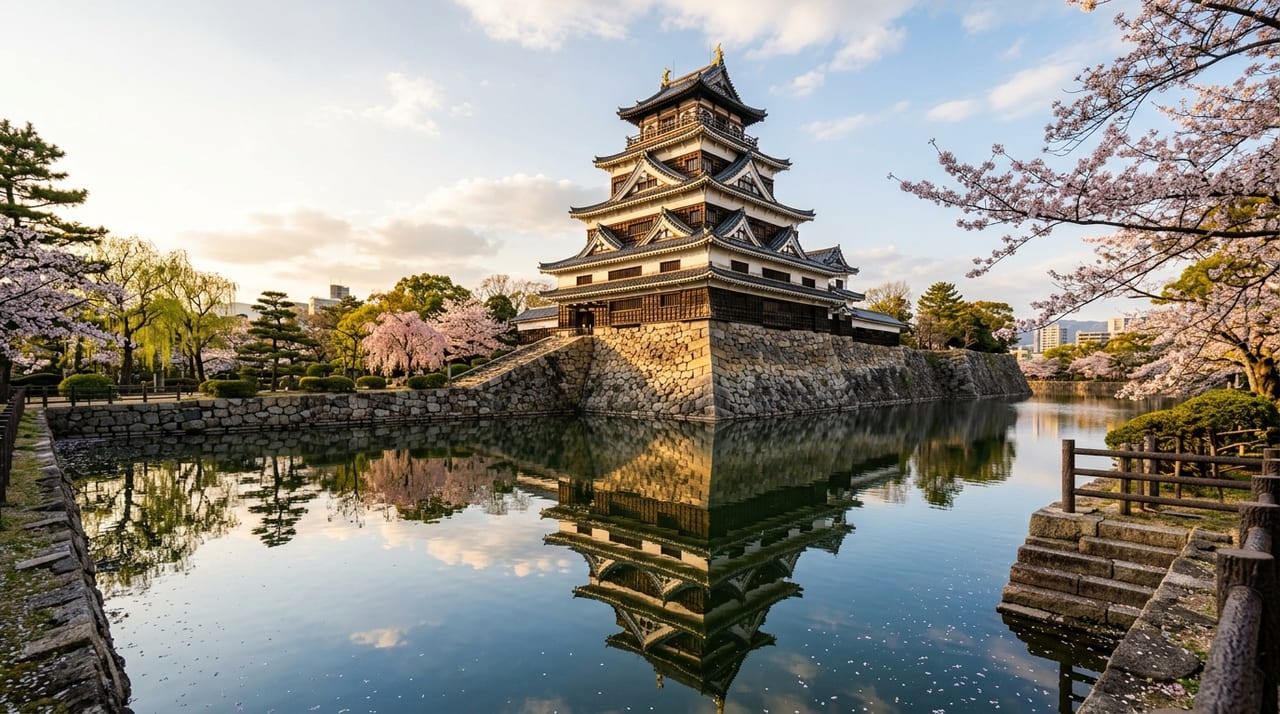
 * Bild nur zu Illustrationszwecken.
Saeki-Schloss
佐伯城
Saeki-Schloss ist eine historische Burg in der Region Kyūshū (Edo-Zeit (Baubeginn 1602; Fertigstellung 1606); aufgelöst 1871). Burgherr: Mōri Takamasa (erster Daimyō und Erbauer); nachfolgende Generationen des Mōri-Clans als Daimyō der Saeki-Domäne.
Überblick
Gründung
Der Bau des Saeki-Schlosses begann 1602, nach der Schlacht von Sekigahara, unter Mōri Takamasa, der der erste Daimyō der Saeki-Domäne wurde; das Schloss wurde 1606 nach sechsjähriger Arbeit fertiggestellt. Die Anlage wurde von Ichida Sukesada, einem ehemaligen Gefolgsmann von Oda Nobunaga, entworfen, und die Steinarbeiten sollen von Hayama Kanzaemon überwacht worden sein, der auch am Bau des Himeji-Schlosses beteiligt war. Weil seine Silhouette einem fliegenden Kranich ähnelt, ist es auch unter dem alternativen Namen "Tsuruya-jō" (Kranich-Haus-Schloss) bekannt.
Abfolge der Daimyō
Von seiner Erbauung bis zur Meiji-Restauration herrschte der Mōri-Clan kontinuierlich als Daimyō der Saeki-Domäne. 1637 wurde unter dem dritten Daimyō, Mōri Takahisa, das San-no-maru (drittes Bollwerk) am Fuße des Berges erweitert, und die Residenz des Daimyō wurde vom Berggipfel zum Fuße des Berges verlegt.
Struktur
Auf dem 144 Meter hohen Gipfel des Berges Hachiman vollständig aus Stein gebaut, besaß das Schloss eine renkaku-shiki (verbundene Bollwerk) Anlage mit Zentrum im Hauptbollwerk und einst einen dreistöckigen Hauptturm. Es ist bemerkenswert für die Verbindung der Geländeform einer mittelalterlichen Bergfestung mit den fortgeschrittenen Steinmauer-Techniken der früh-modernen Schlossbaukunst.
Gegenwärtiger Zustand
Nach der Aufhebung des Schlosses 1871 wurden die Gebäude auf dem Berggipfel in der frühen Meiji-Zeit entfernt, aber die Steinmauern sind erhalten geblieben, zusammen mit dem San-no-maru Yagura-mon Tor am Fuße des Berges, das als materielles Kulturgut der Präfektur Ōita bezeichnet ist. Ein Teil des San-no-maru Palastes wurde an anderer Stelle in der Stadt verlegt und konserviert. Die Stätte ist eine nationale historische Stätte und wurde 2017 unter die Fortsetzung von Japans Top 100 Schlösser (Nr. 194) aufgenommen.
Verbindung zu Schwertern
Sehenswürdigkeiten
- Ein Bergschloss mit Steinmauern, erbaut von Mōri Takamasa mit Maurern einschließlich Hayama Kanzaemon, der auch am Himeji-Schloss arbeitete
- Auch bekannt als "Tsuruya-jō" wegen seiner kranichähnlichen Silhouette
- Das San-no-maru Yagura-mon Tor existiert noch als materielles Kulturgut der Präfektur Ōita
- Eine nationale historische Stätte, ausgewählt unter der Fortsetzung von Japans Top 100 Schlösser (Nr. 194) 2017
* Öffnungszeiten und Eintrittspreise können sich ändern. Bitte überprüfen Sie die offizielle Website vor Ihrem Besuch.