最新消息 — 最新入荷資訊請查閱商品目錄。 查看 →
深入了解日本刀知識與文化的見解
Suishinshi Masahide, active in late Edo Japan, is considered the father of the Shinsintō revival movement. Through his treatises on ancient sword aesthetics and his many disciples, he transformed late-Edo sword-making and inspired a generation of blade smiths.
Tokugawa Ieyasu was not only a political leader but an architect of Japanese sword policy. This article examines how his recruitment of swordsmiths to Edo, patronage of the Honami family, and collection of famous blades established the sword order of the Edo period.
Expert explanations of the histories, current locations, and appreciation points of real famous swords that became famous through Touken Ranbu—including Mikazuki Munechika, Tsurumaru Kuninaga, Yamanbagiri Kunihiro, and Shokudaikiri Mitsutada.
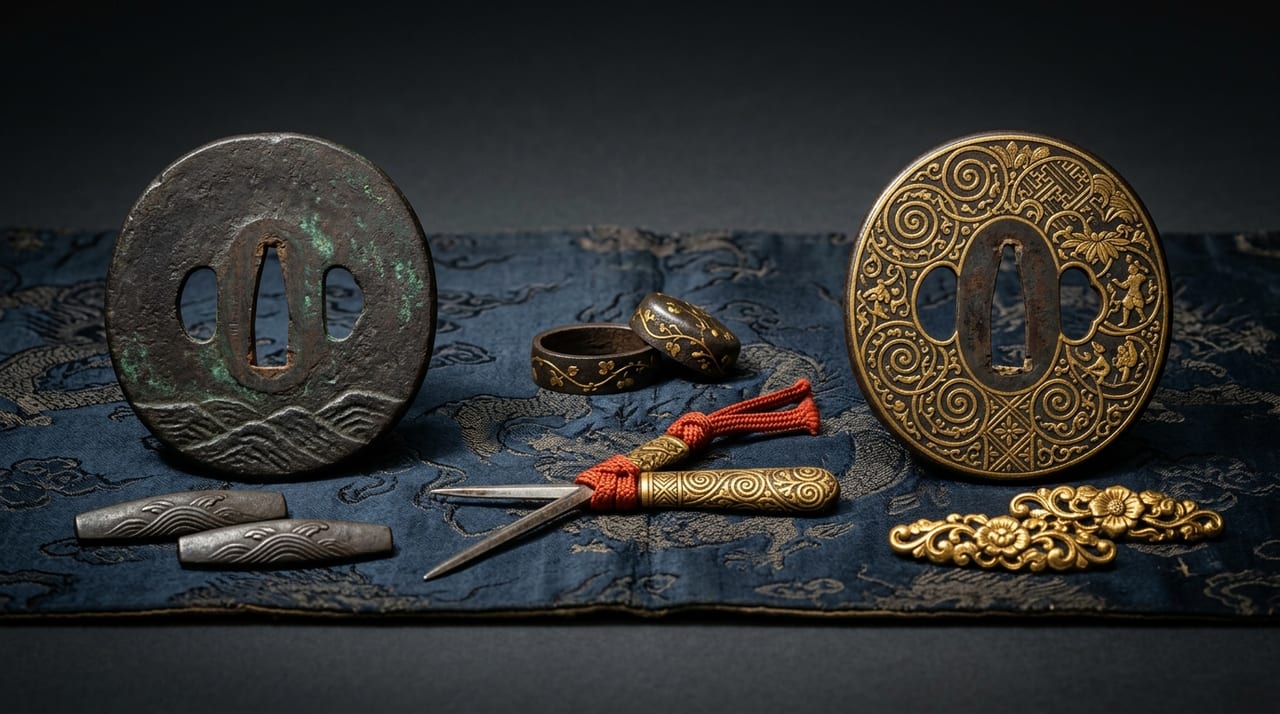
Tsuchiya Yasuchika (ca. 1670–ca. 1744) was a sword fittings metalworker of the mid-Edo period and one of the "Three Great Edo Metalworkers" alongside Yokoya Somin and Nara Toshinaga. His diverse works in high relief and colored metals, with the dragon designs known as the "Dragon of Yasuchika" at their apex, are regarded as the pinnacle of sword fitting art. This article comprehensively explores Yasuchika's life, techniques, masterpieces, and legacy.
Systematic classification of wakizashi by blade construction (tsukuri-komi): hira-zukuri, shinogi-zukuri, kiribe-zukuri, unokubi-zukuri, and kanmuri-otoshi-zukuri. Their morphological features, historical origins, associated smithing traditions, and how construction type is evaluated in NBTHK shinsa.
The oldest Japanese blade forms—jokoto (ancient swords) and their representative warabite-to—explained through morphology, production methods, and archaeological context. A systematic overview of the sword lineage from Yayoi iron blades through Kofun period ring-pommel swords to Nara-period warabite-to, before the emergence of the curved nihonto.
The Yamato Tradition, originating in Yamato Province (Nara), is one of the Five Great Schools of Japanese swords, formed by five schools: Tegai, Senjuin, Hōshō, Taima, and Shikake. This work provides detailed explanations of the characteristics, techniques, and major works of these religiously-rooted blade-making groups.
Classification of Japanese yari (spears) by form, use, and period. Systematic coverage of the major types—hira-sankaku, sasaho, katakama, jumonji, and kikuchi-yari—their morphological features and combat roles, the evolution of spear forms from the Nanbokucho through Edo periods, and their evaluation today as art objects and martial arts equipment.
A 12-year history of the Yasukuni Kaiko Society Forging Workshop, established in 1933. This institutional history examines the ideals of reviving tradition, the contradictions with military demand, confiscation and dispersal at war's end, and postwar reevaluation.
How filing patterns on the sword tang authenticate swords and reveal their school and period.
A historical survey of Muromachi-period sword culture, covering the mass production triggered by the Onin War, the rise of the uchigatana, and how the age of gekokujo shaped the sword.
The transition from the ancient straight-bladed *chokuto* to the curved tachi of the Heian period, examined through theories of continental (Chinese, Korean, Central Asian) influence and indigenous Japanese development. The functional advantages of curvature, its relationship to mounted combat, and surviving examples of ancient straight swords.