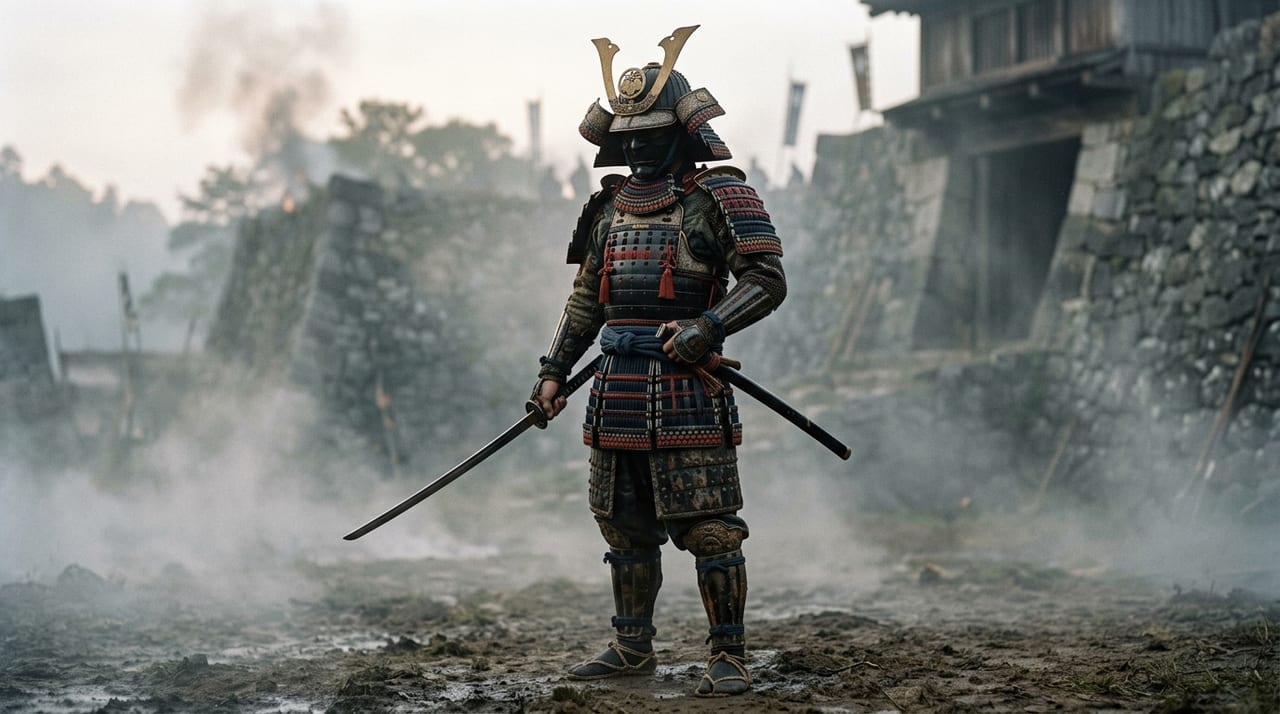
 * Image is for illustrative purposes only.
Todo Heisuke
藤堂平助
8th Unit Captain of the Shinsengumi — Genius swordsman of the Hokushin Ittō-ryū who fought at the Ikedaya Incident and was severely wounded, and died young as a member of the Goryō Eji
Description
Genius of the Hokushin Ittō-ryū
Tōdō Heisuke, born in Kōka 1 (1844), was a swordsman who mastered the Hokushin Ittō-ryū, one of the most flourishing schools of swordsmanship in the late Tokugawa period. The Hokushin Ittō-ryū was founded by Chiba Shūsaku, and at that time in Edo the Chiba dōjō (Genbukan) enjoyed great prosperity as one of the three great dōjō of Edo, and was known as a place where Sakamoto Ryōma and others also studied. Heisuke entered the Genbukan, showed precocious talent in this school, and is said to have obtained a mokuroku (a licence of the school) in the middle of his teens.
Joining the Shinsengumi and Captaincy of the 8th Unit
Heisuke, who took part in the Rōshigumi's journey to Kyoto in Bunkyū 3 (1863), was appointed captain of the 8th unit after the founding of the Shinsengumi. Having mastered the Hokushin Ittō-ryū, he entered the Shieikan, the dōjō of Kondō Isami, and was also entrusted with substitute instruction. As a comrade from before the founding of the Shinsengumi, he was, together with Saitō Hajime, one of the youngest senior officers.
Serious Wounds at the Ikedaya Incident
In the Ikedaya Incident of Genji 1 (1864), Heisuke fought valiantly as one of the first four men to charge in. However, when he removed his hachigane (forehead guard) to wipe away sweat, he was struck on the forehead, which was split open, and at one point he fell into a critical condition.
Beloved Sword: Kazusa-no-suke Kaneshige
The sword traditionally known as Heisuke's favourite blade is the “Kazusa-no-suke Kaneshige.” Kazusa-no-suke Kaneshige was a swordsmith of Musashi Province (Edo) who was active in the early Edo period, in the Kanbun era. Kaneshige is counted among the ryō-wazamono (a “very good cutter” in the Edo-period cutting-test rankings). In the Ikedaya Incident, this sword that Heisuke wielded is said to have become badly battered.
Death with the Goryō Eji
In Keiō 3 (1867), Heisuke left the Shinsengumi together with Itō Kashitarō and others and formed the Goryō Eji (Kōdaiji faction). This was a defection from the Shinsengumi and signified opposition to Hijikata Toshizō. On the night of the 18th day of the 11th month (13 December 1867), in the Aburanokōji Incident, Heisuke was ambushed by the Shinsengumi, and before dawn on the 19th (14 December 1867) he was cut down and died. He was 24 by traditional Japanese reckoning. The life of Heisuke, who gave up his life young, is passed down as the tragedy of a swordsman who lived by his own convictions amid the upheaval of the late Tokugawa period.
Notable Swords
- Kazusa-no-suke Kaneshige (a work of Kazusa-no-suke Kaneshige, a swordsmith of Musashi Province active around the Kanbun era; Heisuke is said to have wielded it at the Ikedaya Incident, where the blade became badly battered)