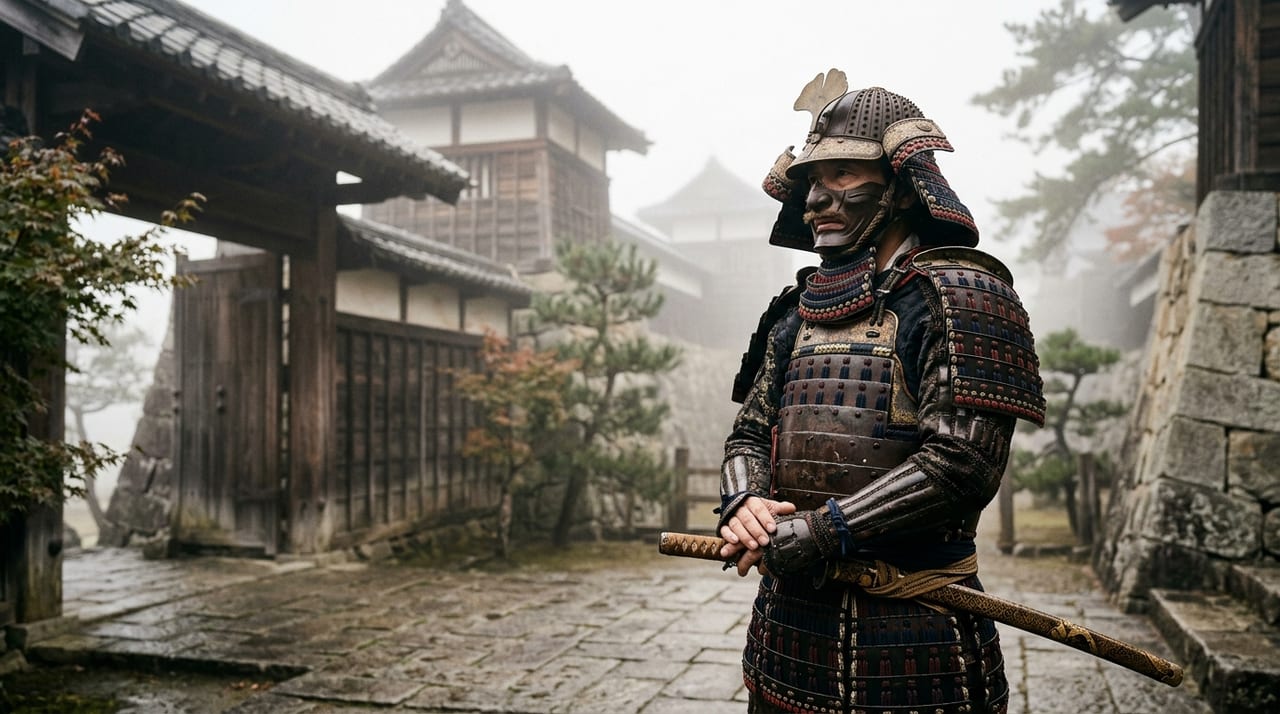
 * Image is for illustrative purposes only.
Shimazu Yoshihisa
島津義久
Eldest of the Shimazu Four Brothers: A Satsuma Commander Who Controlled Most of Kyūshū and Led the Strongest Army of the Sengoku Period
Description
Shimazu Yoshihisa (1533-1611) was a Sengoku-period daimyō of Satsuma Province (present-day Kagoshima Prefecture) and the 16th head of the Shimazu clan. Together with his three outstanding younger brothers, Yoshihiro, Toshihisa and Iehisa, he earned his place in history as the “Shimazu Four Brothers,” and in the late 16th century he realized the greatest territorial extent the Shimazu clan ever achieved. He wielded enough power to bring nearly all of Kyūshū under his control, but was forced to submit to Toyotomi Hideyoshi's Kyūshū campaign. He is also known for his outstanding diplomatic and administrative abilities, and he is ranked among the most accomplished commanders of the Sengoku period.
Yoshihisa was born in Tenbun 2 (1533), the eldest son of Shimazu Takahisa. From a young age he was expected to succeed his father, and in Eiroku 9 (1566) he inherited the family headship. He unified the three provinces (Satsuma, Ōsumi, Hyūga), and together with his three brothers (Yoshihiro, Toshihisa and Iehisa) he set out to unify Kyūshū in united effort.
In Tenshō 6 (1578), at the Battle of Mimikawa, he defeated the large army of Ōtomo Sōrin, who had invaded Hyūga. In Tenshō 12 (1584), at the Battle of Okitanawate, he sent his younger brother Iehisa as commander-in-chief, who killed Ryūzōji Takanobu and brought the Ryūzōji clan under submission. He advanced his conquest of Kyūshū from south to north, and in Tenshō 14 (1586) his power reached as far as Bungo, the stronghold of the Ōtomo clan.
However, in Tenshō 15 (1587), when Toyotomi Hideyoshi carried out his Kyūshū campaign with an army of over 200,000 men, Yoshihisa decided to surrender. He was confirmed in possession of the two provinces of Satsuma and Ōsumi, and of Morokata District in Hyūga Province, and succeeded in preserving the Shimazu house. At the Battle of Sekigahara (1600), his younger brother Yoshihiro fought on the Western army's side and made a name for himself with the “Shimazu retreat” (Shimazu no Nokiguchi), but Yoshihisa united his household and entered negotiations with Tokugawa Ieyasu, securing the survival of the Shimazu house once again. He died in Keichō 16 (1611) at the age of 79.
In terms of Japanese swords, Yoshihisa's domain of Satsuma was a land that nurtured its own sword culture, including the Naminohira school, which began in the late Heian period. Also, his retainer Tōgō Chūi studied Tenshinshō Jigen-ryū in Kyoto, where he followed Yoshihisa when Yoshihisa went up to the capital after his surrender, and later founded the Jigen-ryū.