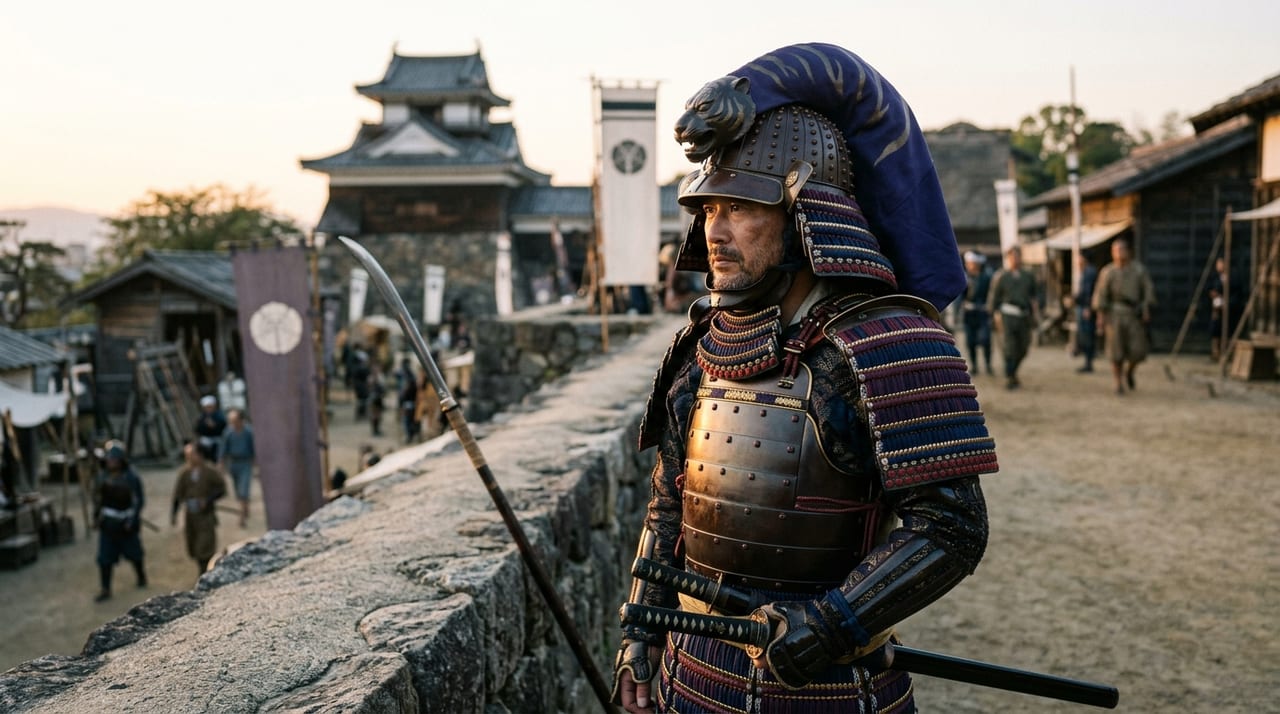
 * Image is for illustrative purposes only.
Oda Nobuhide
織田信秀
Tiger of Owari, Father of Oda Nobunaga, the Outstanding Warrior Who Rose in the Tumultuous Sengoku Era
Description
Oda Nobuhide (1508-1551) was a Sengoku-period warlord of Owari Province (present-day western Aichi Prefecture), remembered in history as the father of Oda Nobunaga, who achieved the unification of the realm. Starting as head of the Danjō-no-jō family, one of the families of the Kiyosu sanbugyō (three magistrates) serving the Owari shugo-dai Oda Yamato-no-kami family, he rapidly expanded his power within Owari through outstanding martial prowess and economic skill, and was known as the "Tiger of Owari."
Nobuhide moved his base from Shōbata Castle to Nagoya-jō, Futowatari-jō, and Suemori-jō. He took control of the trading port of Tsushima, a harbor town within Owari, and strengthened his military with its economic power. He also built Futowatari-jō to bring Atsuta under his control. Atsuta was both the shrine town of Atsuta Jingū and a harbor town, and this secured his economic advantage. Nobuhide's economic strategy could also be said to have been the forerunner of the commerce-focused policies, such as rakuichi rakuza, that Nobunaga later carried out.
In military affairs, Nobuhide fiercely contested with the powerful neighboring daimyo, including the Imagawa clan of Suruga, the Matsudaira clan of Mikawa, and the Saitō clan of Mino. In the Battle of Azukizaka in Tenbun 17 (1548), he was defeated by the Imagawa under the command of Taigen Sessai, but he did not give up his advance into the Mikawa region and continued the struggle. He also made peace with Saitō Dōsan's Mino through a marriage alliance, the betrothal of Nobunaga and Dōsan's daughter Kichō, showing skillful diplomacy. In Tenbun 20 (1551), he died of illness at Suemori-jō (there are also theories that his death took place in Tenbun 18 or Tenbun 21), and his eldest son Nobunaga succeeded him.
Nobuhide also valued tradition and authority, and actively approached the central court. He presented 700 kanmon in coin toward the sengū of Ise Jingū, and in Tenbun 12 (1543) he offered 4,000 kanmon to the court as repair funds for the Dairi.