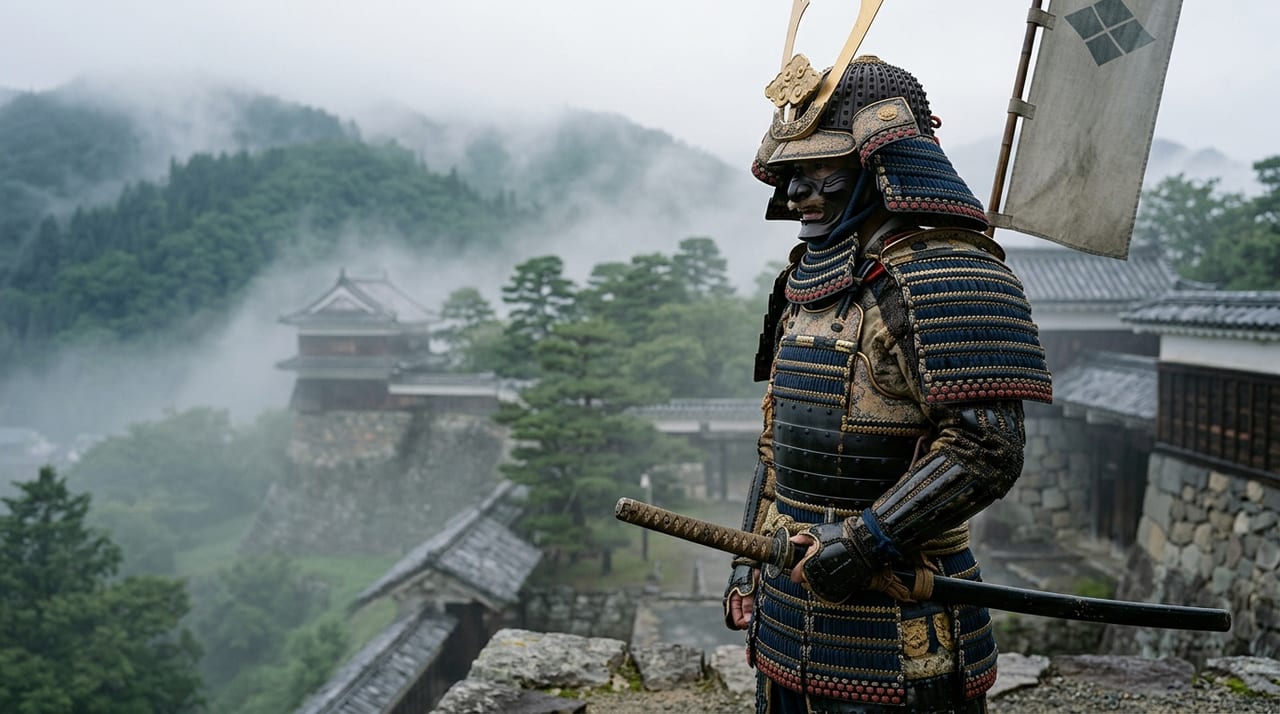
 * Image is for illustrative purposes only.
Nakazawa Koto
中沢琴
The Cross-Dressed Swordswoman of the Hōshin-ryū — Traditionally the Shinchōgumi's Only Female Member
Description
Nakazawa Koto (c. 1839-1927) was a swordswoman from Tone District, Kōzuke Province (present-day Numata City, Gunma Prefecture), trained in the Hōshin-ryū school of swordsmanship. Reliable records of her exact birth year are scarce; while around 1839 is the commonly cited date, other accounts differ. She stood roughly 170 cm tall, notably tall for a woman of her era.
Her elder brother, Nakazawa Sadatsugu, was also a practitioner of the Hōshin-ryū. In 1863 (Bunkyū 3), when Sadatsugu joined the Rōshigumi, a corps recruited in Edo to guard the shogun, Koto disguised herself as a man and accompanied him to Kyoto. The Rōshigumi later split, and the faction that returned to Edo became the Shinchōgumi, a security force placed under the Shōnai domain's supervision. Koto is said to have joined the Shinchōgumi alongside her brother and to have fought in various locations; she is traditionally regarded as the only woman recorded on the Shinchōgumi's roster.
However, primary sources directly corroborating exactly which battles she fought in, and in what capacity, are scarce. While later tradition holds that she took part in fighting around Shōnai during the Boshin War, the specific combat record that can be firmly verified remains limited. She is said to have remained unmarried throughout her life, reportedly declaring she would marry only a man stronger than herself — though this anecdote, too, rests largely on later hearsay and should be distinguished carefully from verified fact. She died in October 1927 (Shōwa 2). Her story — a woman who disguised herself as a man, took up the sword, and reportedly stood on the battlefield as a member of the Shinchōgumi — is remembered today as an example of how broadly martial training extended within samurai society in the closing years of the Edo period.
Notable Swords
- Hōshin-ryū swordsmanship (said to have been used in actual combat as a Shinchōgumi member, though no specific named blade or weapon is documented)