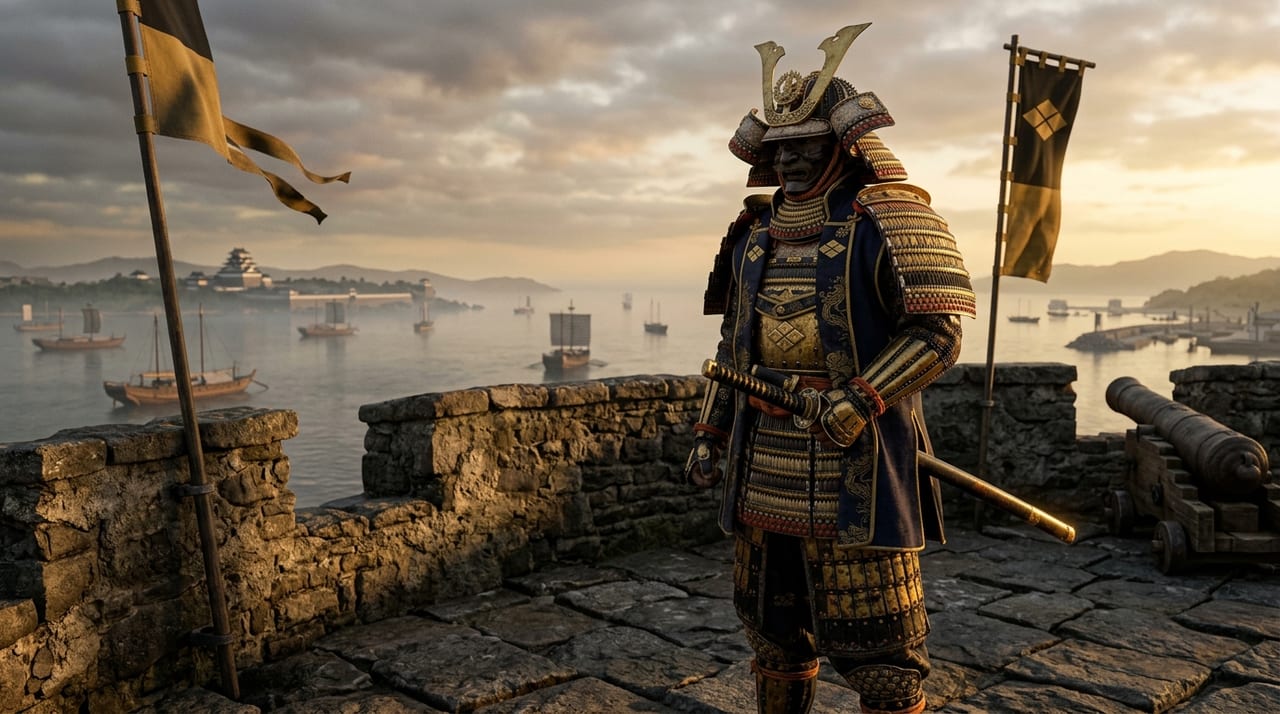
 * Image is for illustrative purposes only.
Ichikawa no Tsubone
市川局
Female Castle Defender — The Sengoku Wife Who Held Takamine Castle
- Era
- Sengoku
- Lifespan
- unknown-1585
- Associated Sword Tradition
- Mōri Clan (Ichikawa Household)
Description
What Is Ichikawa no Tsubone?
Ichikawa no Tsubone was the wife of Ichikawa Tsuneyoshi, a senior retainer of the Mōri clan who governed Yamaguchi in Suō Province during the Sengoku period. Her personal name has not been passed down, and she is known to posterity by the name "Ichikawa no Tsubone," taken from her husband's family name. Ichikawa Tsuneyoshi served Mōri Motonari, Takamoto, and Terumoto, and was a warrior who held Takamine Castle (present-day Yamaguchi City, Yamaguchi Prefecture) as Yamaguchi magistrate (bugyō).
The Ōuchi Teruhiro Rebellion and the Defense of Takamine Castle
In Eiroku 12 (1569), Ōuchi Teruhiro (a member of the Ōuchi clan), who had the support of Ōtomo Sōrin, invaded Suō and laid siege to Takamine Castle. At that very time, Ichikawa Tsuneyoshi, as a main force on the Mōri side, was facing the Ōtomo army at Tachibanayama Castle, and had been absent from his base for an extended period. Entrusted with the castle, Ichikawa no Tsubone donned armor herself, took up a naginata, and led her maidservants. Rallying the few castle soldiers, she withstood the attacks of the Ōuchi forces and is said to have fought through the siege. Over the course of more than ten days of fierce fighting, the castle was held without falling.
Letter of Commendation and Assessment
For this achievement, in the intercalary 7th month of Tenshō 5 (1577), Ichikawa no Tsubone received a letter of commendation (kanjō) from her lord, Mōri Terumoto, as recorded in documents related to the Mōri family. Cases in which a warrior-class woman actually commanded a castle in the absence of its lord and was officially recognized for her martial merit through a letter of commendation issued directly by her lord are few, and Ichikawa no Tsubone is remembered as one of the rare documented examples of a "fighting woman" who survived the Sengoku period.
Transmission to Later Generations
The deeds of Ichikawa Tsuneyoshi and Ichikawa no Tsubone survive only in fragments in sources such as the Kikkawa-ke Monjo (Kikkawa Family Documents) and the Hagi-han Batsuetsuroku, volume 38, "Ichikawa Shichiemon," and in recent years they have also been introduced as anecdotes connected with local history and with swords and armor. The image of Ichikawa no Tsubone defending a castle with a naginata in hand is a valuable example showing that women of the warrior class in the Sengoku period were not merely figures in the rear, but at times took up weapons themselves and stood on the battlefield.
Notable Swords
- Naginata (the polearm she reportedly wielded personally during the siege)