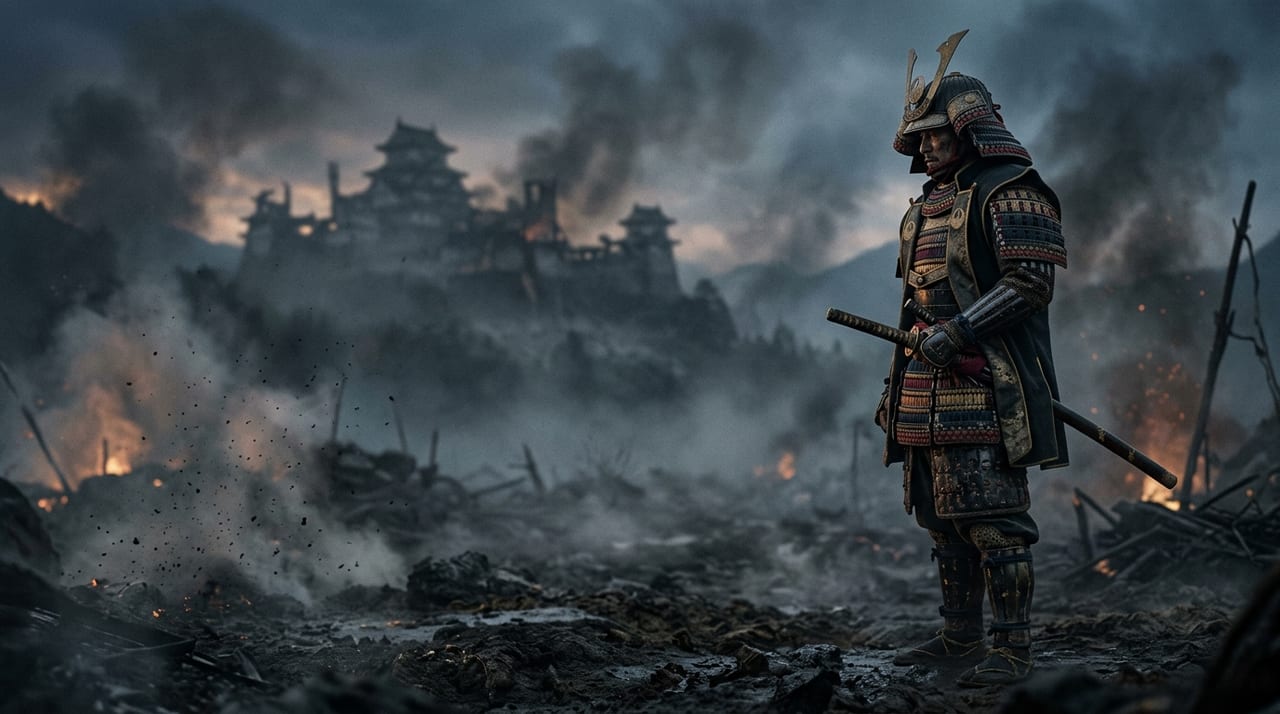
 * Image is for illustrative purposes only.
Chiba Sana
千葉佐那
Master Swordswoman of the Hokushin Ittō-ryū — Traditionally Remembered as Sakamoto Ryōma's Betrothed
Description
Chiba Sana (given name Sanako, 1838-1896) was born the daughter of Chiba Sadakichi, master of the Oke-chō branch of the Hokushin Ittō-ryū school of swordsmanship. Her elder brother was Chiba Jūtarō. She trained in swordsmanship from childhood and is said to have achieved full mastery certification (menkyo kaiden) in kodachi (short sword) technique within the Hokushin Ittō-ryū while still in her teens, and reportedly also served as an instructor of naginata. Renowned for combining swordsmanship with beauty, she was known around the Oke-chō dojo as "Chiba's Demon Beauty" or "Little Chiba Komachi."
Sakamoto Ryōma enrolled at Chiba Sadakichi's dojo when he traveled to Edo for swordsmanship training in 1853, and it was through this connection that he is said to have met Sana. A surviving letter from Ryōma describes her, at age twenty-six, as "a fine rider, formidable with the sword, and skilled with the naginata as well," attesting to her reputation for martial skill. According to Sana's own later recollections, the two became engaged around 1858, though contemporary primary sources directly corroborating this engagement are scarce, and some later embellishment is possible. The two drifted apart as Ryōma left Edo to devote himself to political affairs; upon learning of his assassination in 1867, Sana is said to have kept a sleeve reportedly tailored by her father from Ryōma's garment as a keepsake for years afterward.
For a long time she was remembered as a woman who "remained unmarried her entire life out of tragic love," but a Meiji-era newspaper article discovered in 2010 revealed that after Ryōma's death she married a former Tottori domain retainer named Yamaguchi Kikujirō and divorced him a few years later, prompting a reassessment of the conventional narrative. In her later years she ran a moxibustion clinic, the Chiba Kyūjiin, in the Senju district of Tokyo, and died in 1896 at the age of 59. Though a fully certified master of a practical school of swordsmanship, she is remembered equally as a symbol of romance in the history of the Bakumatsu period — a woman who embodied both the sword and the era.
Notable Swords
- Kodachi (short sword — her signature weapon, in which she held full mastery certification in the Hokushin Ittō-ryū)
- Naginata (glaive — she is said to have served as an instructor)