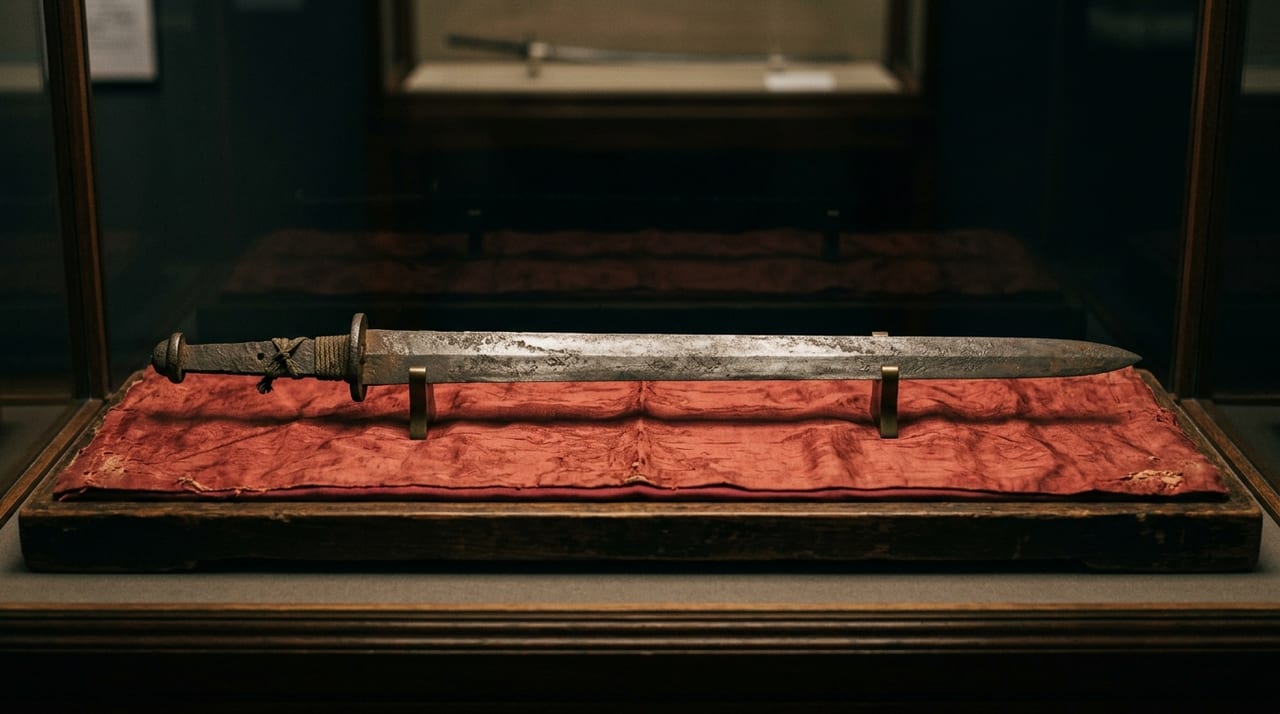
 * Image is for illustrative purposes only.
Tanto, Mumei Sadamune (Meibutsu Terazawa Sadamune)
短刀 無銘貞宗(名物 寺沢貞宗)
Also known as: Terazawa Sadamune, listed in the Kyōhō Meibutsuchō
Description
Overview
Terazawa Sadamune is an unsigned (mumei) tanto attributed to Sōshū Sadamune, listed as a meibutsu (named treasure) in the Edo-period sword catalog Kyōhō Meibutsuchō. Although unsigned, the blade displays the refined characteristics of Sadamune's craftsmanship and is prized as an outstanding example of Sōshū-den swordsmithing.
Style
Sōshū Sadamune, said to be the son or adopted heir of Okazaki Masamune, the master who perfected the Sōshū tradition, is counted alongside Masamune and Gō Yoshihiro as one of the three great masters of that tradition. He is known for a calmer and more polished style than his teacher, and for leaving almost no signed works, of which this tanto is one. The grain (ji-hada) is itame with ji-nie, and the hamon is based on a notare pattern, showing the dignified clarity characteristic of Sadamune's hand, with well-balanced proportions and sound condition.
Provenance
The blade was purchased for 300 kan by Terazawa Shima no Kami Hirotaka, daimyo of Karatsu domain in Hizen Province and a retainer of Hideyoshi renowned for his eye for fine swords, who presented it to Toyotomi Hideyoshi. Hideyoshi gave it to Oda Urakusai (Oda Nagamasu), the youngest brother of Oda Nobunaga and a master of the tea ceremony, who later sold it to the sword appraiser Hon'ami Kōtoku. Hirotaka bought it back for the considerable sum of 700 kan and presented it to Tokugawa Hidetada. The sword's name derives from its first owner, Terazawa Hirotaka, and its repeated changes of hands attest to how highly it was prized.
Designation and Current Location
It is said to have subsequently passed to the Kishū Tokugawa family, given to Tokugawa Yorinobu as a keepsake of Hidetada. The Kyōhō Meibutsuchō, compiled by the Hon'ami family under the eighth shogun Tokugawa Yoshimune, ranks this blade among its foremost entries. Today it is held by the Tokyo National Museum and designated a National Treasure, exhibited periodically in special exhibitions.
Legend
The blade's journey from a domain lord to the ruler of Japan, then to a tea-master daimyo, and finally to the shogunal house illustrates how, in the Sengoku and early Edo periods, celebrated swords served as tokens of loyalty and status exchanged among the era's most powerful figures.
Legends & Stories
Purchased for 300 kan by Terazawa Hirotaka and presented to Hideyoshi, passed to Oda Urakusai, sold to the appraiser Hon'ami Kōtoku, then bought back by Hirotaka for 700 kan and presented to Hidetada — the tanto's winding path among lords, tea masters, and appraisers gave rise to its name.