 * Image is for illustrative purposes only.
Raden Tachi
螺鈿太刀
Also known as: Mother-of-pearl inlaid tachi; shell-decorated tachi; late Heian decorative tachi
Description
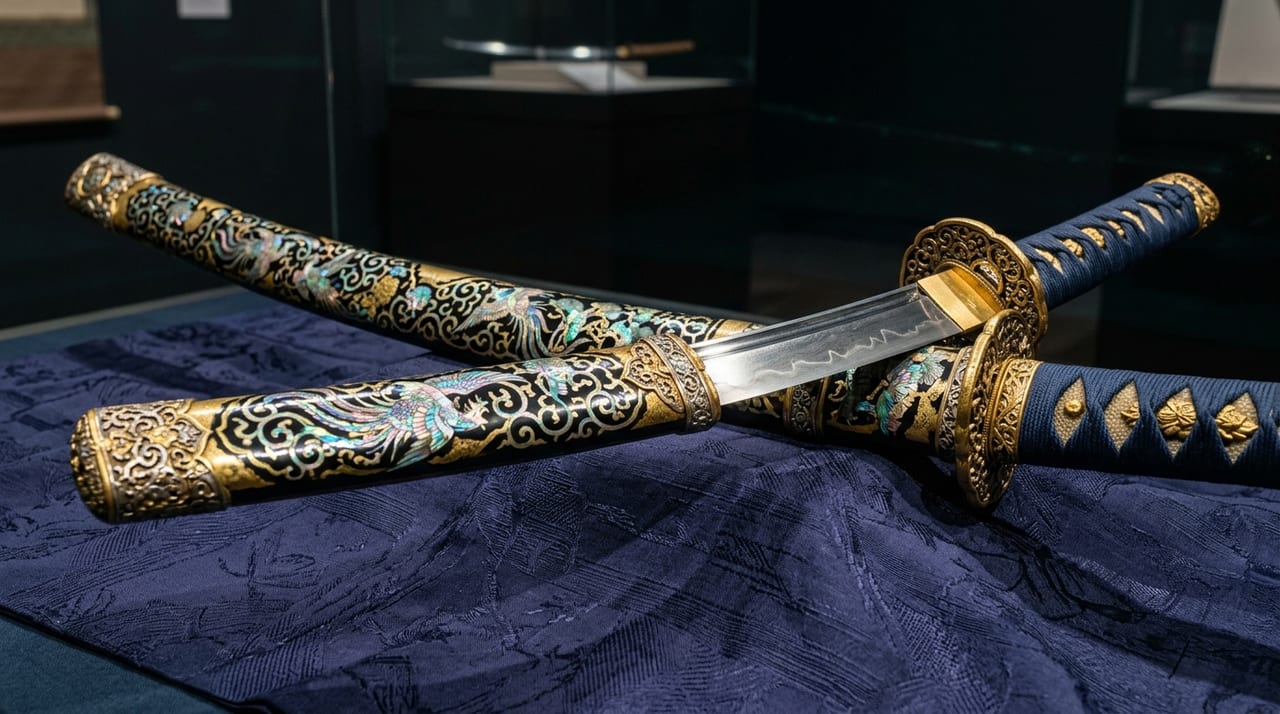
Raden tachi (mother-of-pearl inlaid sword) is a general term for decorative swords whose mountings are embellished with the raden technique—a method in which the iridescent nacre layer found on the inner surface of shells such as abalone, window-pane oyster, and white-lipped pearl oyster is thinly shaved and inlaid onto lacquered, gilt, or silvered grounds to create decorative patterns. In the history of Japanese craftsmanship, the raden tachi form a category of the highest-quality crafted swords produced from the late Heian period through the Kamakura period as votive offerings for the nobility, samurai, shrines, and temples, and multiple extant examples are currently designated as National Treasures or Important Cultural Properties.
Among representative National Treasure raden tachi, those held by Kasuga Taisha, Itsukushima Shrine, Tsurugaoka Hachiman Shrine, and the Tokyo National Museum are particularly renowned. All of these are comprehensive works of craftsmanship combining gold, silver, lacquer, mother-of-pearl inlay, and metal fittings (openwork gilt-bronze tsuba, edge fittings, kashira, and others), and they are positioned as the most important examples in both sword history and the history of Japanese craftsmanship as embodiments of the finest Heian-period craftsmanship.
The blade portion of raden tachi is often the work of swordsmiths from the Ko-Bizen, Yamato, and other schools of the Koto period, displaying the Heian style with pronounced curve. The point is of the small type; the blade width is somewhat narrow with deep waist curve, presenting an overall elegant, slender tachi form. The mounting design is primarily composed of auspicious motifs reflecting Heian court aesthetics—such as phoenixes, arabesques, pines, chrysanthemums, and grapevines—with the iridescent glow characteristic of mother-of-pearl displaying distinctly different beauty under both artificial and natural light.
Legends & Stories
Among the legends associated with raden tachi, the most widely told is the "divine protection of the sea" legend attached to the raden tachi dedicated at Itsukushima Shrine. The tachi dedicated by Taira no Kiyomori to Itsukushima was believed to serve as a vessel of the deity and to possess the power of maritime protection. According to tradition, during the Genpei War, the Taira clan's warships observed the custom of casting anchor in the direction of this tachi, and the belief that "the ships did not sink even in storms because of the divine protection of the sacred sword of Itsukushima" remains rooted in local tradition to this day. For the raden tachi at Kasuga Taisha, a tradition handed down since the Edo period holds that "the sacred deer sit before this sword each night to worship it." The deer of Kasuga Taisha's sacred precincts are venerated as messengers of the deity, and a sword that the sacred deer worship has been interpreted as "the supreme votive offering recognized by the gods" — preserved without a single blemish to reach the present day. A mythological folk origin for the raden technique itself is also transmitted: "The sea god (Watatsumi) granted shells to the heavenly gods so that they might bestow beauty upon the tachi" — making raden tachi objects of reverence as "divine craft works completed through the collaboration of the gods of sea and land."