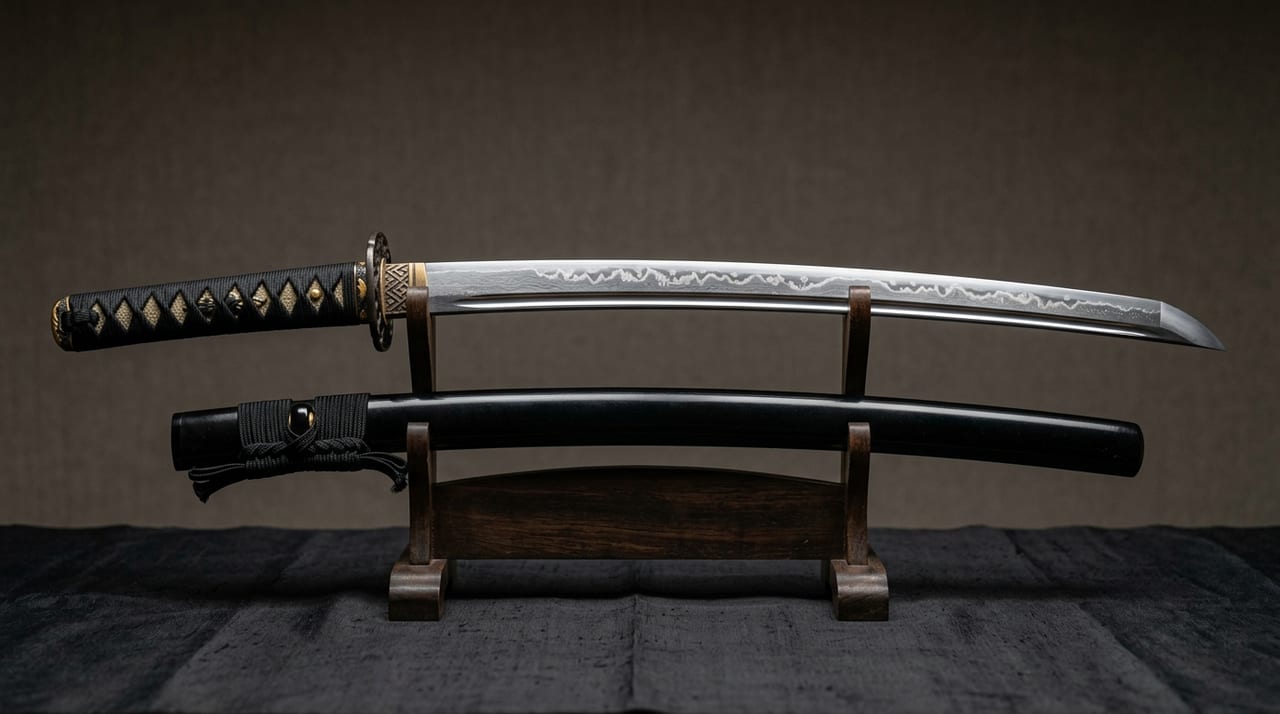
 * Image is for illustrative purposes only.
Sword of Ōsumi Toshihira
大隅俊平の刀
Also known as: Ōsumi Toshihira Uchigatana (Living National Treasure & Master Swordsmith of Modern Gunma)
Description
Ōsumi Toshihira (1932–2009) was a leading figure in Japanese sword forging and the foremost of contemporary swordsmiths, based in Ōta, Gunma Prefecture. He was certified as a Holder of Important Intangible Cultural Property (Living National Treasure) in 1997. He trained under Miyairi Akihira (Living National Treasure), who led the postwar revival of Japanese swordsmithing, and fulfilled his mission of passing down ancient iron-making and forging techniques to the present day.
The greatest hallmark of Toshihira's swords lies in their being made from tamahagane and in the suguha, which he developed by studying the Bitchū Aoe school of the Kamakura period. He is known for having continued to make suguha swords using tamahagane throughout his life, except for his very earliest works.
He won the Masamune Prize three times at the New Sword Exhibition (Shinsaku Meitō-ten), in 1974, 1976, and 1978. In 1977, he was certified as a holder of a Gunma Prefecture Important Intangible Cultural Property. He also dedicated swords for the Shikinen Sengū (periodic rebuilding) of Ise Jingū.
Even after being recognized as a Living National Treasure, he continued to produce works vigorously, releasing many masterpieces until his death in 2009. His hometown of Ōta has the Ōsumi Toshihira Art Museum, which presents his works and achievements.
Smith
大隅俊平
Bitchū tradition (Aoe-style suguha)Ōsumi Toshihira
Modern era (Shōwa–Heisei)
View smith profile →Related Famous Swords
姫鶴一文字
Important Cultural PropertyHimetsuru Ichimonji
Ichimonji School (Bizen)
同田貫正国
Kumamoto Prefecture Important Cultural Property (a Masakuni blade held by Honmyō-ji), among othersDōtanuki Masakuni
Dōtanuki Masakuni (Higo Dōtanuki school)
毛抜形太刀
National Treasure / Important Cultural Property (multiple designated examples)Kenuki-gata Tachi
Unknown (Heian period)
一期一振
Gomotsu (Imperial Collection)Ichigo Hitofuri
Awataguchi Yoshimitsu