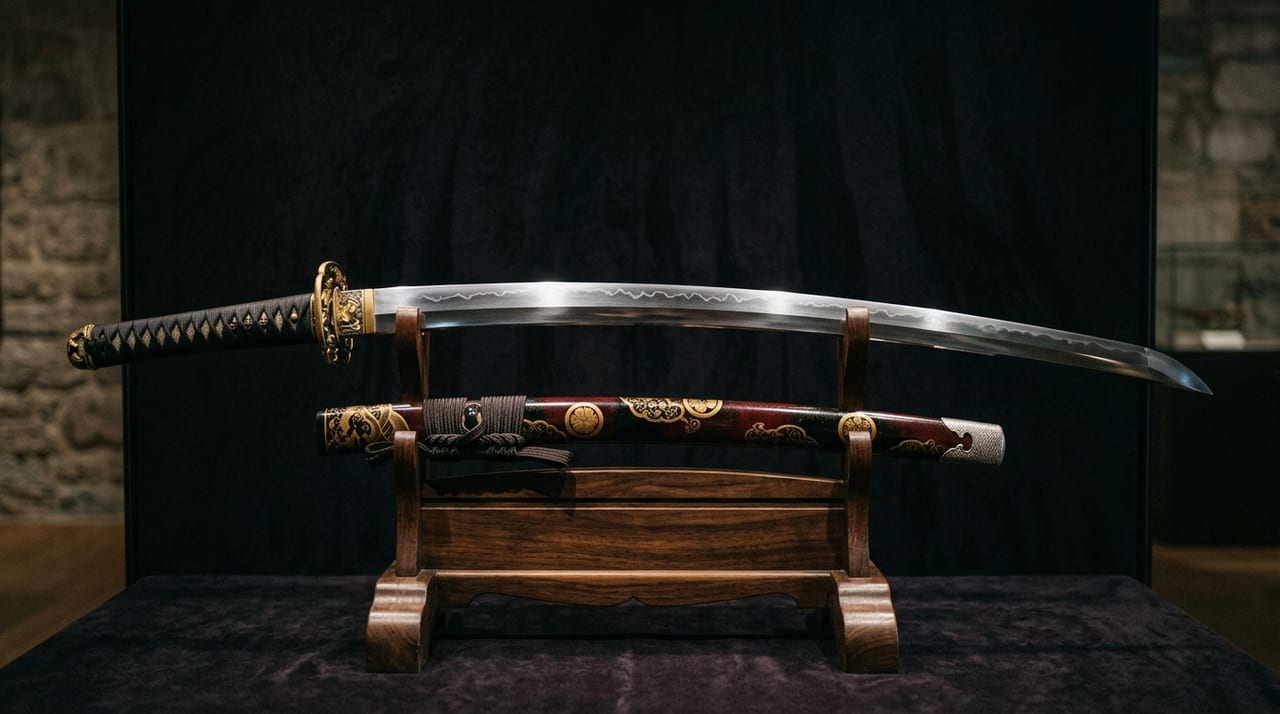
 * Image is for illustrative purposes only.
Naraya Sadamune
奈良屋貞宗
Also known as: Naraya Sōetsu's blade / listed in the Kyōhō Meibutsu Chō / Owari Tokugawa heirloom
Description
A Sadamune once owned by a merchant of Sakai
The Naraya Sadamune is a tantō by Sadamune. Reliably signed Sadamune blades are almost unknown, and this one is unsigned, attributed to Sadamune on the basis of its Sōshū-tradition workmanship. It is hira-zukuri, with a tightly forged ko-itame grain and a shallow notare temper line mixed with small irregularities, rounded and deeply returning at the point; both faces carry carvings of a Fudō Myōō sword and Sanskrit characters. It measures 29.4 cm with a curvature of 0.3 cm. The name comes from Naraya Sōetsu, a merchant of Sakai, who first owned it.
From Hideyoshi to the Owari Tokugawa
Around the Bunroku era (1592–96) the blade is said to have been acquired and presented to Toyotomi Hideyoshi. After his death it passed to Toyotomi Hideyori, and on 21 May 1608 it was presented to the second shogun Tokugawa Hidetada. It later passed through the Kii Tokugawa house to the Owari Tokugawa, and is recorded among the celebrated blades of the Kyōhō Meibutsu Chō.
Designation and present whereabouts
The blade is designated an Important Cultural Property and is now held by the Tokugawa Art Museum in Nagoya, Aichi Prefecture.
Legends & Stories
From a merchant's storehouse to the hands of the unifiers
Unusually for a meibutsu, the Naraya Sadamune's first recorded owner was not a warlord but Naraya Sōetsu, a merchant of Sakai — the self-governing port city whose wealthy merchants were known for collecting celebrated tea utensils and swords. That a blade once kept in a merchant's storehouse should pass, through presentation, into the hands of Hideyoshi and then the Tokugawa shogunal house, finally coming to rest as a treasure of the senior Owari branch, illustrates how sword culture moved between merchant and warrior worlds in the transition from the Sengoku to the early Edo period.
Related Famous Swords
一期一振
Gomotsu (Imperial Collection)Ichigoichifuri
Awataguchi Yoshimitsu
織田信長の愛刀
National Treasures and Important Cultural Properties (multiple)Oda Nobunaga's Beloved Sword
Awataguchi Tōshirō, Samonji, Yukimitsu, Hasebe (respective smiths)
肥前忠吉
Important Cultural Property • Important Sword (multiple works)Hizen Tadayoshi
First Hizen Kuni Tadayoshi
会津正宗
Imperial Treasure (Imperial Household Treasure, Imperial Household Agency custody)Aizu Masamune
Masamune