 * Image is for illustrative purposes only.
Katana by Koyama Munetsugu
固山宗次の刀
Also known as: Uchigatana by Koyama Munetsugu (Technical Master of Musashi Shinshintō)
Description
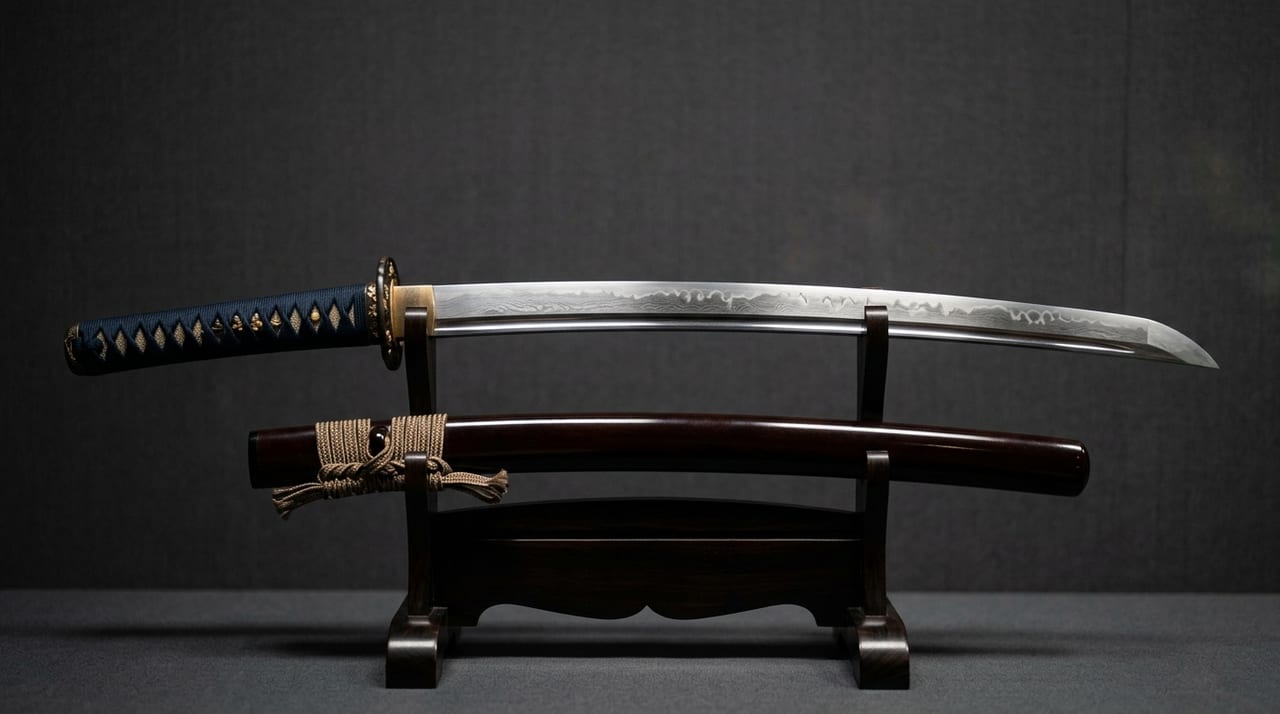
Koyama Munetsugu (こやまむねつぐ), a native of Mutsu Province (present-day Shirakawa City, Fukushima Prefecture), was a representative swordsmith of the shinshintō period who embodied the ideals of the shinshintō movement as a disciple of Katō Tsunahide. Inheriting his master's philosophy of 'return to ancient work,' he established a distinctive style that fused the techniques of the koto era with modern knowledge. The most celebrated feature of Munetsugu's swords is the diversity of his jigane. His ability to deploy ko-itame, o-itame, masame, ayasugi-hada and other surface textures according to the purpose of each blade was particularly outstanding among shinshintō smiths. His hamon likewise spans a wide range—gunome, chōji, hitatsura—skillfully incorporating features from the Bizen, Sōshū, and Yamato traditions. The way nie accumulates in his Sōshū-tradition pieces, closely resembling the ancient Sōshū originals, is especially admired by appraisers. He also served as an official shogunal swordsmith and produced numerous presentation blades for the Tokugawa shogunate. Multiple surviving works hold the Jūyō Tōken designation from the Society for the Preservation of Japanese Art Swords, and he is highly regarded by researchers as a smith who demonstrates the technical apex of the shinshintō period.
Legends & Stories
Katsuyama Munetsugu was taught by his master Choounsai Tsunatoshi, a top disciple of Suishinshi Masahide: "The secret of ancient swords lies in the jigane. If you can read the jigane, a sword becomes a book." According to tradition, Munetsugu traveled throughout the country, visiting museums and daimyo residences to examine and sketch koto blades firsthand. It is said that when he first held a work by Masamune from the Kamakura period, he was so profoundly moved—exclaiming "This is like living iron!"—that he did not leave the forge for three days and nights. There also survives an anecdote that whenever he forged a sword for the shogunal household, he would sit formally before the household shrine, bow in the direction of Edo Castle, and only then raise his hammer—a story passed down as evidence of his respect for the shogunal family and his pride as a master swordsmith.