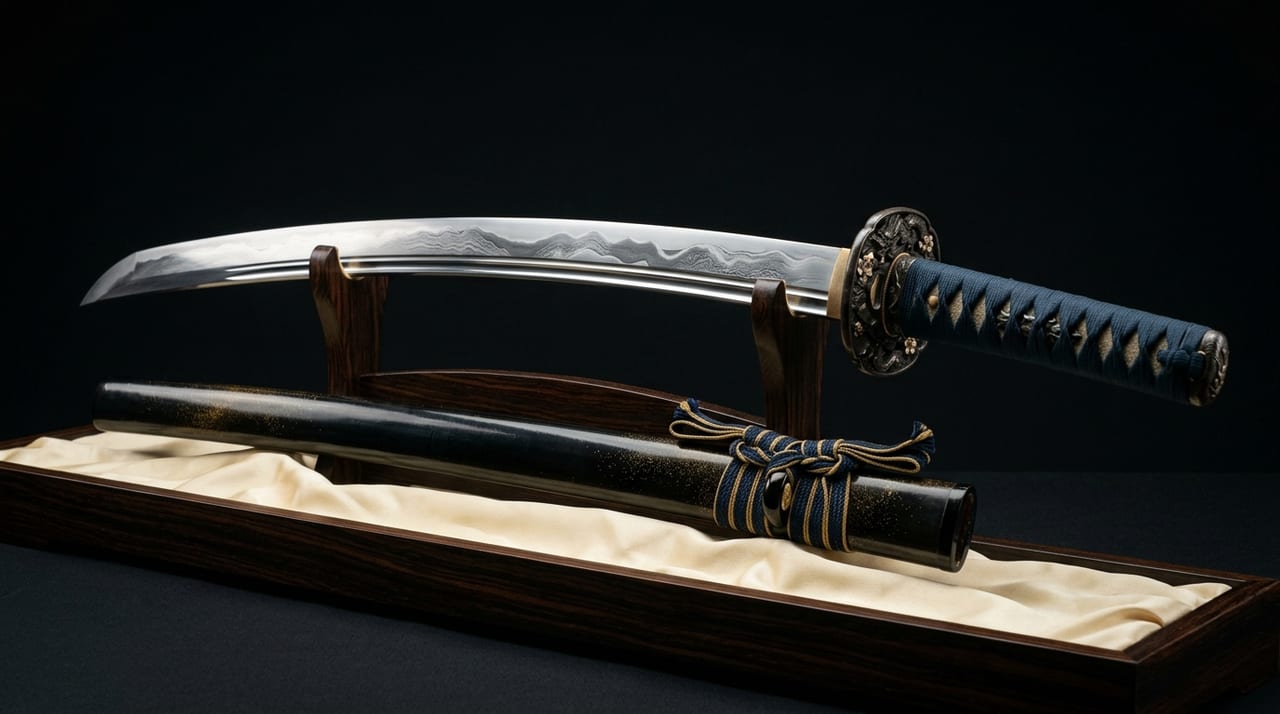
 * Image is for illustrative purposes only.
Gassan Sadakazu II
月山貞一(二代)
Also known as: Son of Gassan Sadakatsu; Osaka Gassan school; Living National Treasure
Description
The Osaka Gassan Lineage
Gassan Sadakazu II (1907-1995) was a swordsmith of the Osaka Gassan school, born in Osaka as the third son of the swordsmith Gassan Sadakatsu. The Osaka Gassan line descends from Gassan Sadakichi, who moved to Osaka around Tenpo 4 (1833) from an old lineage of smiths based at Mount Gassan in Dewa Province. Sadakazu began studying forging under his father at the age of thirteen, initially signing his work "Sadamitsu."
Awards and Living National Treasure Designation
In 1967 (Showa 42) he received both the Masamune Prize, the highest award at the 3rd Exhibition of Newly Forged Swords, and an award from the Cultural Properties Protection Committee (the predecessor body to the Agency for Cultural Affairs, which was not established until the following year). He mastered the techniques of all five regional traditions — Yamato, Yamashiro, Bizen and Soshu, together with the Gassan family's own ayasugi forging method — and rose to the pinnacle of the contemporary swordsmithing world. In 1971 (Showa 46) his outstanding technique was recognized with designation as a Living National Treasure (Important Intangible Cultural Property Holder).
Style
His work is grounded in the ayasugi-hada forging inherited from the Gassan family, combined with a broad command of the techniques of the five traditions. The skill in blade carving passed down from his forebears is also highly regarded.
Present Standing
His works survive today in private and museum collections, and he is said to have also taken part in producing sacred treasures for the Shikinen Sengu of Ise Grand Shrine. Building on the foundation laid by his grandfather, Gassan Sadakazu I (an Imperial Household Artist who revived the Gassan school from the late Edo through Taisho periods), Sadakazu II is placed in sword history as a figure who represents the highest standard of the modern Japanese sword.
Legends & Stories
Where his grandfather, Gassan Sadakazu I, revived the Gassan school amid the hardships following the Meiji-era sword-abolition edict and earned the honor of Imperial Household Artist, Sadakazu II mastered all five sword-making traditions and earned Living National Treasure status in the equally difficult postwar era. Across two generations at two historical turning points, the family is noted in the history of the modern Japanese sword for having preserved the Gassan tradition intact.