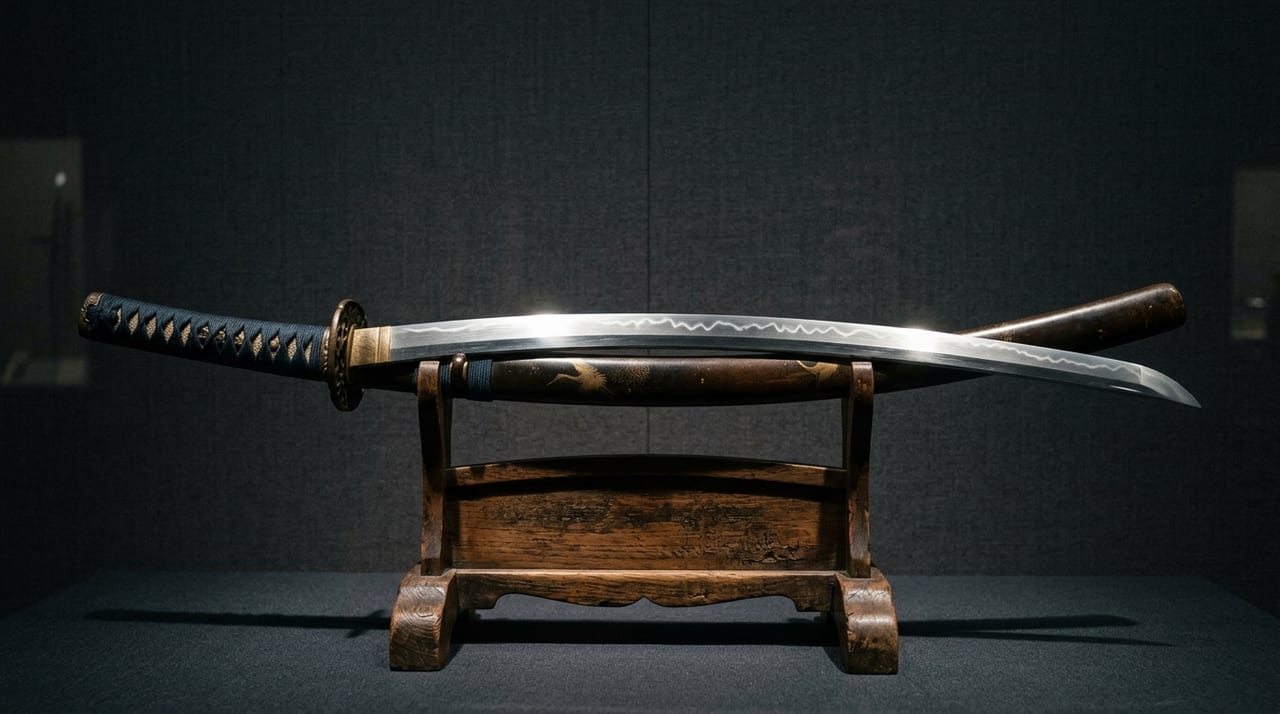
 * Image is for illustrative purposes only.
Tachi by Amata Akitsugu
天田昭次の太刀
Also known as: Tamamaki-no-Ontachi; Sugari-no-Ontachi; Ise Grand Shrine Shikinen Sengu ceremonial sword
Description
Living National Treasure Amata Akitsugu
Amata Akitsugu (1927-2013), a swordsmith from Niigata Prefecture, was designated a Living National Treasure (Holder of Important Intangible Cultural Property) in 1997 (Heisei 9). He is a rare figure among swordsmiths in having won the Masamune Prize three times, each time in a different tradition — Yamashiro, Soshu and Bizen — a testament to his mastery of multiple distinct schools at the highest level.
Service at the Ise Grand Shrine Shikinen Sengu
Amata is said to have taken part in producing the ceremonial sacred swords for the Shikinen Sengu of Ise Grand Shrine on four occasions in total: once as an assistant and three times as the lead swordsmith. On the fourth occasion he is said to have been responsible for producing the Tamamaki-no-Ontachi and the Sugari-no-Ontachi. The Shikinen Sengu is a Shinto rite held once every twenty years in which the shrine's complete set of ceremonial garments and sacred treasures is renewed and offered to the great deity, and being entrusted with forging these swords is regarded as one of the highest honors available to a contemporary swordsmith.
Style
Centered on the Yamato tradition, Amata also mastered the techniques of the Yamashiro, Soshu and Bizen traditions, and his work is known for its pursuit of beauty in the jigane, the forged steel itself. Reproducing the beauty of the jigane found in koto (old sword) blades became his lifelong research theme, and he devoted great effort to the study of the steel.
Present Custody
As a matter of principle, the sacred treasures dedicated to Ise Grand Shrine are not open to public view, so Amata's other works are held today in private and museum collections around the country. His three Masamune Prizes and his designation as a Living National Treasure stand as symbols of his standing as a modern swordsmith.
Legends & Stories
Winning the Masamune Prize three times in three different traditions — Yamashiro, Soshu and Bizen — illustrates how difficult it is for a single smith to master multiple schools in one lifetime. His four-time service at the Ise Grand Shrine Shikinen Sengu, culminating in responsibility for the important sacred swords Tamamaki-no-Ontachi and Sugari-no-Ontachi, is remembered as an episode reflecting the high degree of trust Amata achieved as a swordsmith.