New Arrivals — Browse our catalog for the latest authentic Japanese sword arrivals. Browse →
9th month, Tenshō 9 (1581)
Iga Province (present-day Iga City area, Mie Prefecture)
Forces
Oda Forces
Iga Provincial Forces (Sōkoku Ikki)
About 10 min read
Iga Province is a mountainous region in what is now the northwestern part of Mie Prefecture. During the Sengoku period it developed a distinctive system of self-government known as "sōkoku ikki." Its social structure was unusual, with the lines between samurai, farmers and ninja blurred, and it has long shown strong independence from outside authority. It is especially known as the home of Iga-ryū ninjutsu. Ninja groups, including the clan of Hattori Hanzō, refined techniques of espionage and surprise attack, drawing on their intimate knowledge of the mountains and fields.
In Tenshō 7 (1579), Oda Nobukatsu (Nobunaga's second son) invaded Iga on his own initiative. However, this was a reckless military action carried out without sufficient preparation. Nobukatsu's army met the organized resistance of Iga's kokujin (local lords) and ninja and suffered a crushing defeat. His forces were outmaneuvered by the surprise attacks and guerrilla tactics of the Iga warriors, who knew the mountain terrain well, and they were forced to withdraw after losing many officers and soldiers.
Nobunaga harshly rebuked this failure, and his letter even went so far as to say he would cut off the parent-child bond. However, for Nobunaga, who aimed to unify the realm, Iga's independent power was a force that could not be overlooked.
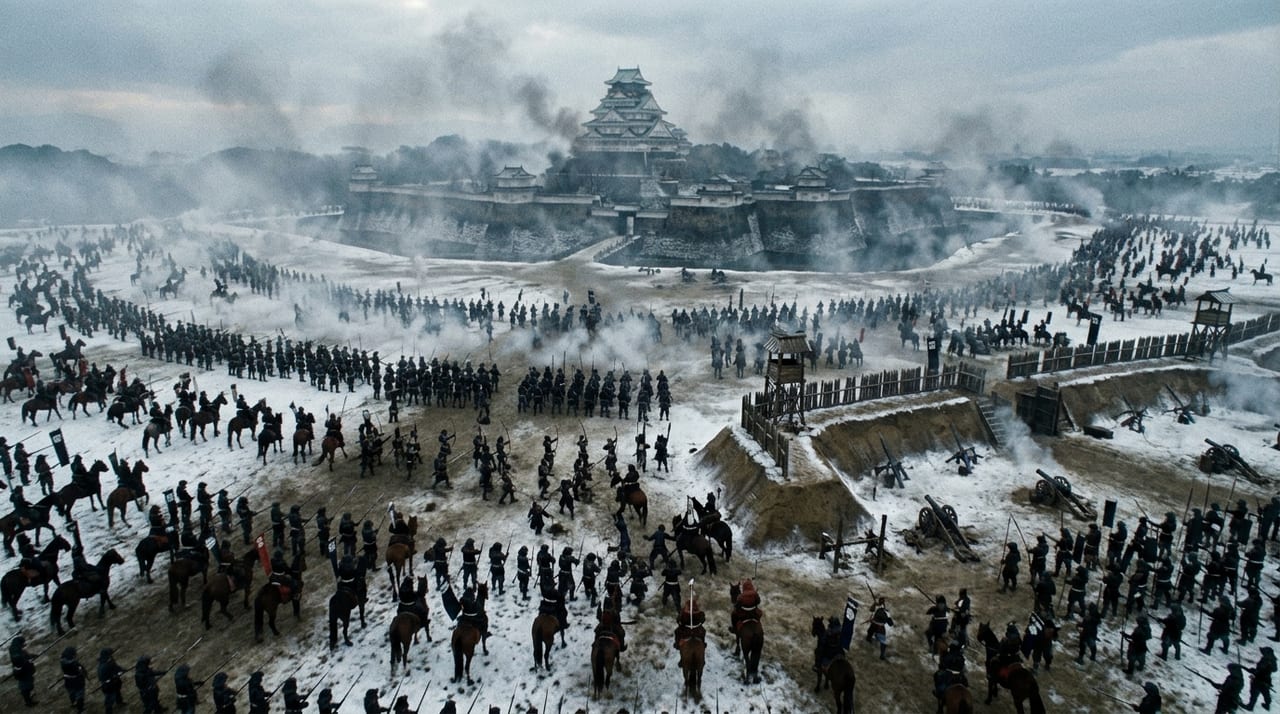
In the summer of Tenshō 9 (1581), Nobunaga decided on a full-scale invasion of Iga. This time, by Nobunaga's order, a large army with Nobukatsu as commander-in-chief was mobilized. There are various theories about the size of the force, but it is said to have numbered between 40,000 and 60,000 men. The method adopted was an encirclement-and-annihilation strategy, in which Iga was invaded simultaneously from multiple routes and surrounded.
Nobunaga's leading generals were each assigned a sector and deployed to press in on Iga from all sides. Niwa Nagahide and Takigawa Kazumasu took the Tsuge route, Gamō Ujisato took the Tamataki route, and Tsutsui Junkei took the Kasama route.
In the early part of the 9th month of the same year, the Oda army began its attack from all directions and, within a few days, took Iga's main strongholds one after another. The kokujin of Iga and the defending forces of the sōkoku ikki resisted fiercely in many places, but in the face of overwhelming numerical superiority they could not sustain organized resistance.
The Oda army is said to have burned temples and villages and adopted a scorched-earth tactic, killing women, children and monks alike. Kashiwara Castle, which held out to the end, surrendered after agreeing to peace on the condition that the lives of its garrison be spared.
However, many ninja abandoned organized combat and survived by hiding deep in the mountains. It is also said that some, such as Hattori Yasunaga, the father of Hattori Hanzō (Masanari), had left Iga early and entered the service of the Matsudaira house.
The Iga War is noted as a historical case in which the weapon culture of ninjutsu and the sword culture of the samurai directly confronted each other. Ninja weapons were designed for assassination, reconnaissance and diversion rather than head-on combat, and centered on small, portable tools such as kunai, shuriken, kaginawa (grappling hooks) and smoke screens.
However, when the fighting turned into regular combat, ninja also used swords. Accounts of the sword in Iga-ryū ninjutsu describe techniques such as probing with the scabbard and using a blade as a foothold when climbing over walls. However, some scholars doubt that ninja actually used the short, slightly curved "shinobigatana (ninjatō)." No description of shinobigatana appears in ninjutsu manuals such as the Bansenshūkai.
The conquest of Iga was an important part of Nobunaga's plan to unify the realm. Nobunaga's political thinking, which aimed to eliminate the remnants of the medieval order embodied in self-governing sōkoku and to extend centralized rule across the country, appeared as thorough attacks on regions with independent systems of self-government, such as Iga and Saiga (Kii Province).
On the 9th day of the 10th month, after Iga was subdued, Nobunaga personally inspected the province. He gave Ae, Iga and Nabari, three districts, to Nobukatsu, and Yamada District to Oda Nobukane.
In the 6th month of Tenshō 10 (1582), the year after the Iga War, the Honnō-ji Incident occurred and Nobunaga met a violent death. Right after the incident, the Iga people rose again (the Third Tenshō Iga War). However, Iga's former sōkoku self-government never returned, and its people scattered, serving daimyo in various regions.
The Tenshō Iga War occupies a special place in the history of the Japanese sword. In ordinary battles, signed swords forged by master smiths were worn at the waists of commanders, and their sharpness and curvature supported their military achievements. By contrast, few historical records concretely describe what kind of swords the Iga kokujin and ninja used.
The modern ninja boom and sword games often take Iga and Kōka as their subjects. This can be seen as an unconscious resonance with this historical background.
The Tenshō Iga War, in which Nobunaga's great army clashed with Iga's kokujin and ninja, should be remembered in both sword history and military history. It was one of the battles that announced the end of the Sengoku period, that is, the end of an age in which swords were the main actors on the battlefield.