The Form of Yokote and Kissaki — The Functional Beauty and Craft of the Japanese Sword's Tip
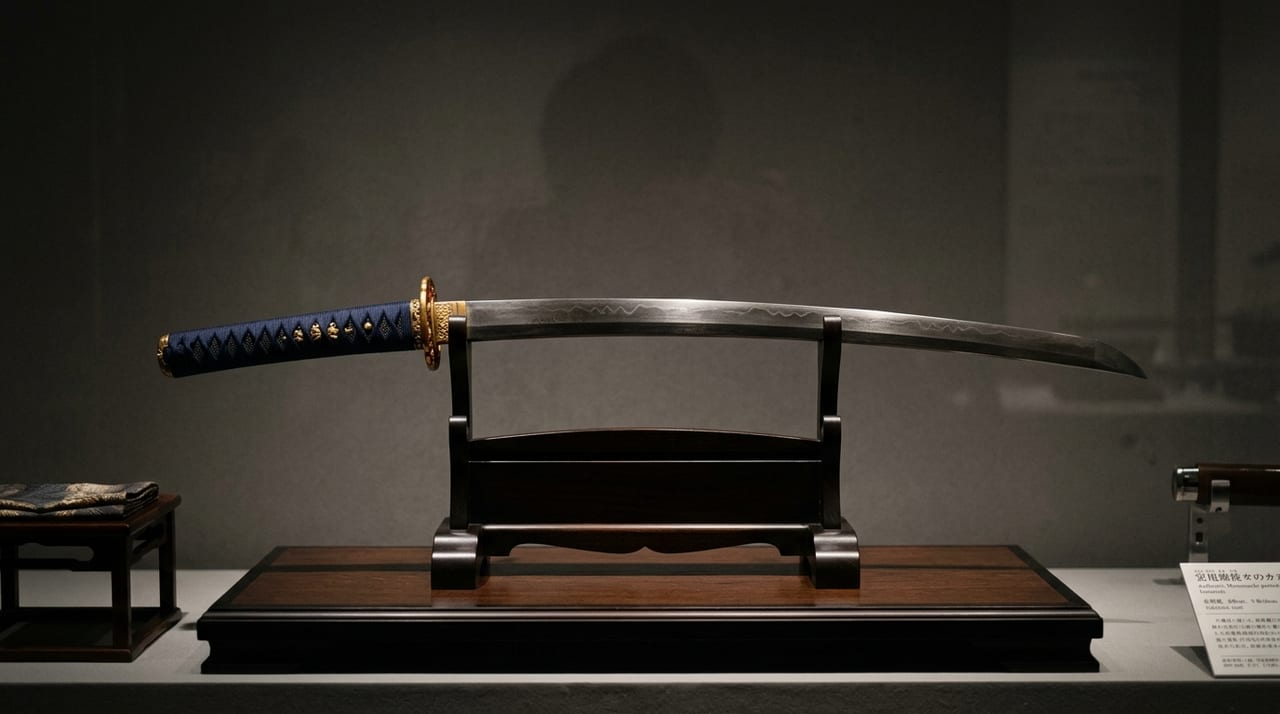 * Image is for illustrative purposes only.
Table of Contents
What Is the Kissaki — The "Face" of the Japanese Sword
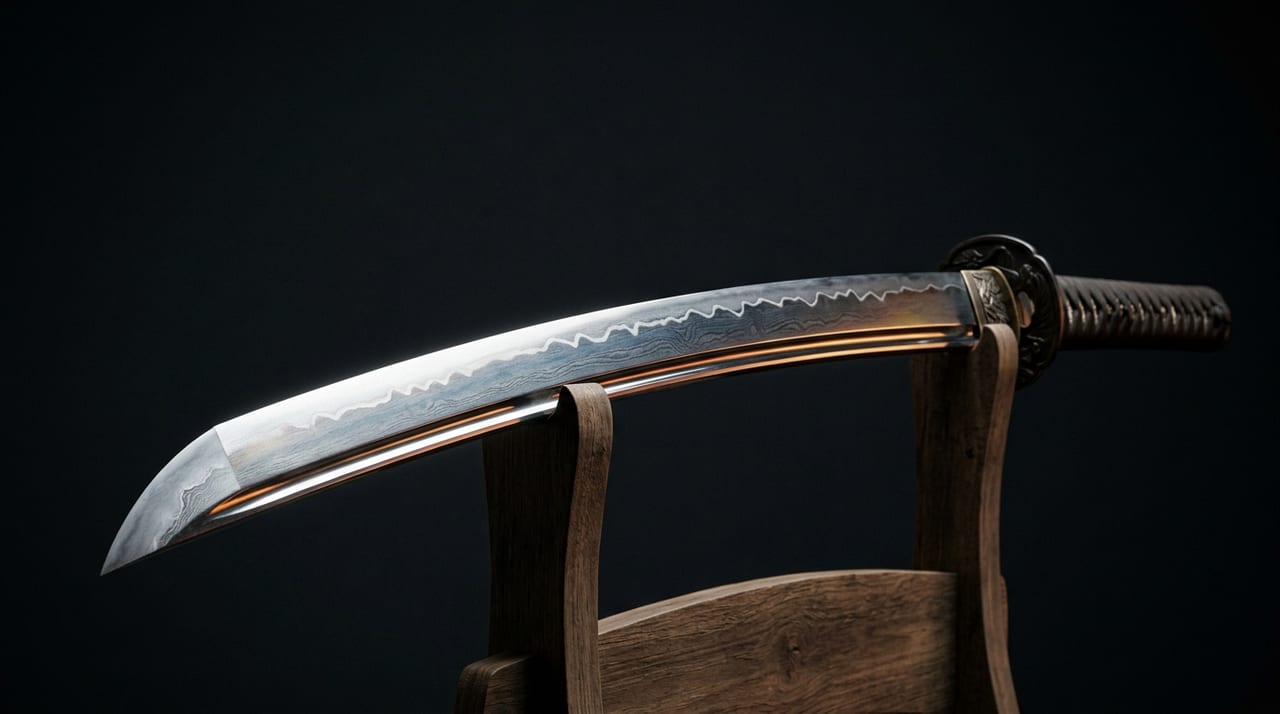
The "kissaki" is the tip section of the Japanese sword — the part that could be called the "face of the blade" — and is the most visually striking component. Compared with Western swords, the kissaki of the nihontō stands out for its distinctive geometric form. This tip, which converges in an instant the continuous flow from the blade body, goes beyond a mere thrusting function and is the essential element that determines the beauty of the entire sword.
The kissaki is not simply the "tip of the blade." It is the part where the tōkō's skill, the aesthetic sensibility of the era, and practical combat requirements are all concentrated; even among works by the same tōkō, the shape of the kissaki may change over time. Furthermore, among tōkō of the same period, the individual character of schools is clearly expressed in kissaki styles. In sword appraisal, the shape, size, and style of the bōshi (the hamon appearing in the kissaki) serve as important clues for determining period and school.
Yokote — The Geometry Created by the Kissaki's "Boundary Line"
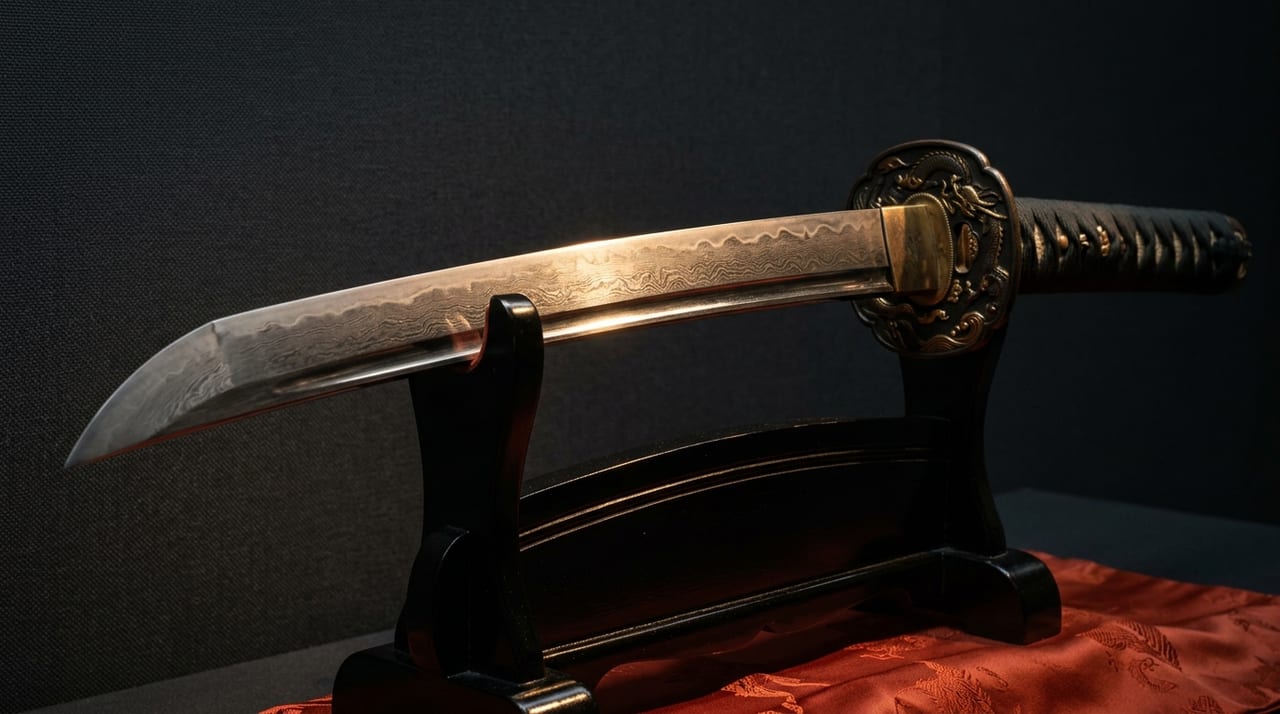
The "yokote" is a lateral ridge drawn at the boundary between the main body of the blade (the flat of the blade and the shinogi area) and the kissaki. Hira-zukuri blades have no yokote, but in shinogi-zukuri tachi and uchigatana the yokote is clearly formed, becoming an important design element that divides the overall structure of the blade.
The yokote appears to the eye as a simple "line," but its creation involves the complex interplay of three processes: tanren (forging), yaki-ire (quenching), and polishing. During the tanren stage, a form that is mindful of the boundary between kissaki and blade body is created; after the hardness of the kissaki section is secured through yaki-ire, the work of clearly "bringing out" the yokote line is performed in the final polishing stage.
All of the following serve as criteria for evaluating a blade's period, school, and quality: the position of the yokote (its distance from the blade tip), its direction (whether perpendicular or forward-leaning relative to the blade body), and its crispness. A blade whose "yokote is razor-sharp and true" demonstrates the high quality of the polishing, while a blurred or indistinct yokote is a factor that lowers the appraisal, serving as evidence of poor angle management of the kissaki section during the polishing process.
Kissaki Size and Historical Period — The Evolution of Form Inscribed by History
The size of the kissaki changed over time and serves as a reliable indicator for historical period determination.
- Small kissaki (ko-kissaki): Seen frequently in the Heian-Kamakura period. Combat in this era was dominated by mounted warriors, and since striking quickly from horseback was considered important, a slim and graceful kissaki was preferred. As if accompanying the tip of an elegant tachi with deep koshi-zori, the kissaki also settles neatly and slenderly.
- Large kissaki (ō-kissaki): Seen frequently in the Nanbokuchō to Muromachi period. The kissaki also became large to match the spirit of the age — its tendency toward enlargement and grandeur. The kissaki of nodachi and ōdachi are particularly large, accentuating the powerful impression of the whole blade. Large kissaki also made a comeback in the Keichō Shintō period from the late Sengoku era through the early Edo period, becoming one element of a bold blade shape.
- Medium kissaki (chū-kissaki): Seen frequently in the late Kamakura period and in Edo-period uchigatana. A middle size with an excellent balance of practicality and beauty, it became established as the standard form in the shintō and shinshintō periods.
This evolution in size is linked to the overall trend of enlargement and reduction in blade size, and one can read in the kissaki alone the changes in combat style and aesthetic sensibility of each era.
Bōshi — The School's Individuality as Told by the Hamon of the Kissaki
The "bōshi" is the hamon that appears in the kissaki section and is an important point of appreciation treated separately from the hamon of the main blade body. The bōshi is formed during the yaki-ire of the kissaki, and its shape varies widely by school, tōkō, and period.
- Haki-kake bōshi: A style in which the bōshi extends directly to the tip of the kissaki. Widely seen in Bizen-den and Yamashiro-den blades, the continuity of the hamon is beautiful.
- Maru-bōshi: A form in which the turn of the bōshi curves back in an arc. Seen frequently in masterworks of the Kamakura period, it gives an elegant impression. The length of the turn and the beauty of the curve are the key points of evaluation.
- Ō-maru-bōshi: A form that turns back larger and more rounded than the maru-bōshi, a bold style seen mainly in masterworks of the kotō period (Kamakura to Muromachi). The roundness spreads across the entire kissaki, giving a warm impression.
- Ko-maru-bōshi: A form that turns back modestly and small, with a neat and refined impression. Frequent in Yamashiro-den and Yamato-den, typical examples are found in works of the Awataguchi school of the Kamakura period.
- Kaen-bōshi: A bōshi that rages like flames in violent disorder. A special style typified by works of Yukimitsu of the Sōshū-den and the Yamato Taima school, concentrating the aesthetic of "disorder" in the kissaki. Disordered bōshi are also seen in works of Masamune and Sadamune, but Yukimitsu and others are particularly cited as typical examples of the kaen-bōshi. It has a powerful visual impact and is widely loved by sword enthusiasts.
- Yaki-zume bōshi: A state in which there is almost no turn and the yakiba is packed up to the very tip of the kissaki. It carries significance from a strength standpoint and was adopted frequently in combat-oriented blades.
The Craft of Kissaki and Bōshi — The Most Demanding Work for Tōkō and Togishi
The crafting of the kissaki and bōshi is one of the most demanding tasks for both tōkō and togishi alike.
For the tōkō, the yaki-ire of the kissaki is the part most difficult to control across the entire blade. Because the kissaki is the tip of the blade, heat escapes differently from other parts, and the temperature management and timing of rapid cooling during yaki-ire determine the final form of the kissaki. The closer to the tip, the less steel there is, and a slight temperature difference has a large effect. The successful completion of the kissaki's bōshi in an appropriate state — "neither too disordered nor over-quenched" — is a barometer demonstrating the tōkō's overall technical mastery. Master craftsmen acquire this delicate control through intuition and long years of experience, which crystallizes as the distinctive bōshi forms that are each individual's hallmark.
For the togishi, the three elements of the kissaki — the shinogi, the yokote, and the bōshi — must all be brought to their finest state simultaneously. To bring out the yokote line with crispness while expressing the hamon of the bōshi with clarity, delicate use of the whetstone at angles different from those used for the blade body is required in the ha-nugui and ji-nugui stages. Because the kissaki section is small in area, even a slight deviation in how the whetstone is applied appears as a blurred yokote or indistinct bōshi. Skilled togishi use small whetstones dedicated to the kissaki, at times guiding the stone with their fingertips while accumulating minute operations.
Conclusion — What the Kissaki Reveals About the Blade's Total Mastery
The three elements of kissaki, yokote, and bōshi form a "condensed historical record" that speaks at once to four things: the blade's period, its school, the tōkō's skill, and the togishi's artistry. Within the mere few centimeters of the tip, the maker's intent, the aesthetic sensibility of the era, and the pinnacle of technique are layered and inscribed.
Deepening one's attention to the kissaki in sword appreciation is one of the best methods for dramatically raising one's overall understanding of the nihontō. When appreciating the kissaki, simply keeping the following three steps in mind will sharply raise the resolution of one's sword appreciation.
- Infer the period from the size of the kissaki
- Confirm the quality of the polishing from the crispness of the yokote
- Surmise the school from the shape of the bōshi
The kissaki is truly the microcosm of the nihontō as a comprehensive art form.