Yakinaoshi — The Meaning of Re-quenching Japanese Swords and the Limits of Restoration
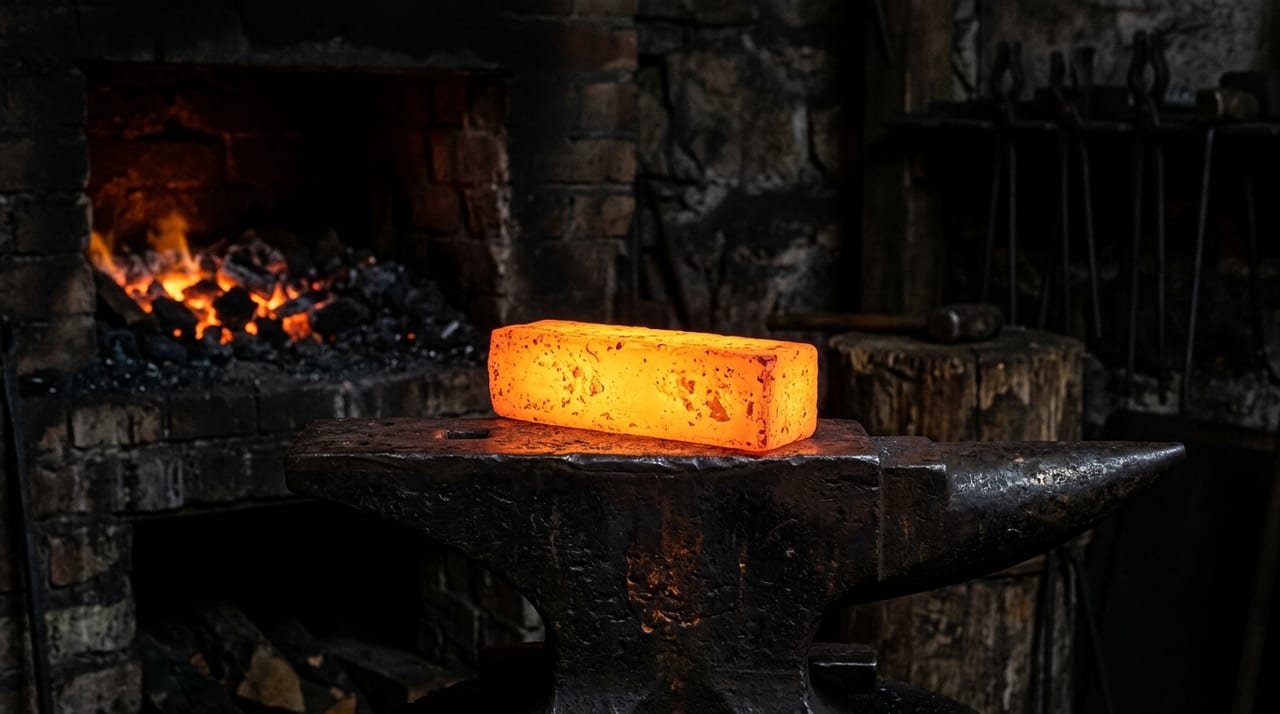 * Image is for illustrative purposes only.
Table of Contents
What Is Yakinaoshi — A Technique for "Giving a Sword New Life"
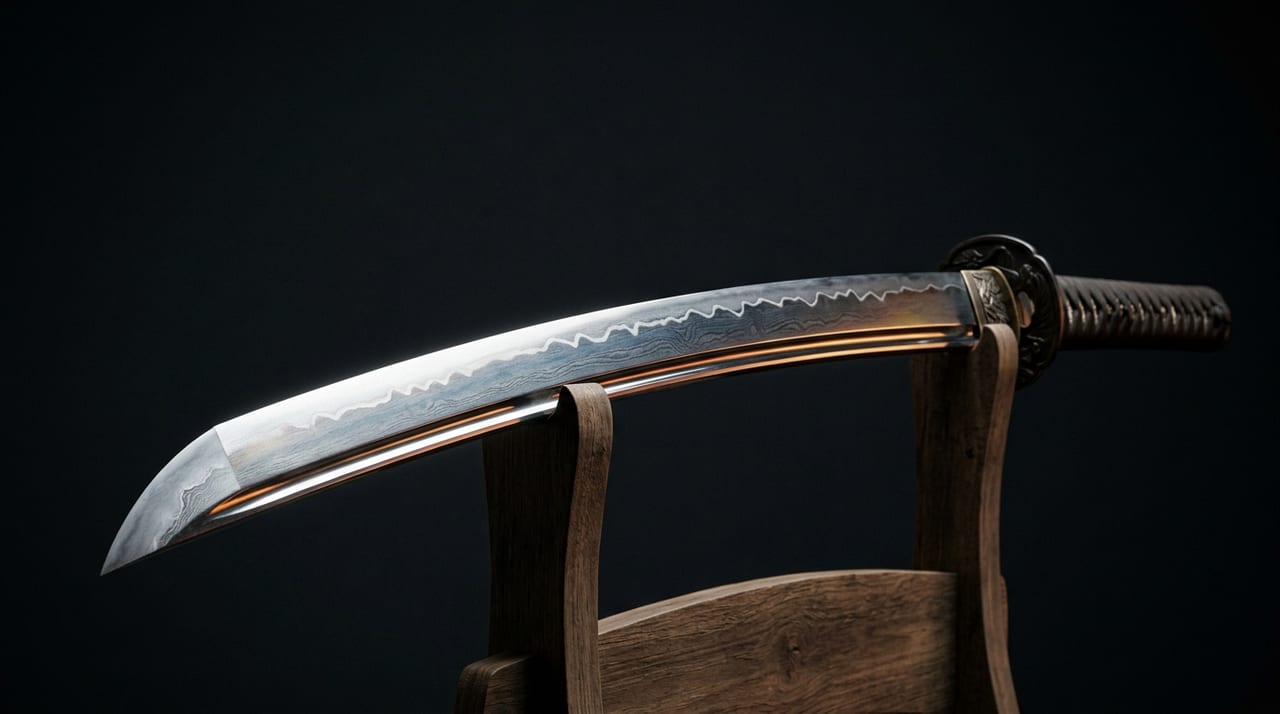
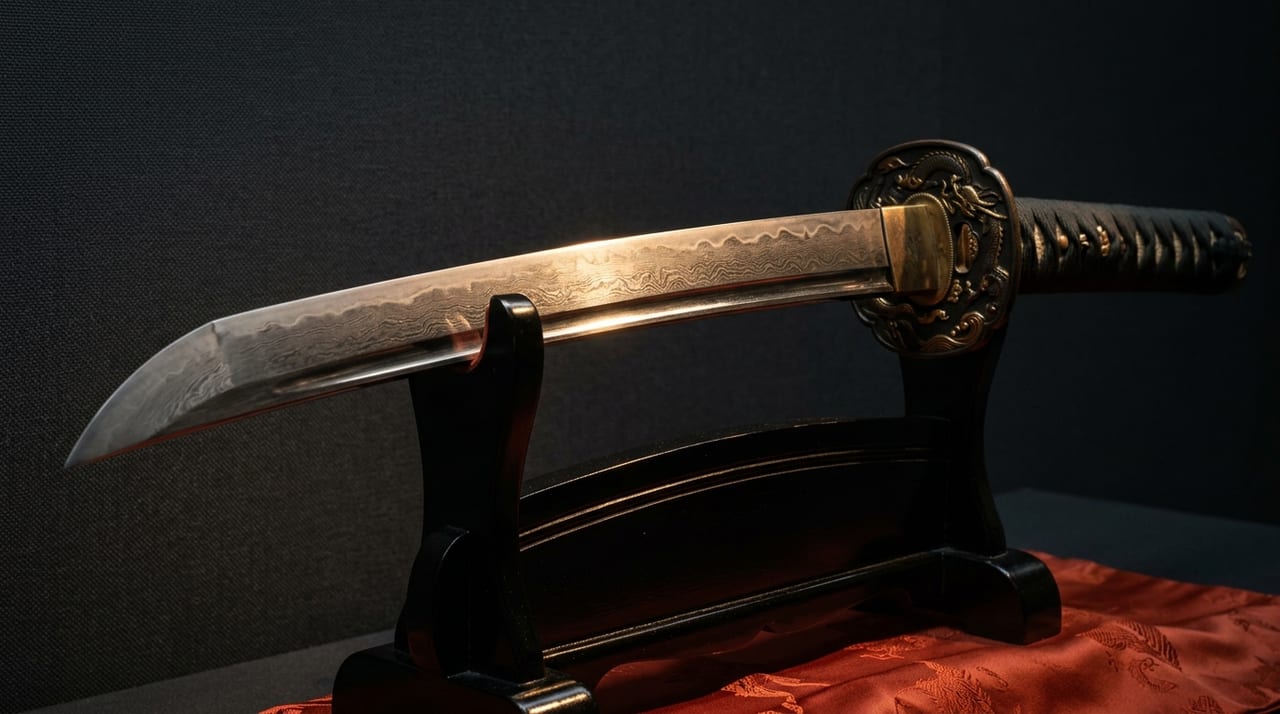
Yakinaoshi refers to a technique for applying yaki-ire (quenching) again to an already completed Japanese sword. Because the hamon (temper line) of a Japanese sword is determined in the yaki-ire process, yakinaoshi is also an act of re-forming the hamon. It has been performed as a means of restoration when a sword breaks, recovery when a hamon disappears, or as a last resort for correcting defects.
The word "yakinaoshi" is also used in everyday language to mean "a redo" or "reconsideration," but in the context of Japanese swords it refers to a specific and specialized technical act. In the world of sword appraisal, however, it is also a negative signal indicating "a sword that once had some kind of problem," and whether or not yakinaoshi has been performed is an important item to verify in appraisal. Because yakinaoshi is information that concerns the sword's provenance itself, it becomes an unavoidable issue in the context of purchase or appraisal.
The Main Situations in Which Yakinaoshi Is Performed
The situations in which yakinaoshi is carried out can broadly be divided into three categories.
- ① Hamon loss (yakiochi): When exposed to intense fire or heat, the martensitic structure that constitutes the hamon transforms at high temperature, reverts to a homogeneous structure, and the hamon disappears. Records remain showing that many swords burned along with their storehouses in the great fires of the Edo period (such as the Meireki Fire) lost their hamon and were re-quenched. Among famous kotō that survive today, there are several for which a history of yakinaoshi has been confirmed from historical sources.
- ② Restoration of broken swords: When a sword breaks, the fractured surface may be treated, the blade reshaped shorter, and yakinaoshi performed. The blade often ends up shorter than its original form, and the restoration process is accompanied by the "suriage" (shortening) procedure.
- ③ Hamon change by commission: Although a rare case, instances in which samurai commissioned yakinaoshi to change the hamon design of their swords are recorded in Edo-period historical sources. In modern times, tōkō (swordsmiths) sometimes perform it to correct the hamon of a sword they themselves have made.
Common to all these situations is the fact that yakinaoshi has been chosen not as a decision to "abandon the original sword" but rather to "continue making use of the original sword." The ability to re-form only the hamon while preserving the jigane (steel of the blade surface) and shape of the blade itself is also the reason yakinaoshi has continued to be chosen as a means of restoration.
The Technical Process of Yakinaoshi
In principle, yakinaoshi must be performed by the tōshō (swordsmith) who made the original sword, or by a tōkō (swordsmith) of equivalent or greater skill. In modern times it is treated as work exclusive to tōshō.
- Tsuchiotoshi: Dirt and traces of the previous yaki-ire are removed from the blade surface.
- Tsuchioki (applying the clay coating): The hamon pattern is designed by applying clay before yaki-ire. Whether to reproduce the original hamon or create a new design is at the tōkō's discretion.
- Yaki-ire (quenching): The process is the same as at the time of the original making, but steel that has been quenched once may have accumulated structural fatigue, so exactly the same result as the first time is not guaranteed. In particular, the steel of kotō that has undergone extensive orikaeshi tanren (folding) carries a risk of intergranular corrosion (ryūkai fushoku) from reheating.
- Polishing (togi): A finishing polish is required.
Because the entire process from tsuchiotoshi to polishing must be carried out, yakinaoshi is not a task that can be completed in a short time; it is a labor-intensive restoration that depends on the skill of both the tōshō and the togishi (polisher).
Clues for Identifying Whether Yakinaoshi Has Been Performed
It is said that there are several clues to which experts pay attention on a blade that has undergone yakinaoshi. The most representative of these is the contrast between the condition of the rust remaining on the nakago (tang) and the condition of the hamon. Since the nakago is covered with clay and protected during yaki-ire, it should in principle bear rust of the same age as the blade, but if the impression of the hamon and the aged appearance of the nakago rust look mismatched, this becomes one piece of evidence raising suspicion of yakinaoshi.
Irregularities in the bōshi (temper line in the point), and unnatural demarcations arising at the boundary between the jigane and the hamon, are also sometimes cited as grounds for judgment. However, evaluating these characteristics requires specialized knowledge and experience, and cannot be determined by lay observation alone. Definitive judgment as to whether yakinaoshi has been performed is limited to appraisers who have examined many swords, or to official appraisal bodies such as NBTHK.
The Limits of Yakinaoshi — Problems in Appraisal and in Technique
Yakinaoshi has serious limitations in both technical and appraisal terms.
- Decline in appraisal value: In NBTHK evaluations, a sword confirmed to have undergone yakinaoshi may have its grade significantly lowered because it becomes difficult to assess the style of the original period and tōkō. In particular, when kotō from the Kamakura or Nanbokuchō periods have been subjected to yakinaoshi, the re-quenching is added to the jigane's age-related changes, making it quite different from "the hamon inherent to kotō." Swords for which a kanteisho (appraisal certificate) explicitly states "yakinaoshi present" have a strong tendency to see their market valuation fall.
- Risk of physical deterioration: When the blade is reheated, there is a risk of microscopic cracks forming around the hamachi (blade notch) and monouchi (striking area). A blade with a history of use and storage may have accumulated internal stress, making its behavior when released by rapid cooling uncertain.
- Difficulty of reproducing the hamon: The complex hamon of kotō — such as midare-chōji, inazuma kinsuji, and tobiyaki — are the product of the tsuchioki technique and yaki-ire sensibility cultivated by the original tōkō, and it is practically impossible for a later tōkō to reproduce the identical hamon. It is not unusual for the hamon after yakinaoshi to be judged "inferior to the original."
What to Verify When Purchasing or Owning a Sword
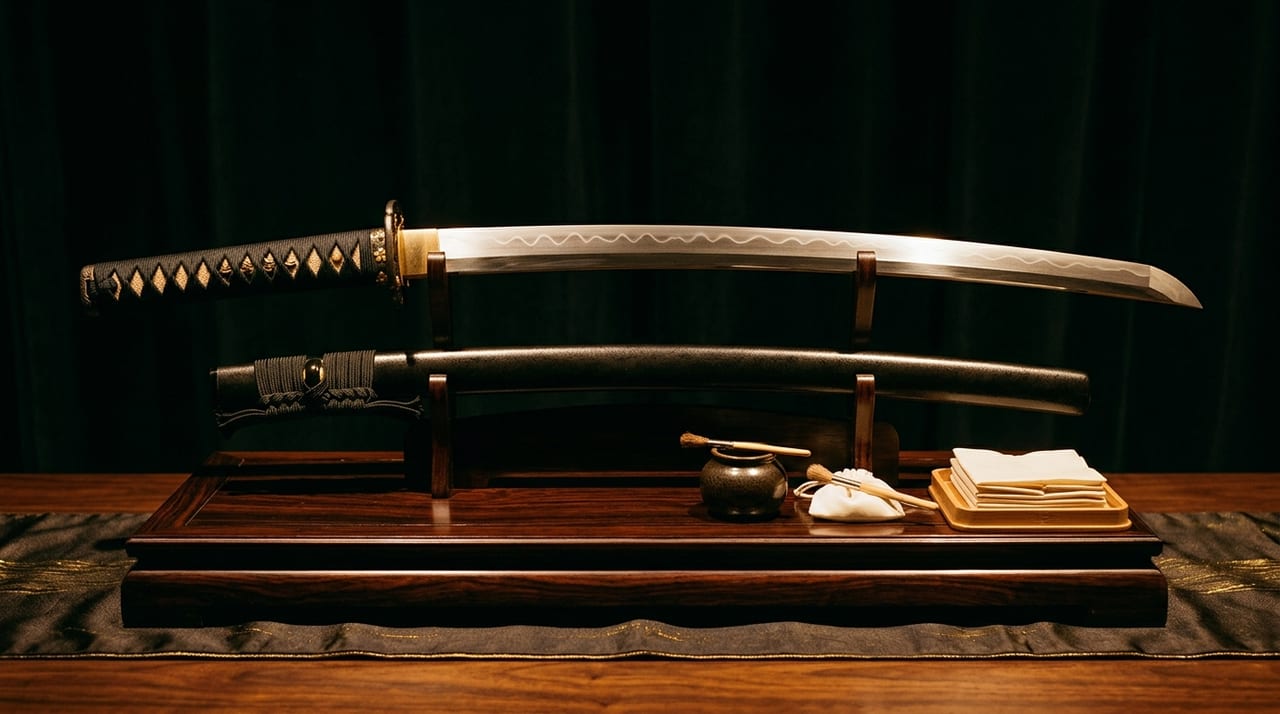
When considering a sword with a history of yakinaoshi, the basic first step is to check the content of the kanteisho. A kanteisho that has gone through the assessment of an appraisal body will reflect whether yakinaoshi has been performed and the evaluation made on that basis, making it an important reference before purchase. Additionally, if documents remain that reveal information about the sword's provenance and transmission — such as who owned it and when, and the circumstances that led to yakinaoshi — these will be useful for understanding the sword's value.
If there is suspicion of yakinaoshi on a sword already in one's possession, it is advisable not to take matters into one's own hands, but first to consult a trustworthy appraisal body or specialist dealer. Incorrect handling could place further burden on the blade.
The Significance of Yakinaoshi in the Modern Era
While yakinaoshi is often viewed negatively, it is also an indispensable technique in the context of sword restoration. When a famous historical sword loses its hamon to fire or war damage, choosing partial recovery through yakinaoshi over complete loss can be a rational judgment from the standpoint of cultural property preservation.
Among the celebrated Living National Treasure tōshō of today, there are cases in which a tōshō performs yakinaoshi on a damaged sword by a senior tōshō, framing it not as "restoration" but as "regeneration." It is sometimes described as "re-servicing" out of respect for the original tōshō, but in technical terms it is the same process.
Yakinaoshi is at once "an imperfect recovery" and "an act of prolonging the life of a sword." From the perspective that views the Japanese sword not merely as an object but as a cultural living entity, there is room for it to be evaluated positively as the best choice within its limitations.