The Technique of Controlling Ji-nie Formation — Fine Martensite Blooming in the Jigane and the Yaki-ire Design Carried Out by the Tōshō
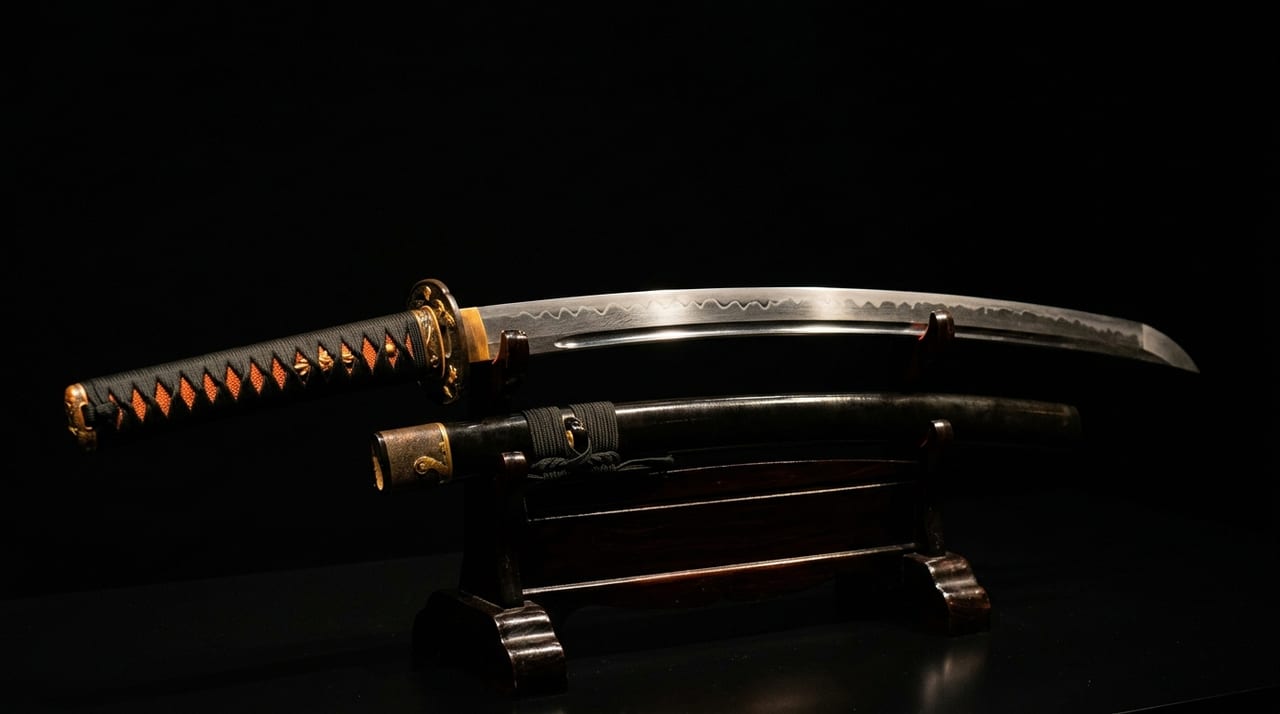 * Image is for illustrative purposes only.
Table of Contents
What Is Ji-nie?
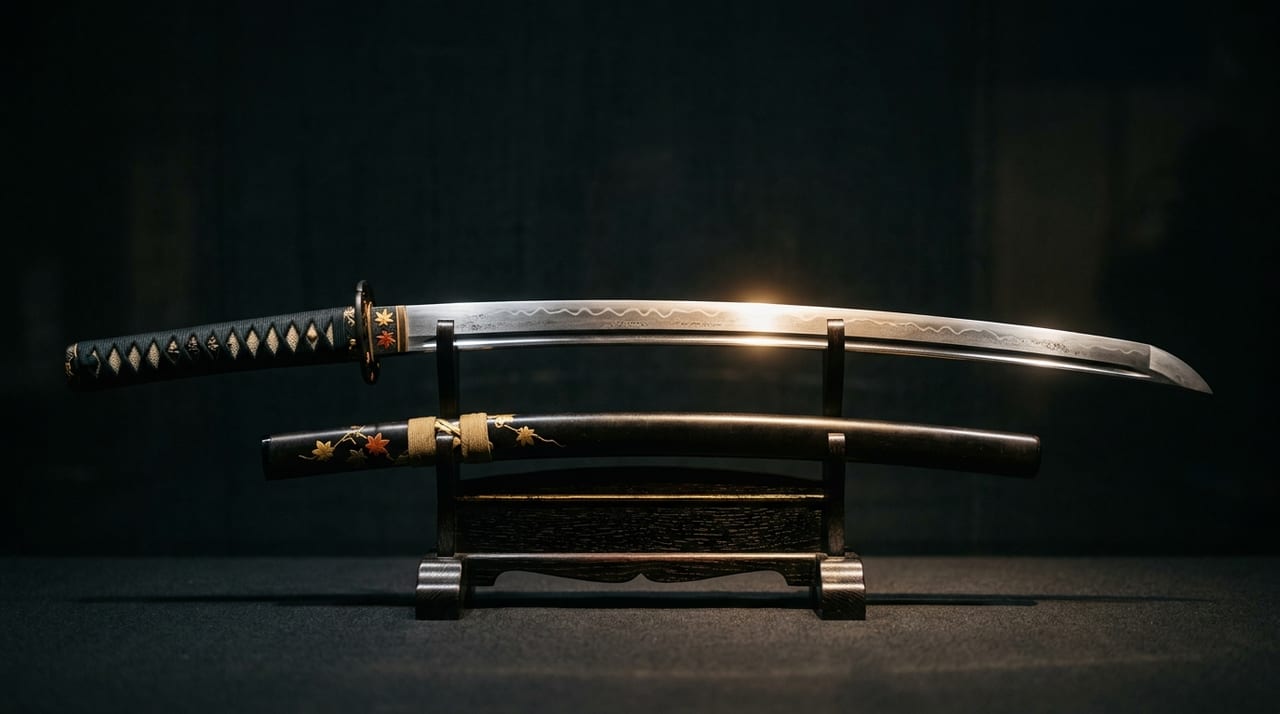
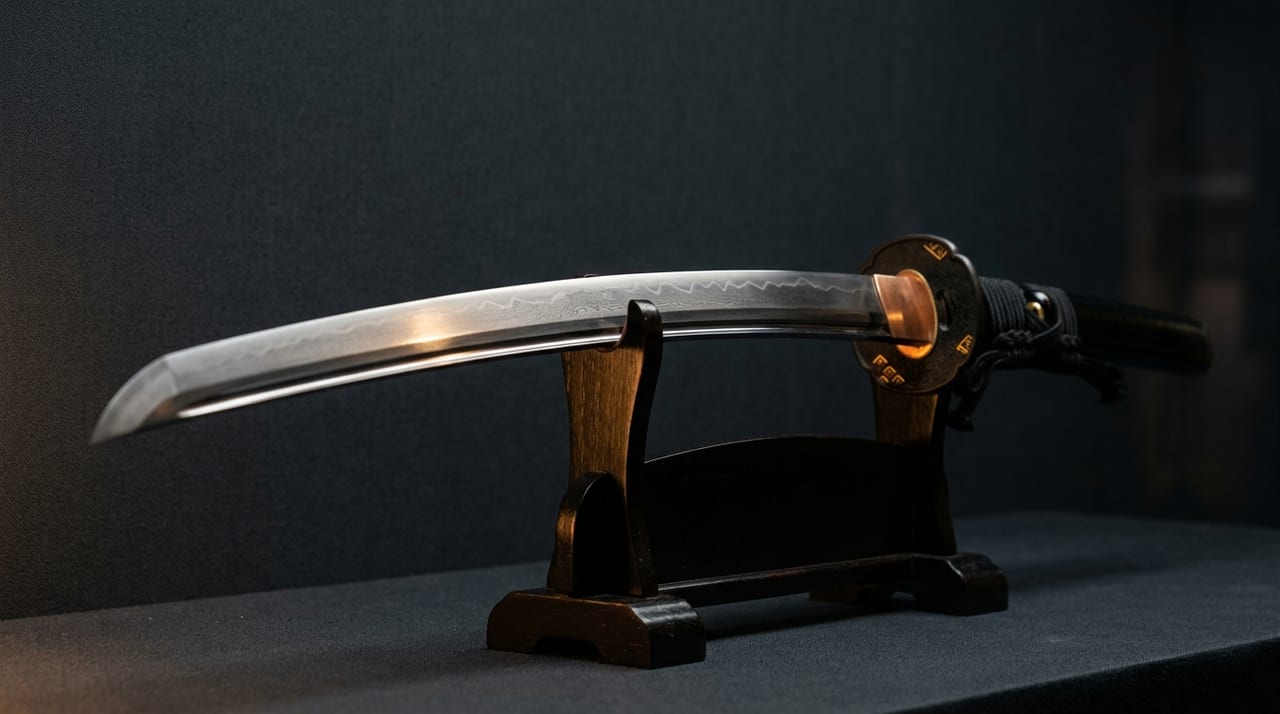
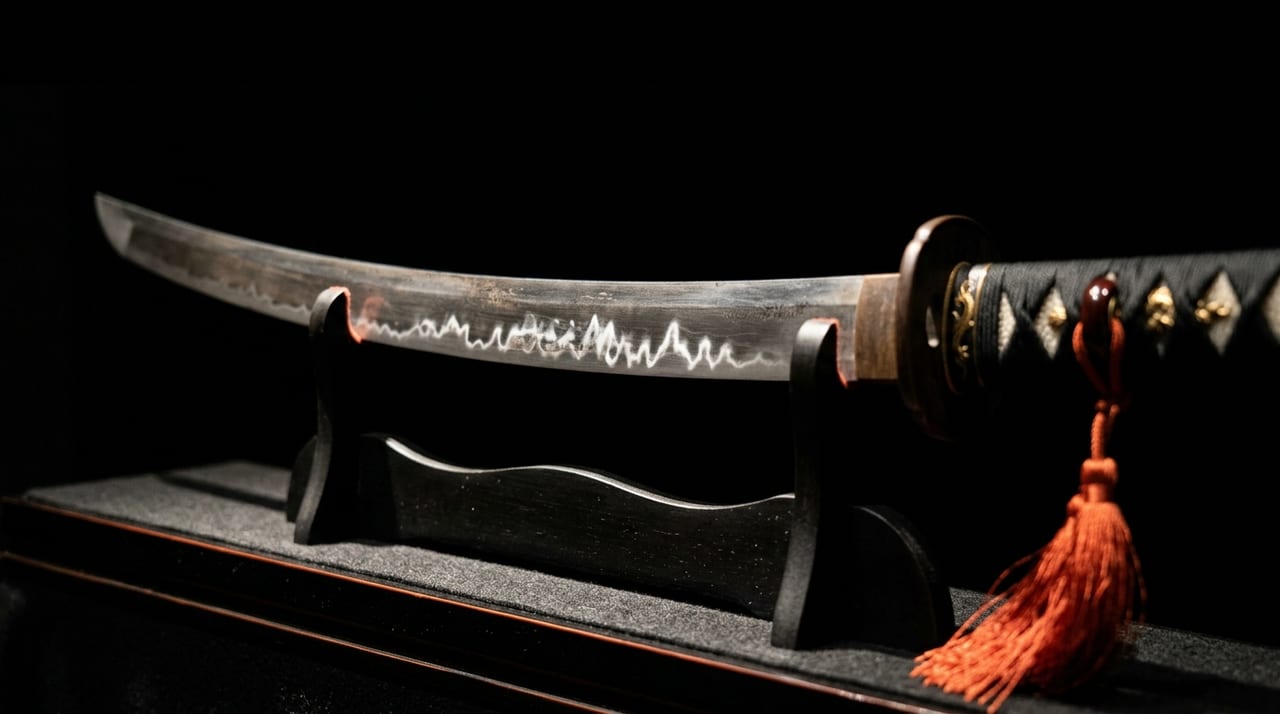
When a nihontō is viewed under a suitable light source, fine sparkling particles can sometimes be seen scattered across the "jigane" of the blade — the area outside the band of the hamon. This phenomenon is called "ji-nie."
Ji-nie is not a mere optical effect; it reflects the state of the steel's metallurgical microstructure. Simply put, ji-nie is the phenomenon in which fine martensite particles are uniformly dispersed within the jigane and appear to sparkle when they catch the light.
The Formation Mechanism of Ji-nie — Carbon Concentration Distribution and Yaki-ire
To understand the formation of ji-nie, one must first grasp the carbon concentration distribution of tamahagane, the material from which nihontō are made.
Non-uniformity of Carbon Concentration in Tamahagane
Tamahagane produced by tatara smelting does not have a uniform carbon distribution. Although orikaeshi tanren homogenizes it to a degree, fine variations in carbon concentration still remain in the finished blade.
These subtle variations in carbon concentration are the critical factor that determines the formation of ji-nie in the yaki-ire process.
The "Subtle Temperature Band" of Yaki-ire
During yaki-ire, the temperature required to austenitize the steel — that is, to bring it to a high-temperature state in which carbon is dissolved in the iron lattice — typically ranges from approximately 750 to 900°C, depending on the carbon content.
This "subtle temperature band" is of decisive importance to the formation of ji-nie.
- When the temperature is too high: The entire jigane becomes austenitized, and after rapid quenching, the areas outside the hamon band also undergo strong martensitic transformation. Ji-nie appears strongly, but this carries the risk of the entire blade becoming hard and brittle.
- When the temperature is appropriate: Only the areas of higher carbon concentration (fine carbon-enriched zones within the jigane) become austenitized, and only these areas transform into martensite after rapid quenching. The result is a state in which fine martensite particles are "scattered" throughout the jigane — ji-nie.
- When the temperature is too low: Austenitization is insufficient and martensitic transformation does not occur. The jigane is predominantly a soft pearlite structure, and ji-nie does not appear.
The Influence of Tsuchioki Patterns on Ji-nie
The thickness pattern of the refractory clay (tsuchioki) that the tōshō applies to the blade before yaki-ire also greatly affects the distribution of ji-nie formation.
Blade-edge side (applied thinly): A thin layer of clay promotes rapid quenching, encouraging strong martensitic transformation. This area becomes the "hamon band," where nie with a strong brilliance concentrates.
Jigane side (applied thickly): A thick layer of clay produces slower cooling. However, this is not "complete slow cooling"; the thermal drag from the hamon band causes localized rapid quenching even in the carbon-enriched zones of the jigane. This localized rapid quenching triggers martensitic transformation and forms ji-nie.
Ji-nie is thus a product of the "indirect rapid-quenching effect that the hamon band brings to the jigane." The design of the tsuchioki becomes the most critical parameter for controlling the intensity of ji-nie.
The "Nie-deki" of Sōshū-den — The Highest Expression of Ji-nie
Sōshū-den — the sword tradition originating in Sagami Province (present-day Kanagawa Prefecture) that was established from the mid-Kamakura period through the Nanbokuchō period — is known for the aesthetic of strong ji-nie and nie within the blade, called "nie-deki."
The works of representative tōkō Masamune and Sadamune are filled with fine particles of light across the entire jigane, as if "nie erupting from the skin," and this phenomenon came to be regarded by later generations of sword appraisers as the most important aesthetic criterion — the "hallmark of Sōshū-den."
Reproducing the nie-deki of Sōshū-den remains one of the greatest challenges even for gendaitō tōkō, and "how uniformly and abundantly one can draw out ji-nie" serves as an indicator of a tōkō's level of skill.
Criteria for Evaluating Ji-nie — Kowa-nie and Ko-nie
In appraising ji-nie, sword connoisseurship draws the following distinction.
Strong ji-nie (kowa-nie): Individual martensite particles are large, with a brilliance clearly visible to the naked eye. Frequently seen in masterwork blades of Sōshū-den, it possesses a powerful beauty described as "the jigane being alive." However, if the particles are too large, they can become a structural weakness.
Fine ji-nie (ko-nie): Fine particles are densely dispersed, producing an overall soft brilliance like a haze. Frequently seen in masterwork blades of Bizen-den, it possesses a refined beauty described as "the jigane being moistened."
What It Means for the Tōkō to "Control" Ji-nie
A skilled tōshō controls the intensity and uniformity of ji-nie by integrally adjusting the following multiple parameters.
- Material selection: selection of tamahagane based on carbon concentration and homogeneity
- Number of forging cycles and temperature: adjustment of the degree to which fine carbon distribution is homogenized
- Tsuchioki pattern: control of the thickness and uniformity of the clay on the jigane side
- Yaki-ire water temperature: the lower the water temperature, the higher the cooling rate, with a tendency to intensify ji-nie
- Yaki-ire speed: the timing, angle, and speed at which the blade is plunged into the water
Because the quality of ji-nie is determined by the subtle combination of all these parameters, "ji-nie control" is extremely difficult to quantify or standardize, and becomes the holistic expression of the tōshō's experience and intuition. This is why the ability to draw out the beauty of ji-nie to its fullest is regarded as one of the indicators of the highest technical achievement a tōshō can attain.