Controlling Yakihaba: The Art of Shallow and Deep Quenching in Hamon Formation
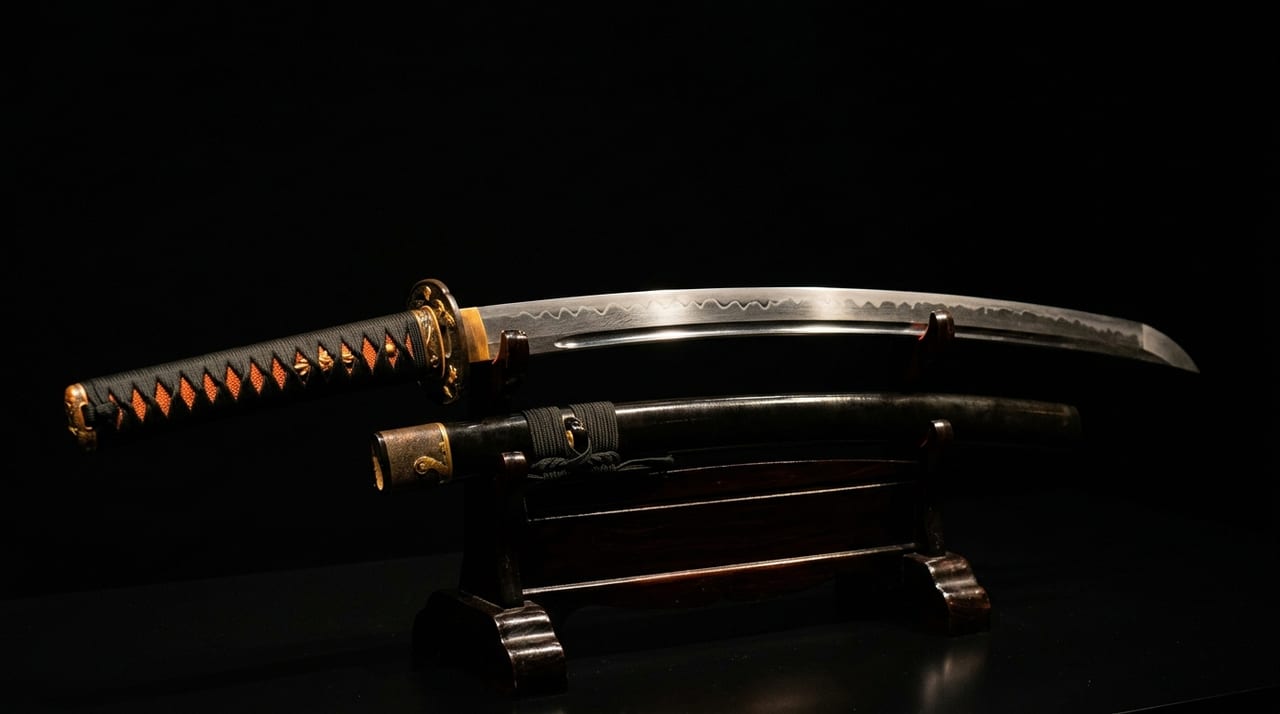 * Image is for illustrative purposes only.
Table of Contents
What is Yaki-haba — Measuring the "Depth" of hamon
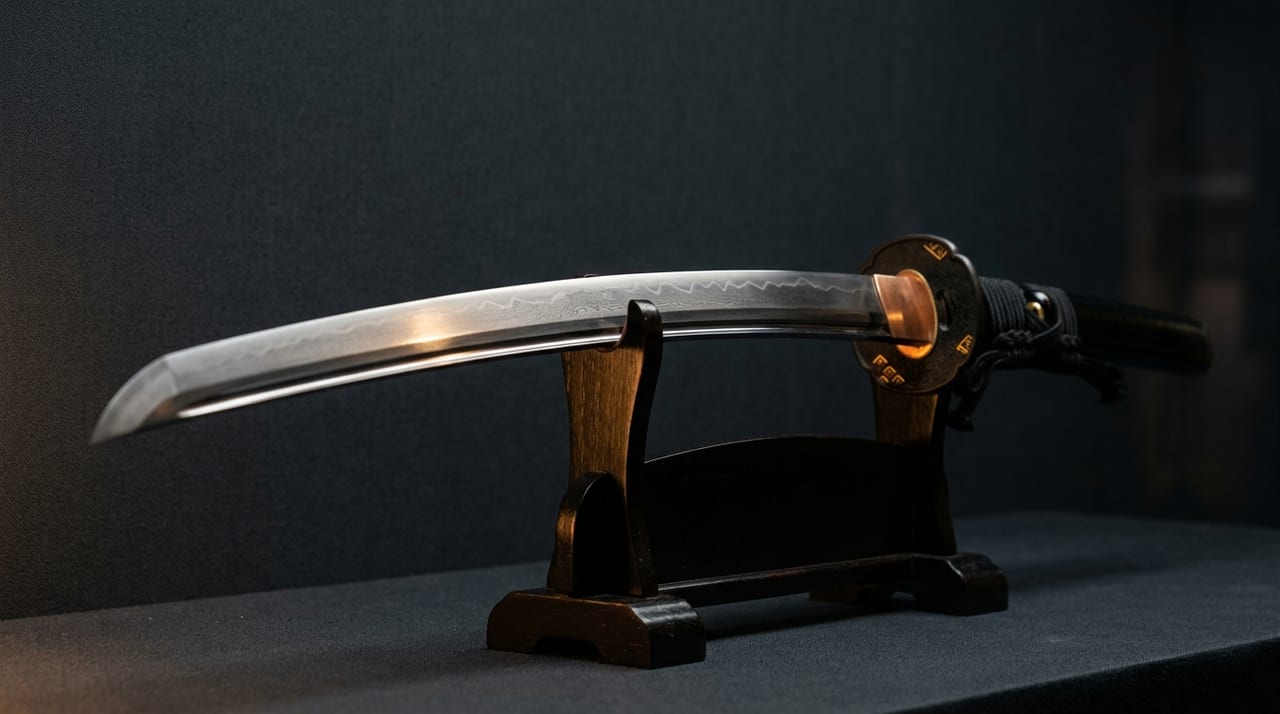
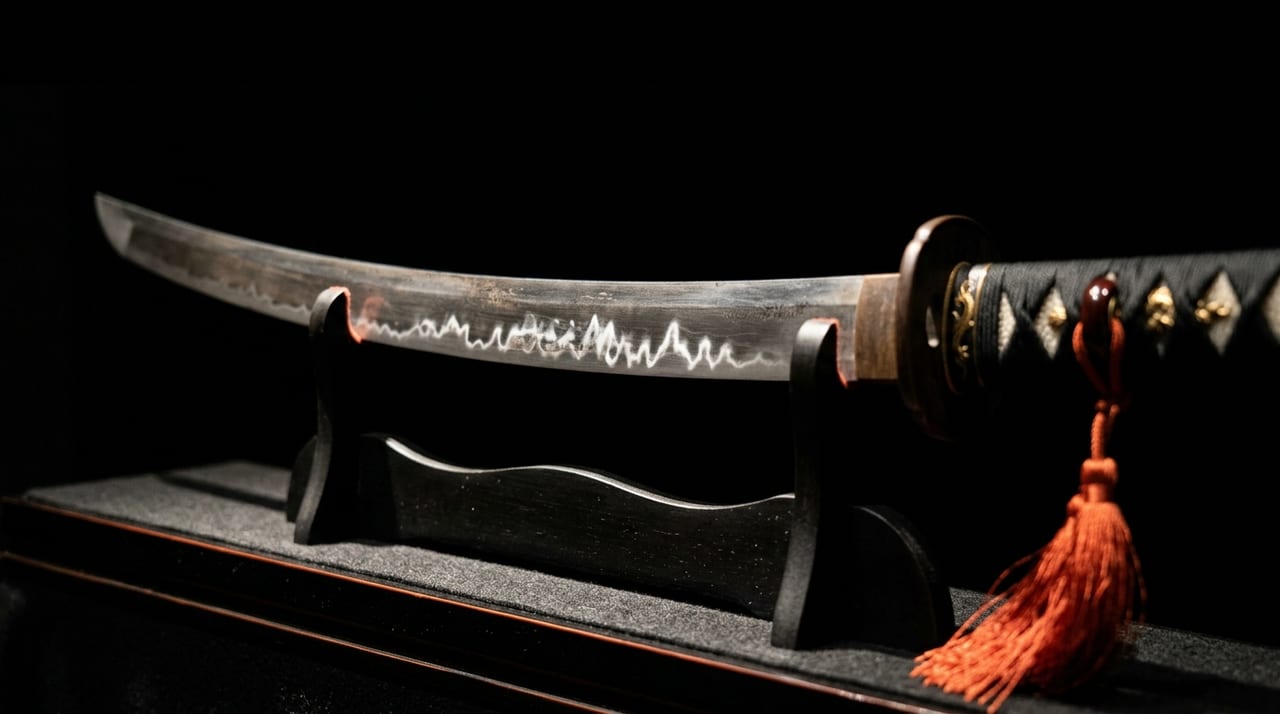
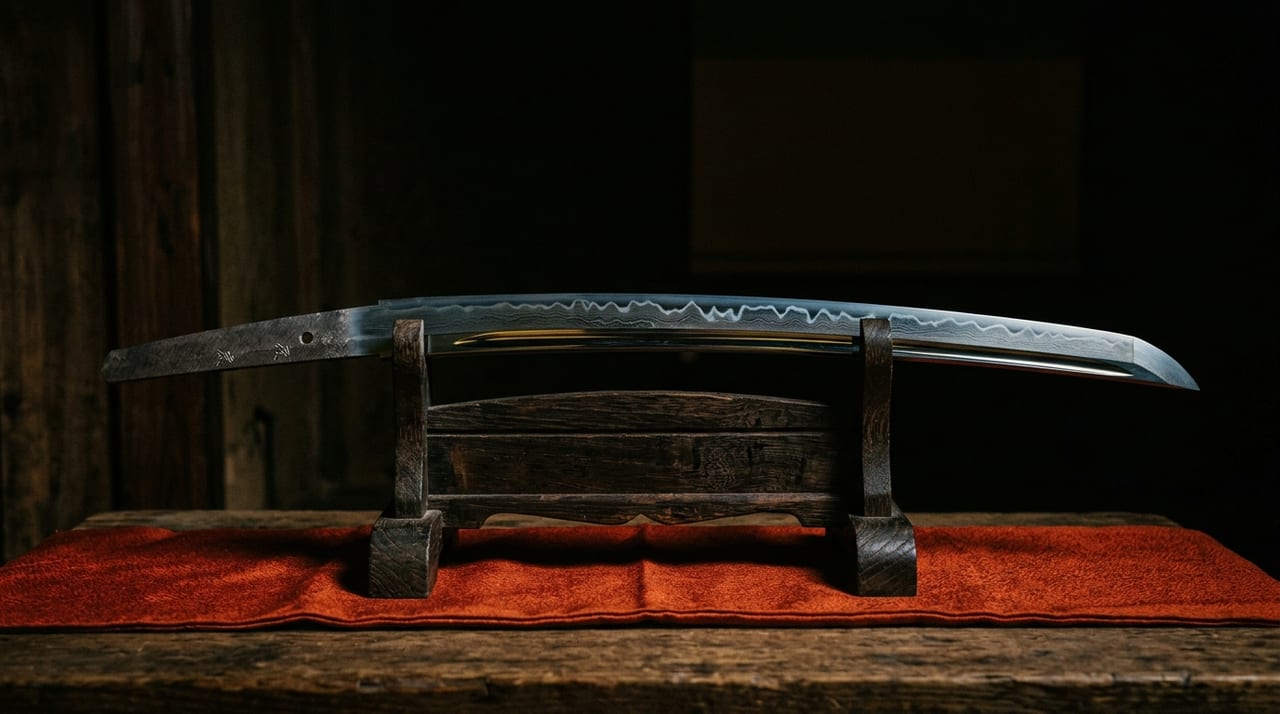
When appreciating Japanese swords, the eye tends to be drawn to the shape of the hamon — suguha, choji, gunome, and others. However, from the perspective of a master swordsmith, the "yaki-haba" is equally important as the "shape" of the hamon.
Yaki-haba refers to the width of the hardening zone that has undergone martensitic transformation, appearing in the area where the yakiba-tsuchi has flaked away after quenching. The extent of hardening from the blade edge toward the spine — this "yaki-haba" directly affects the sword's strength, cutting ability, and the way its curve develops.
The hamon is not merely a decorative pattern, but a metallurgical trace born from the quenching process. By applying yakiba-tsuchi to the blade, heating it in the forge, and then rapidly cooling it in water, only the thin blade-edge portion beneath the yakiba-tsuchi undergoes rapid cooling and undergoes martensitic transformation to become hardened. The hardening boundary appears as the hamon, and the distance from that boundary to the blade edge becomes the "yaki-haba."
Usuyaki (Thin Hardening) — The Boundary Between Delicacy and Insufficient Strength
"Usuyaki" refers to quenching with a relatively narrow yaki-haba compared to the blade width. Its advantages are that the hamon appears delicate, and the internal stress from quenching is minimized. From the perspective of preserving decorative swords long-term, usuyaki places less strain on the blade and is superior in terms of preservation.
On the other hand, the weakness is "the risk of insufficient strength." If the yaki-haba is excessively narrow, the blade edge becomes prone to chipping in actual combat or test cutting. While thin hardening is favored in modern decorative swords, considering practicality, ensuring an appropriate width is essential.
Many examples of thin hardening can be found in ancient swords (koto) from the Heian and Kamakura periods. This reflects the constraints of that era when quenching technology was still in its developmental stages, and is also related to how swords were used on battlefields at the time. It is believed that in an era when thrusting and wringing techniques were the mainstream rather than slashing, excessive yaki-haba was unnecessary.
Key points to distinguish thin hardening works are that the hamon boundary (the contour line on the spine side) is located close to the blade edge, and that the "jigane" unaffected by the quenching on the base side of the hamon is clearly visible.
Fukayaki (Deep Hardening) — Balancing Boldness and Risk
"Fukayaki" refers, in contrast to usuyaki, to quenching with a wide yaki-haba relative to the blade width. It is characterized by the hamon appearing to spread across the entire blade, and in the Shinshintō period (from Tenmei onward) in the late Edo era, works featuring deep hardening increased.
The advantages of fukayaki are visual impact and improved cutting force, but the greatest risk is "yake-ware." If cooling is too rapid, stress differences develop between the inside and outside of the hardening zone, causing the blade to crack vertically — "yake-ware." Fukayaki tends to increase this risk, requiring swordsmiths to possess advanced control techniques.
An extreme example of deep hardening is "hitatsura." Works in which quenching extends across the entire blade surface and the distinction between ground and edge becomes nearly nonexistent, possessing such an extensive yaki-haba, are evident in works by Osafune Nagayoshi, a master swordsmith representative of the Soshu tradition, and Koyama Munetsugu of the Shinshintō period. Such hitatsura represents a symbol of advanced technique, and is said to be difficult for even modern swordsmiths to reproduce.
Swordsmith's Judgment — Three Elements of Steel Material, Season, and Clay Placement
Controlling yaki-haba is a complex technique backed by experience. The main variables are as follows.
Carbon content of the steel material: The higher the carbon content, the more readily martensitic transformation occurs, and the wider the yaki-haba becomes. Since tamahagane produced by the tatara method varies in carbon content depending on the location, the selection of where to use it is also an important technical decision. It is also known that the carbon content balance between the kawagane and shingane affects the yaki-haba.
Quenching temperature and water temperature: If the blade's heating temperature is too high, it tends toward fukayaki; if too low, toward usuyaki. Additionally, since the water tank's water temperature and salinity concentration affect the cooling rate, adjustments according to seasonal water temperature changes are necessary. Traditionally, swordsmiths have carefully adjusted the water conditions each season while gauging water temperature by feel. Spring and autumn are relatively stable, while summer tends to have slower cooling, making usuyaki more likely.
Thickness of yakiba-tsuchi: If the yakiba-tsuchi on the blade side is made thin, yaki-haba becomes wider; if thick, usuyaki results. This tsuchioki control is considered one of a swordsmith's most delicate techniques. The composition of yakiba-tsuchi (the ratio of wood ash, whetstone powder, and clay) is also a secret tradition specific to each school and swordsmith, and this directly determines the individual character of the hamon.
Reading Yaki-haba in Authentication
In sword authentication, yaki-haba serves as an important indicator for distinguishing "schools, swordsmiths, and periods." Representative trends include:
- Soshu tradition: Deep hardening tendency, strong nie, and many works approaching hitatsura
- Bizen tradition: Appropriate yaki-haba, characteristic with elaborate choji hamon
- Yamato tradition: Thin hardening tendency, mainly featuring suguha and small irregular patterns
When using yaki-haba as an auxiliary means in authentication, attention must also be paid to the polish condition of the blade. Excessive polishing that narrows the blade edge can cause the apparent yaki-haba to appear different. To accurately read the true yaki-haba, comprehensive judgment combining the activity within the blade — such as gold lines, sand flow, and reflection — becomes the essential point of authentication.