The Wakizashi's Status and Wearing Culture: The Daishō System and the Wakizashi as a Samurai's Credential
 * Image is for illustrative purposes only.
Table of Contents
What is Wakizashi — Definition through Blade Length and Status
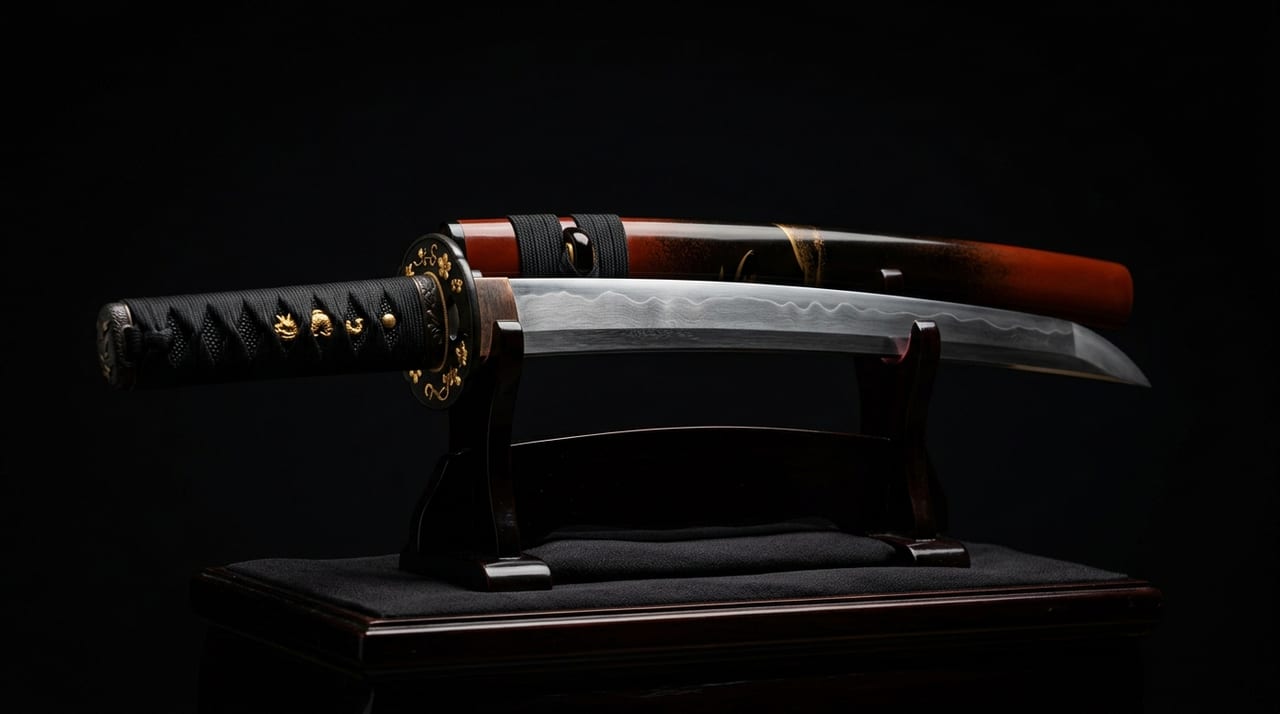
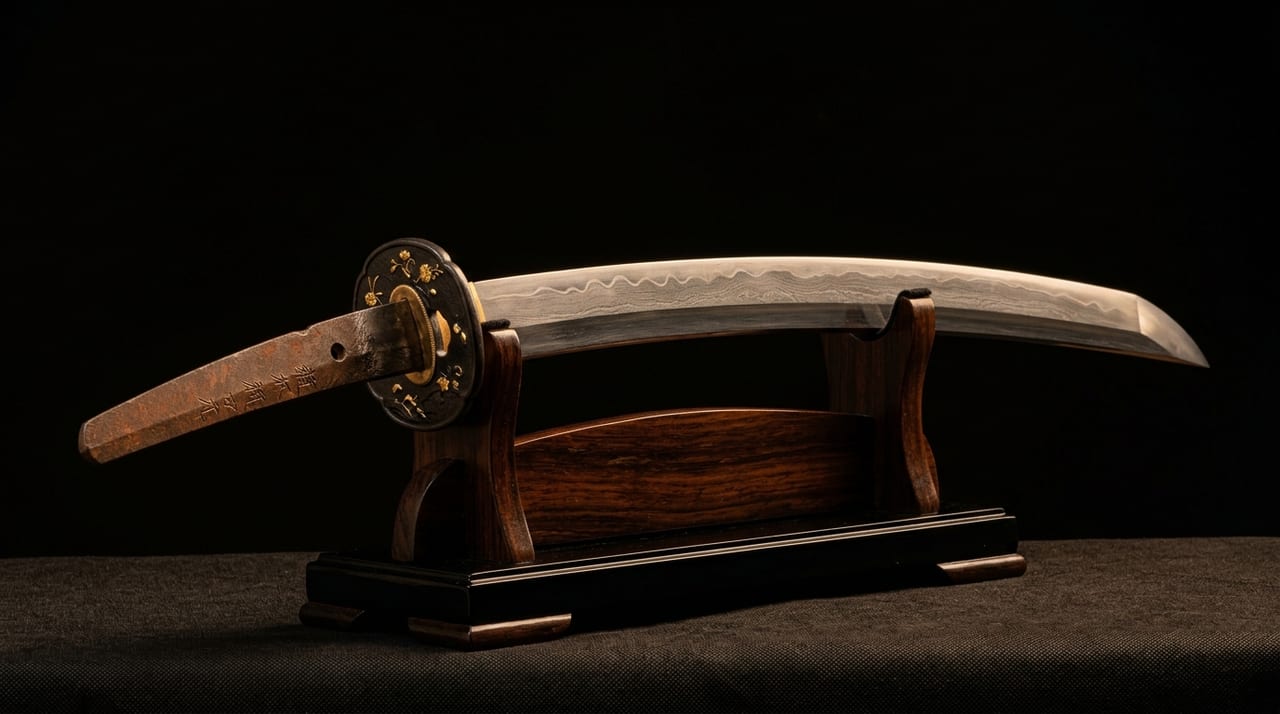
Japanese swords are classified by blade length (length of the blade). In the general classification, a blade length of 2 shaku (approximately 60 cm) or more is called "katana" or "tachi," a blade length of 1 shaku (approximately 30 cm) or more but less than 2 shaku is the wakizashi, and less than 1 shaku is called "tanto."
Wakizashi blade lengths vary widely, ranging from approximately 1 shaku 1 sun (about 33 cm) to 1 shaku 9 sun (about 57 cm). Depending on blade length, there are also informal distinctions such as "o-wakizashi" (1 shaku 5 sun or longer), "naka-wakizashi," and "ko-wakizashi."
The term "wakizashi" can be interpreted as meaning either "sword worn at the side" or "auxiliary worn implement (sidearm)." In any case, the designation as a "secondary or subordinate sword" to the primary weapon of the long sword (ōkatana: uchigatana) is reflected in its name.
Daishō — Establishment of the Samurai Code of Sidearm Wearing
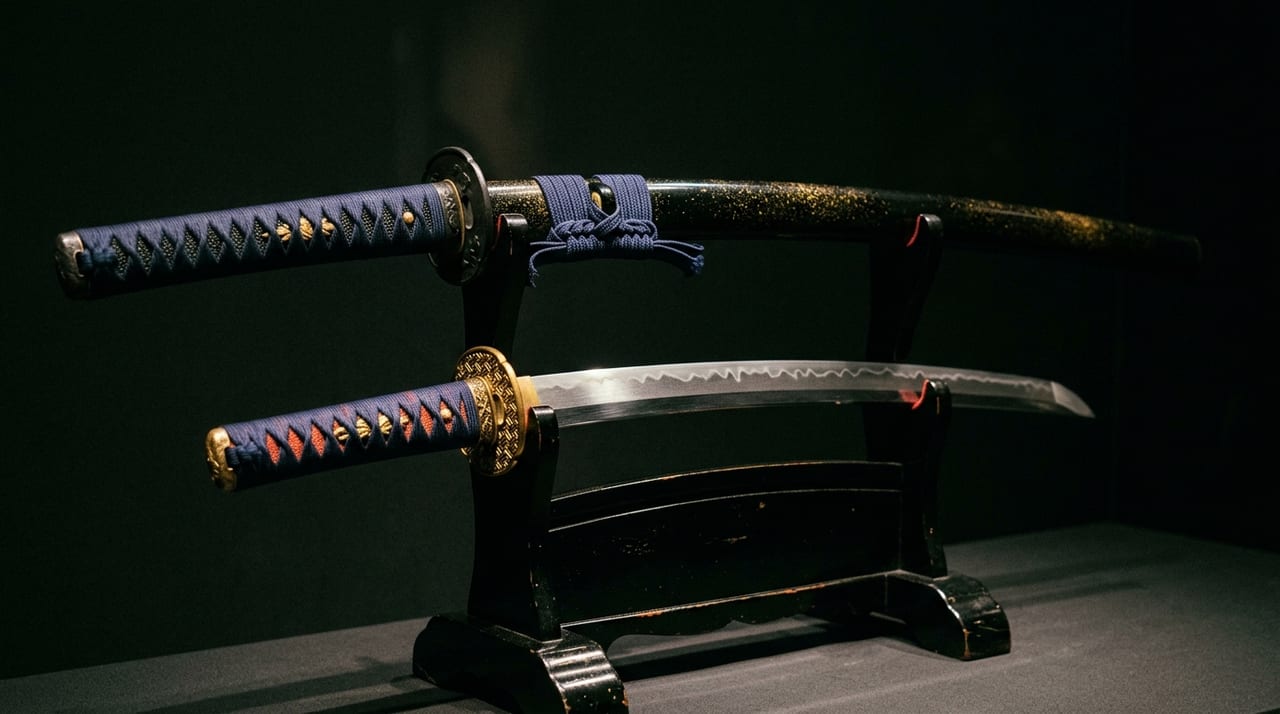
Daishō is the style of wearing a matched pair of swords—an uchigatana and wakizashi—at the waist. This sidearm style was established as the official attire of the samurai during the Edo period (1603–1868).
Sidearm Regulations by the Edo Shogunate
The Edo Shogunate established sidearm regulations to make samurai status visible and maintain social order.
Sidearm Wearing as a Samurai Privilege: In the Edo period, the "right to wear daishō at all times" was the clearest status marker of samurai rank. Peasants and townspeople were prohibited in principle from wearing a long sword (daitō; blade length 2 shaku or longer)—with some exceptions—and only samurai could wear daishō.
Daishō Wearing Style Regulations: The long sword (uchigatana) was worn with the blade edge up, inserted into the belt as a "sashimono," and the wakizashi was worn similarly at the left waist. A blade length of the daitō of approximately "2 shaku 3 sun to 2 shaku 5 sun" was considered the practical standard (excessively large or small was considered improper).
Sidearm Wearing by Non-Samurai — Differences by Status
While "sidearm wearing is a samurai privilege" was the principle, there were many exceptions and hierarchical differences.
Sidearm Permission for Peasants and Townspeople: Village headmen and wealthy merchants were sometimes granted permission to wear swords with their family name (myōji-taitō). However, this was not samurai rank itself, but rather the conferral of treatment equivalent to samurai status.
Merchant Swords (mise-mono): Wakizashi wearing for travel or bodyguard purposes was tacitly tolerated to a certain degree regardless of status.
Women's Kaiken (Concealed Dagger): The women of samurai families had the custom of carrying a short blade called a "kaiken" for self-defense (while not legally a wakizashi due to its blade length of less than 1 shaku, it was part of sidearm culture).
The Social Function of Wakizashi — Significance Beyond the "Complement" to the Long Sword
While wakizashi was born as a "backup" or "secondary" to the long sword, it acquired more complex social significance throughout the Edo period.
A Practical Weapon for Indoor and Confined Spaces
The long daitō was at a disadvantage in indoor combat and in confined spaces. In Japanese homes, it was both customary etiquette and practical to leave the daitō with its saya and carry only the wakizashi (following the custom of leaving the daitō at a "katanakake" sword rack when visiting).
In unexpected indoor conflicts or skirmishes in narrow corridors and attics, the wakizashi was superior in maneuverability. The perception of "wakizashi as a weapon for indoor combat" was widely shared among Edo period samurai.
Kaishakunin Blade — Companion to Seppuku
In the ritual of seppuku, unique to Japanese samurai culture, the wakizashi played an important role. While the formal procedure was for the seppuku performer to cut the abdomen with a short blade or wakizashi and an assistant (kaishakunin) to strike the neck with a long sword, the wakizashi was often chosen as the blade for performing the abdominal cut with one's own hand.
The wakizashi occupied a special place, as a "tool for how a samurai dies," in both spiritual and ritualistic significance.
Genpuku (Coming of Age) and First Sidearm Wearing — The Ritual of Status Confirmation
Samurai boys were first permitted to wear daishō during genpuku (the coming-of-age ceremony) and were recognized as samurai. A wakizashi given by one's father or lord at genpuku was treasured for life as a "first sword" (uigatana) and was deeply involved in the formation of samurai identity.
Likewise, the appearance of wearing daishō at one's first official attendance when entering a lord's service (shikan or being hired) demonstrated "proof of officially taking up position as a samurai."
Characteristics of Wakizashi Construction — Morphological Diversity as a Sword
Because wakizashi blade lengths vary widely, their construction forms are also diverse.
- Hirazukuri (flat construction): A flat blade without a ridge (shinogi). A form close to a short blade, suited for thrusting. Common in short wakizashi.
- Shinogizukuri (ridged construction): Construction identical to a standard uchigatana. Common in large wakizashi (longer wakizashi).
- Shōbu-zukuri (iris construction): Similar to hirazukuri but with a distinctive form with a different kissaki shape.
Choice of Construction: The combination of blade length and construction form reflected the intended use, contemporary fashion, and the owner's preferences. Imposing large wakizashi had substitute functions for the long sword, while smaller flat-constructed wakizashi were used for self-defense and ceremonial purposes.
Evaluation of Wakizashi in the Collector Market
What position does the wakizashi hold in the modern sword collector market?
Price Range: Wakizashi tend to be generally lower in price compared to long swords (uchigatana), but those by renowned sword makers with important certification documents and high-quality koshirae can reach several million yen. Short wakizashi in particular are morphologically rare and can have high collector demand.
Rarity by Blade Length: Mid-length wakizashi of approximately 1 shaku 3 to 5 sun are the most common and not rare. On the other hand, short wakizashi around 1 shaku 1 sun and large wakizashi exceeding 1 shaku 8 sun (blade lengths close to long swords) are highly rare.
Importance of Preservation and Koshirae: The condition of preservation (presence or absence of rust and damage) and the koshirae (whether shirasaya or decorative koshirae, and their quality) have a major impact on the price of a wakizashi. Edo-period "matched pair koshirae (soroigoshirae)"—sets of koshirae for long sword and wakizashi with identical design by the same craftsman—are particularly highly valued.
Conclusion — The Wakizashi Reflects the Samurai's Life
The wakizashi is not an "accessory" to the long sword (uchigatana). Within the daishō system, the wakizashi held independent significance embodying the samurai's social status, daily actions, and spiritual identity.
From genpuku to seppuku, the wakizashi was present at each milestone of a samurai's life. The design, signature, and history of damage inscribed in each blade silently tell the story of the life of the samurai who once bore it. The perspective of appreciating wakizashi not as a "subordinate item" of the long sword but as an independent work of art is the key to more deeply savoring the richness of Japanese sword culture.