The Art of Tsuchioki (Applying the Clay Coating): The Clay-Application Process Before Yaki-ire That Determines the Hamon
 * Image is for illustrative purposes only.
Table of Contents
What Is Tsuchioki: The Most Critical Process Before Yaki-ire
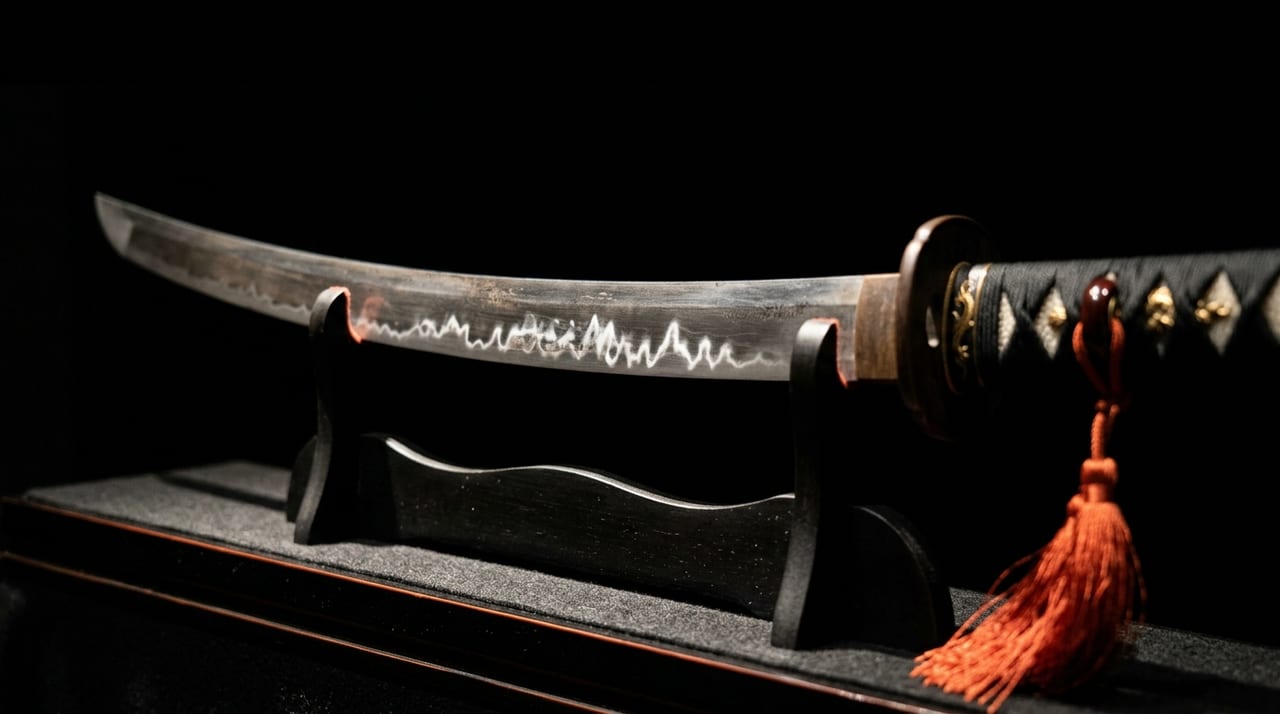
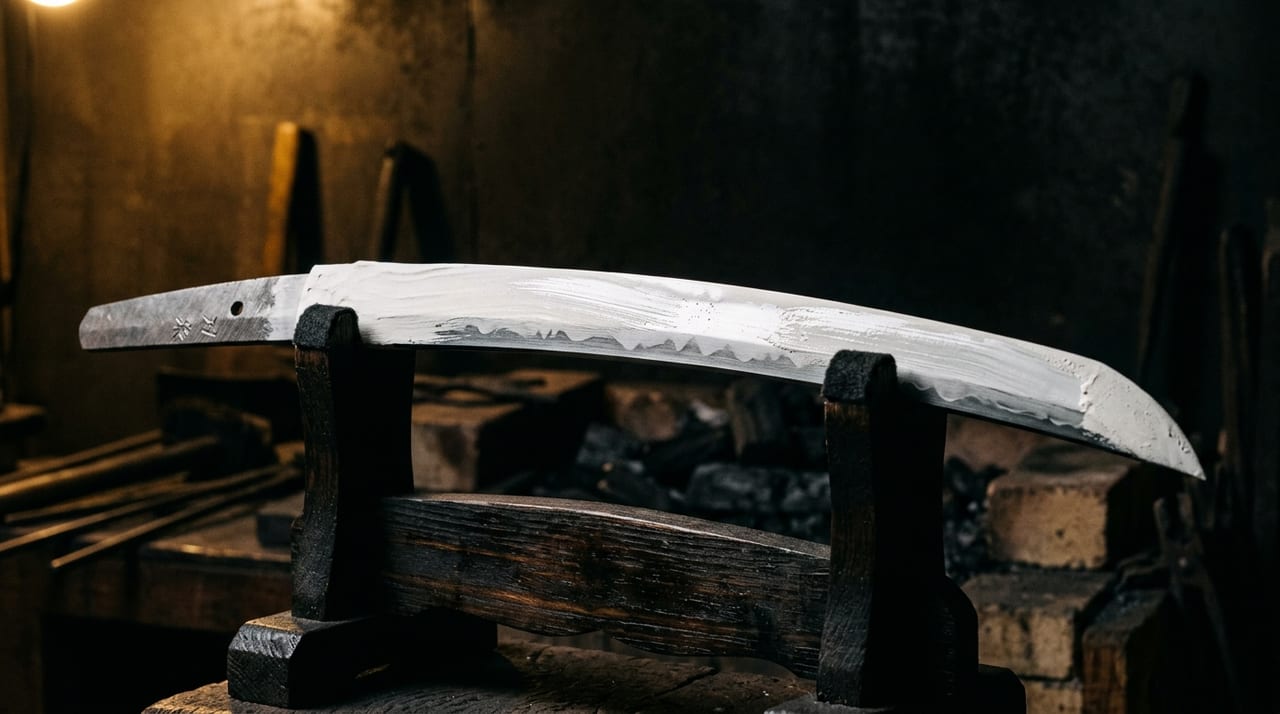
Tsuchioki (applying the clay coating) is a process carried out immediately before yaki-ire (quenching) in the manufacturing of nihontō; it is the technique of applying a heat-resistant clay called "yakitsuchi" to specific areas of the blade. This process determines the final shape and pattern of the hamon (temper line) on the blade and is one of the most important processes that form the artistic character of nihontō.
While it may appear at first glance to be a simple "clay coating," it is in fact a task in which the advanced knowledge and intuition that a tōshō (swordsmith) has cultivated over many years is distilled. The yakitsuchi mixture, its thickness, the application pattern, and the drying state — all of these directly affect the beauty of the hamon and the functionality of the blade.
The Yakitsuchi Mixture: Materials and Secret Traditions
The composition of the yakitsuchi varies from tōshō to tōshō and has often been passed down as a "closely guarded secret tradition." The main components are as follows.
- Nendo (clay): High-heat-resistant refractory clay is the primary ingredient. It must withstand the sudden thermal changes during yaki-ire and function uniformly throughout the cooling process. Since characteristics differ depending on place of origin and purity, tōshō often select and use their own "familiar clay."
- Toishiko (whetstone powder) and sumiko (charcoal powder): Mixed in to adjust the contraction of the clay and control heat conductivity. Toishiko consists of fine abrasive particles, while sumiko is an organic component that carbonizes during yaki-ire and produces its own distinctive effects.
- Mokutanbai (wood charcoal ash): Since thermal stability varies with the type of source wood, some tōshō take care even in selecting their materials.
These are kneaded together with water to complete the yakitsuchi, but the mixing ratios, water content, and degree of kneading differ from tōshō to tōshō, and even the same tōshō will make fine adjustments depending on the season and humidity.
The Tsuchioki Process: The Work of Designing the Hamon
Tsuchioki is, in a sense, the work of "designing the hamon." The tōshō, facing the ground-out blade (shirouchi), arranges the clay while holding an image of the hamon in mind.
- Shitanuri (base coat): A foundation layer in which a thin, uniform coat of yakitsuchi is applied to the entire blade. It serves as the base for heating the blade evenly.
- Hatorinuri (edge-tracing coat): The yakitsuchi is placed along the section that will form the outline of the hamon. This work determines the basic shape of the hamon. The hamon shapes characteristic of each school — chōji-midare, gunome-midare, suguha, and others — are reproduced through the tsuchioki pattern.
- Hadayosenuri (body-side coat): By applying a thick coat of clay to the jigane (steel of the blade surface) area, the cooling rate during yaki-ire is slowed, creating a difference in microstructure from the edge area. This difference affects the clarity of the hamon and the expression of the surface pattern of the jigane.
- Drying and inspection: After tsuchioki is complete, the blade is dried appropriately. Since uneven drying can cause cracks and warping during yaki-ire, this step cannot be overlooked either.
The Science of Tsuchioki and the Hamon: The Metallurgical Mechanism
The mechanism by which tsuchioki produces the hamon can be explained metallurgically as "selective control of martensitic transformation."
When steel heated to a high temperature (around 800°C) is rapidly quenched, the crystal structure changes before the carbon dissolved in the iron can precipitate, and an extremely hard microstructure called "martensite" is produced. This forms the luminous part of the hamon.
The edge area coated with thin clay quenches readily, and martensitic transformation occurs actively. In contrast, the mune (back of the blade) area coated with thick clay cools more slowly, and relatively soft microstructures such as pearlite and bainite are maintained. It is this difference in hardness that is visualized as the "hamon."
The difference between nie (visible martensite crystals) and nioi (fine martensite mist) also originates in tsuchioki. The nie, which appears granular, relates to the coarseness of martensite particles produced by relatively rapid cooling, while the nioi, which appears as a haze, arises from a continuous sequence of finer martensite particles. The balance of these two elements enriches the expression of the hamon and forms the very foundation of its aesthetic value.
Tsuchioki Styles by Tradition: Heritage and Individuality
The five traditions of nihontō (Yamashiro, Yamato, Bizen, Sōshū, and Mino) each have a characteristic hamon style, and this reflects differences in tsuchioki patterns.
- Bizen-den: Complex hamon typified by chōji-midare. Creating the shape that resembles the chōji flower demands delicate control in tsuchioki. The techniques refined by the master craftsmen of Bizen — led by the Osafune-ha — have been passed down to tōshō of the present day.
- Sōshū-den: Characterized by vigorous nie-based hamon in which a broad suguha is accompanied by large disruptions. The hamon of Masamune and Norishige are regarded as the pinnacle of Sōshū-den, and the combination of clay volume and rapid quenching is distinctive.
- Yamato-den: Many examples feature a clean, unadorned hamon based on suguha. The outlines of the tsuchioki are clear, and the aesthetic is a rugged beauty that strips away superfluous ornamentation.
Tōshō of the present day likewise apply their own improvements while building upon the tsuchioki techniques inherited from their masters. Tsuchioki is the prime example of a technique that "looks simple on the surface yet is profoundly deep," and it is said to take several decades before one can produce a proper hamon with consistency. Even today, as scientific analysis has advanced, the true essence of tsuchioki lies in the accumulation of experience and intuition, and its value as a traditional craft remains unshaken.