The Materials Science of Tsuba: Shakudo, Shibuichi, Gold, Silver, and Iron — Properties and Aesthetic Choice
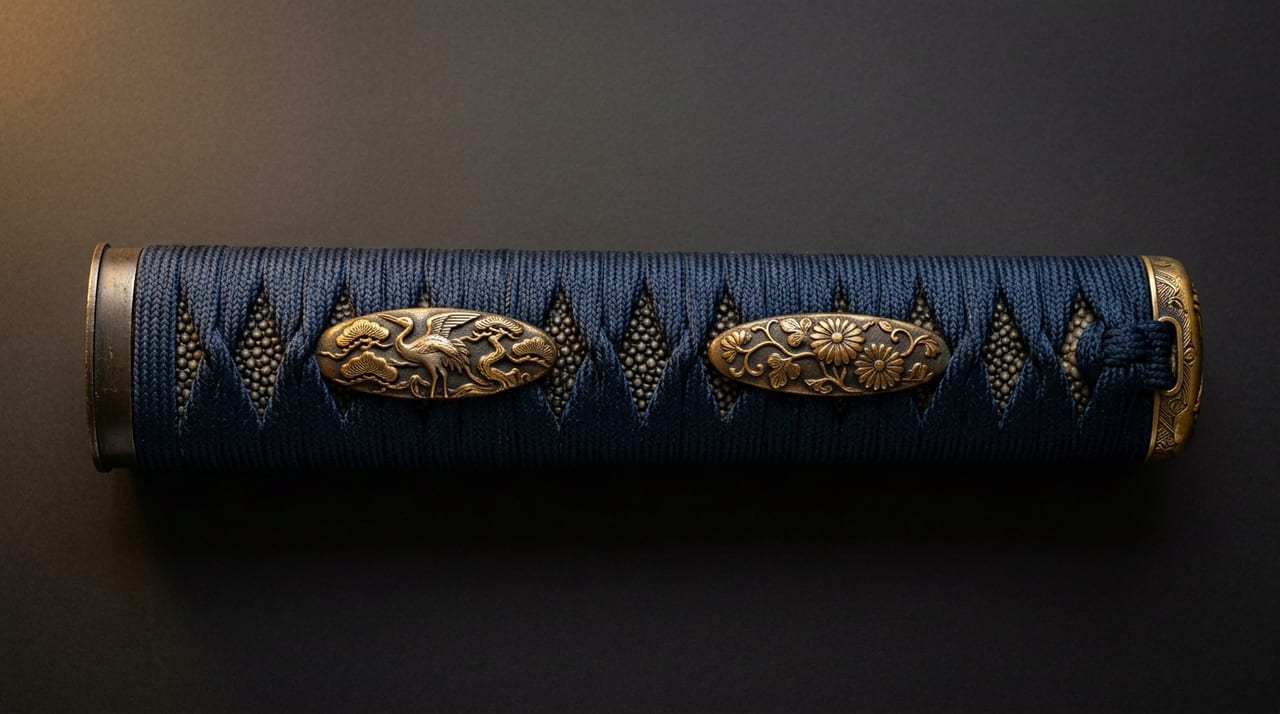 * Image is for illustrative purposes only.
Table of Contents
Material Selection Speaks
The materials used in tsuba determine the "voice" of a work. Robust iron speaks of strength and sincerity, jet-black shakudo speaks of authority and depth, and gleaming gold speaks of wealth and vitality. The act of selecting materials is the first aesthetic decision a maker makes, reflecting various factors including school, era, purpose, and the status of the user.
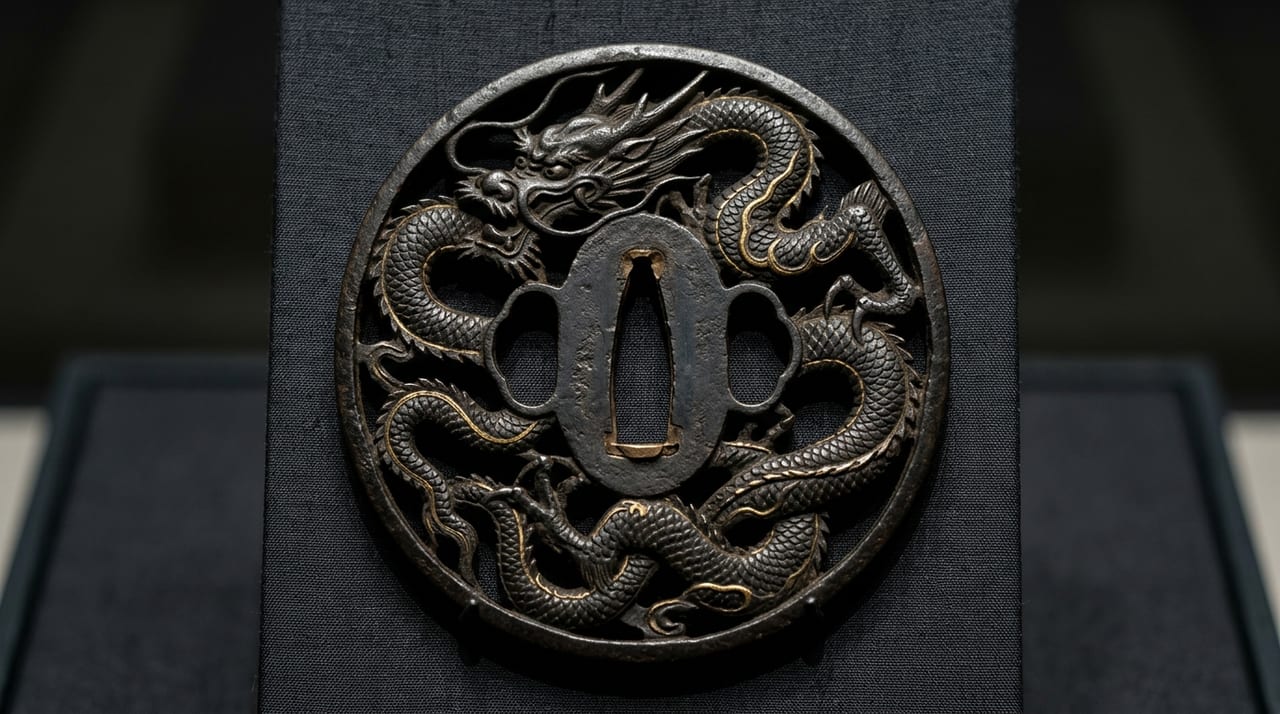
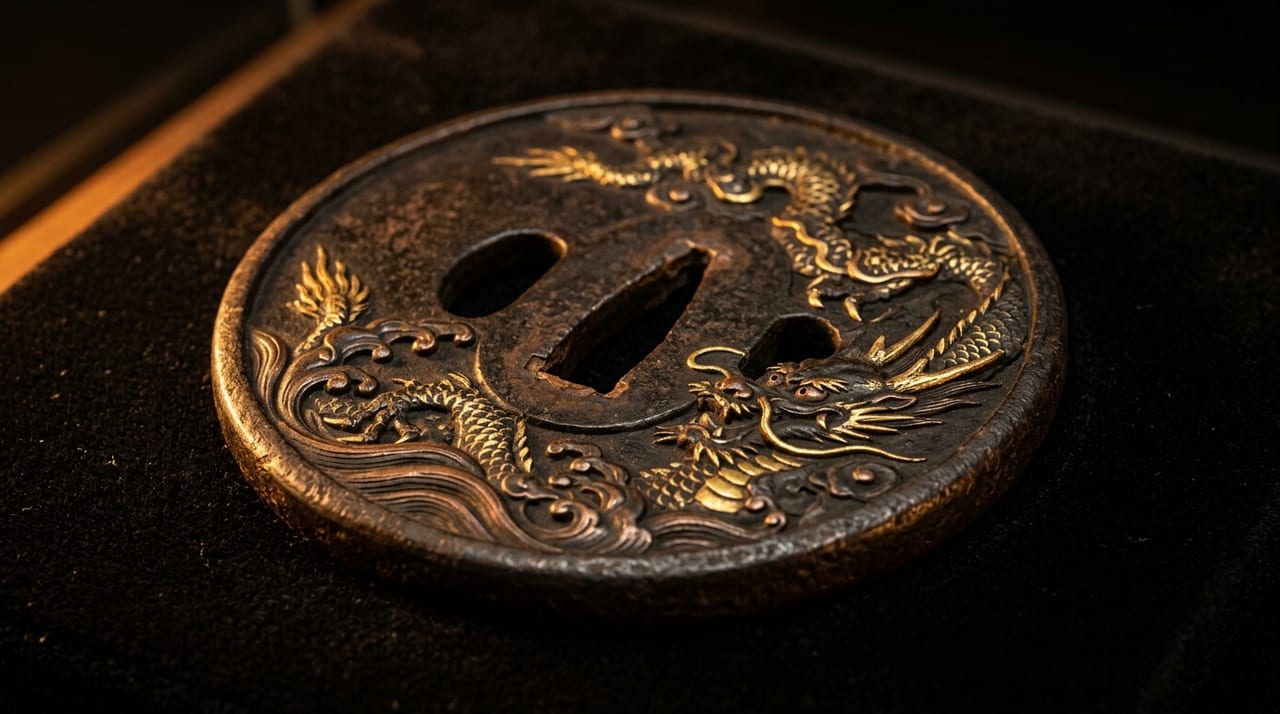
Even when the same dragon motif is carved, entirely different "voices" emerge from the same subject depending on whether it is finished with fine carving on an iron ground, high relief carving with gold coloring applied on a shakudo ground, or silver inlay set into a shibuichi ground. Materials study is the foundational knowledge needed to decipher these "differences in voice."
Iron—The Most Japanese Tsuba Material
Iron is the material used for Japanese sword blades and the original material used for tsuba since ancient times. Within sword fittings, a tsuba made from the same material as the blade is not merely a decorative item but possesses the status of a weapon integrated with the blade itself.
The types of iron used in tsuba are broadly divided into two categories.
- Forged iron: Refined iron with impurities removed through repeated folding and forging, made by the same process as the blade. A wood-grain-like "jihada" appears on the surface, with the character of the jihada varying by school and maker.
- Nanban iron: Imported iron from Europe that arrived in the early Edo period, with uniform structure and a distinct luster. It was used in a group of tsuba called nanban tsuba.
Three primary techniques for coloring iron are known.
- Rust patination: An oxidation process that forms a stable dark brown rust layer on the surface, protecting the substrate.
- Polished finish: A finish that highlights the metallic luster, creating a mirror or semi-glossy appearance.
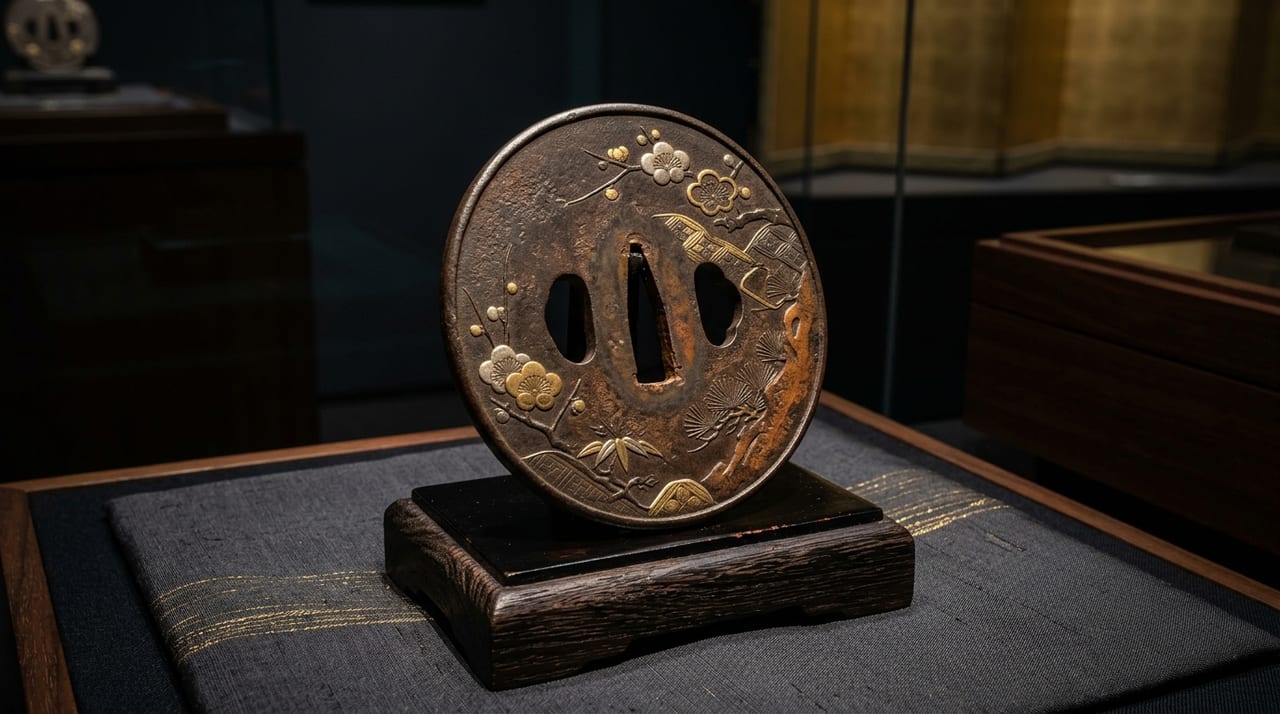
- Natural aging patina: The iron's natural dark brown color deepens over long years, acquiring an antique patina—one of the most valued elements in appreciating old tsuba.
The Higo metalwork tradition that flourished in the Edo period maintained a philosophy of using iron exclusively, rejecting gold and silver decoration and pursuing a robust beauty expressed through carving alone on iron. The works of craftsmen such as Hayashi Matashichi and Iwato Masayuki are highly regarded as exemplary pieces that pushed the possibilities of iron as a material to their limits.
Shakudo—The Mystery of an Alloy That Produces Jet Black
Shakudo is a uniquely Japanese alloy made by adding approximately 3–5% gold to copper, and the term is internationally established in English as "shakudo." Although it appears as a reddish copper color in its raw state, it displays an entirely different character when subjected to a special acid treatment.
The process called color development involves immersing the material in a solution called "shakudo liquid," a compound made from vinegar, funori seaweed, and verdigris, and heating it to form a stable layer of black oxide on the surface from precipitated gold. The color that emerges from this treatment is a deep jet black described as "crow-feather black," possessing an entirely different depth from ordinary iron black—a black that seems to draw the viewer in.
The Gotō family was renowned for their extensive use of shakudo. The style established by the founder, Gotō Yūjō, in the late Muromachi period is unified by a technique in which high relief figures, animals, and plants are applied to a shakudo ground and finished with gold coloring. The extreme contrast between jet-black ground and gleaming gold served as the visual language of "authority and brilliance," earning overwhelming support from the shogunal and prominent daimyo families. The lineage from Gotō Shichitetsu through the eighteenth generation of the Gotō family were also heirs to the aesthetics of shakudo.
Although the color-developing treatment is performed once on the finished piece, it possesses the characteristic of increasing in depth with age. The patina of a shakudo tsuba that has aged for a hundred or two hundred years acquires a beauty of an entirely different dimension from that immediately after treatment.
Shibuichi—The "Subtlety" Embodied in Ash-Blue
Shibuichi is an alloy made by mixing silver at a ratio of one-quarter (25%) into copper, and is known in English as "shibuichi." It possesses a unique color distinct from the black of shakudo, the brilliance of gold, and the robust character of iron.
The distinctive color of shibuichi that emerges after color development is ash-blue—a calm, bluish gray—embodying the concept of "subtlety" in Japanese aesthetics. Subtlety refers to a refined, dignified restraint that eschews excessive ornamentation, a sensibility that resonates with both samurai culture and Zen aesthetics.
The color varies depending on the silver content ratio; shibuichi with a high silver content (called "gin-shibuichi") appears lighter and whiter, while copper-rich versions (called "dō-shibuichi") approach warmer, tea-like tones. The depth of shibuichi lies in the craftsman's deliberate selection of these subtle compositional variations and the creation of color tones suited to the subject and style.
The Nara metalwork tradition is noted as a school that favored shibuichi. Craftsmen such as Nara Toshinaga, Tsuchiya Yasuchika, and Sugiura Jōi practiced a pluralistic approach to materials by combining iron, shakudo, shibuichi, gold, and silver in complex ways, pursuing diverse color expression through material contrast. Tsuba combining shibuichi ground with shakudo elements produce a quiet, tense contrast between ash-blue and jet-black.
Gold and Silver—The Elegance of Precious Metals
Gold and silver are primarily used as inlay materials, but they were also used as base metals in tsuba making.
| Type | Characteristics |
|---|---|
| Gold tsuba | A tsuba made entirely or largely from pure gold or high-karat gold alloy, representing the highest level of formality. Primarily created for ceremonial, presentation, or display purposes, limited to the swords of the shogunal and prominent daimyo families. Gold is chemically stable against acid and rust, requiring no color-developing treatment and eternally retaining the luster of the material. The practical fragility of gold—its susceptibility to scratches and deformation—paradoxically clarified its status not as a weapon but as an artwork. |
| Silver tsuba | A tsuba with silver as the base metal, ranking below gold in formality but possessing a unique beauty in silver's cool, clear white luster. Silver forms silver sulfide over time and darkens, so old silver tsuba display a distinctive patina called "aged silver color." The aesthetic appreciation of this natural aging process as an element of connoisseurship is also characteristic of Japanese metalwork appreciation. |
As inlay materials, gold and silver function as tools for creating color contrast with the base metal. Gold inlay on shakudo, silver inlay on shibuichi, and cloth-pattern gold and silver inlay on iron—each combination produces distinctive visual effects, with optimal selections made according to era, school, and subject matter.
Materials as Bearers of Culture and Aesthetics
The choice of each material carries cultural and philosophical significance beyond its mere physical properties.
The Higo metalwork tradition's exclusive use of iron is a material choice declaring the samurai's true purpose: "The sword is no ornament; it is a weapon." The Gotō family's style of combining shakudo and gold is a court metalwork expression that converts authority and formality into visual language. The Nara metalwork tradition's emphasis on shibuichi can be read as an expression of Edo-period literati sensibilities pursuing both subtlety and stylistic diversity.
Understanding a tsuba's material becomes a gateway to deciphering the era, culture, and thought that produced it. Material selection is the first artistic decision a metalworker makes, and the first clue to understanding what a single tsuba is meant to communicate.