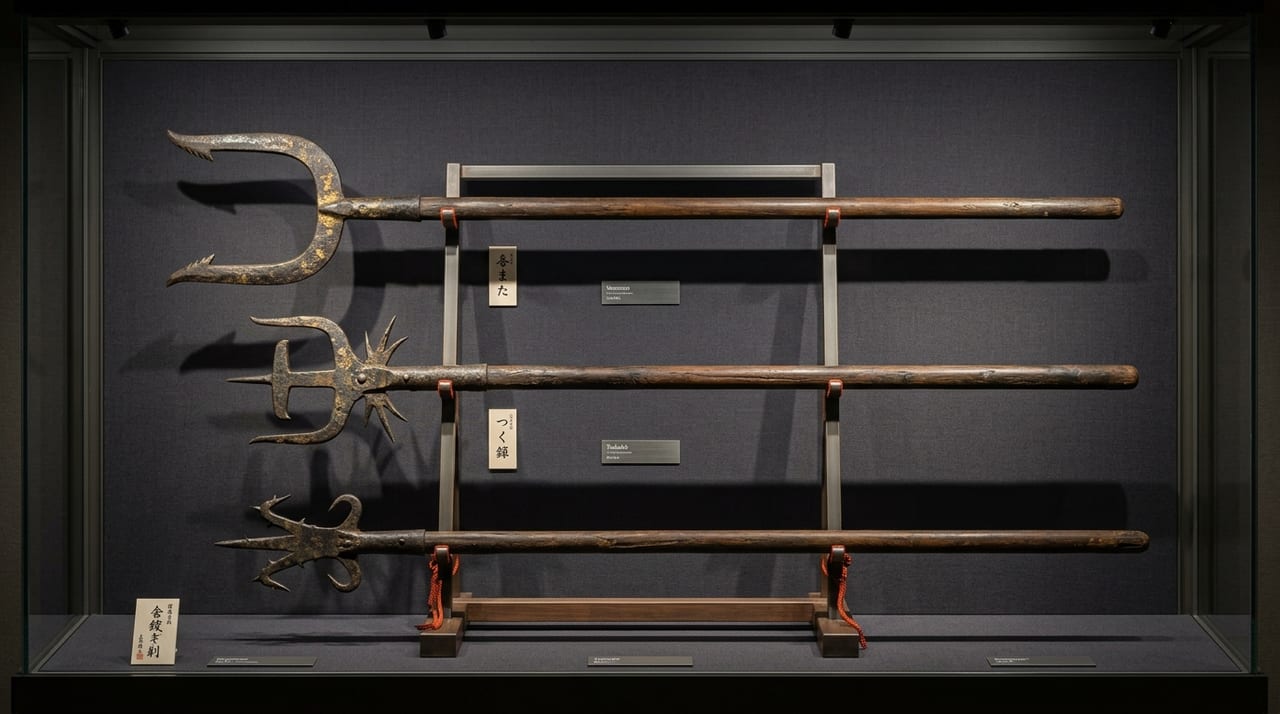
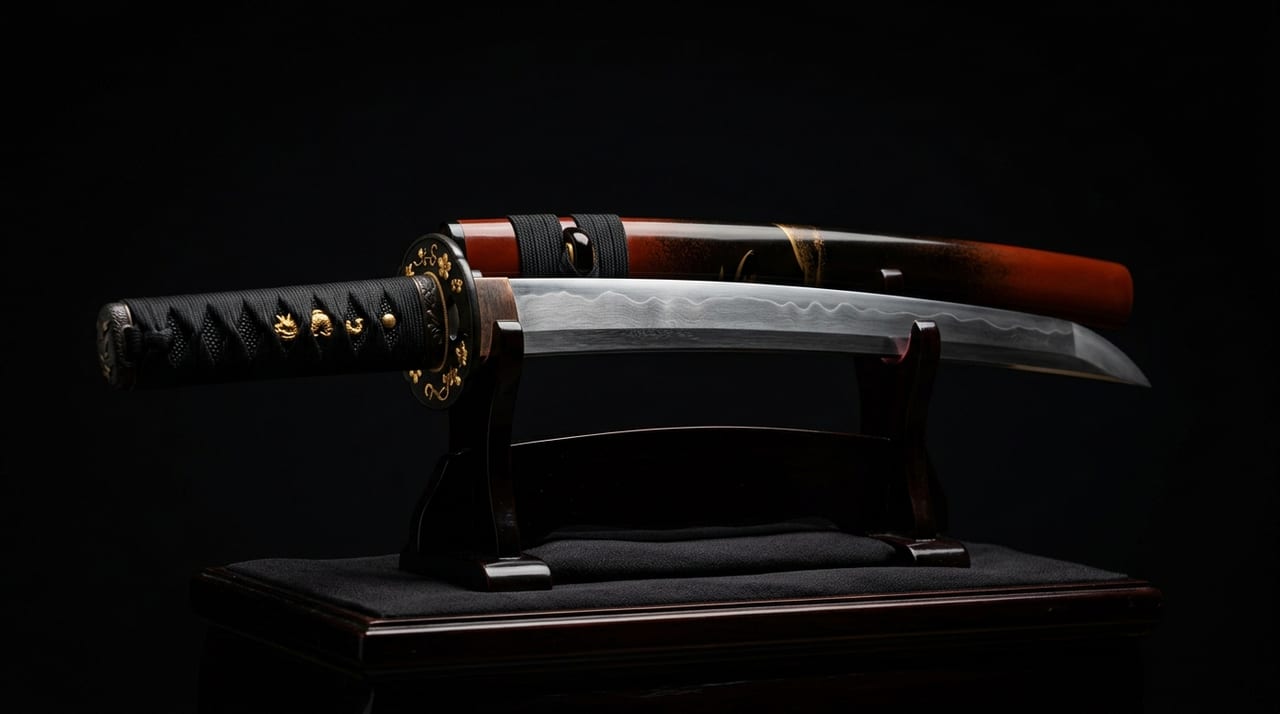
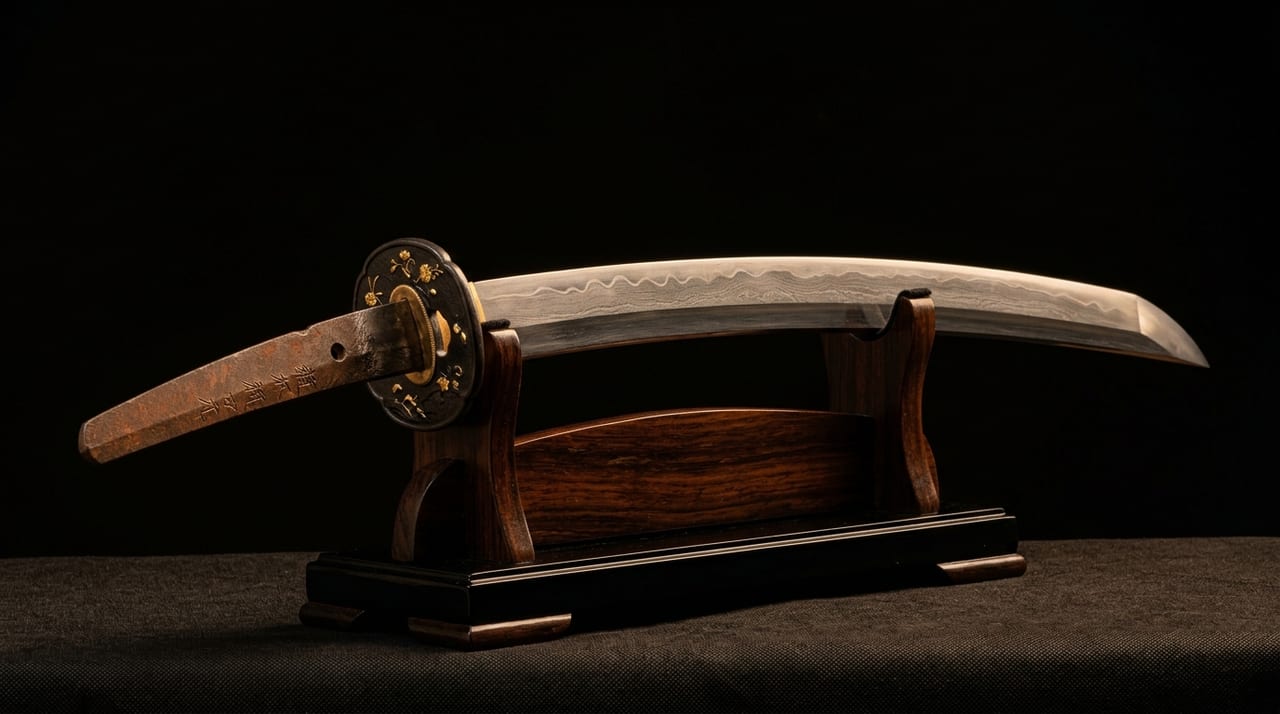
Tenchūsashi — The Special Wakizashi Culture of Castle Attendance at Edo Castle and the World of Buke Etiquette
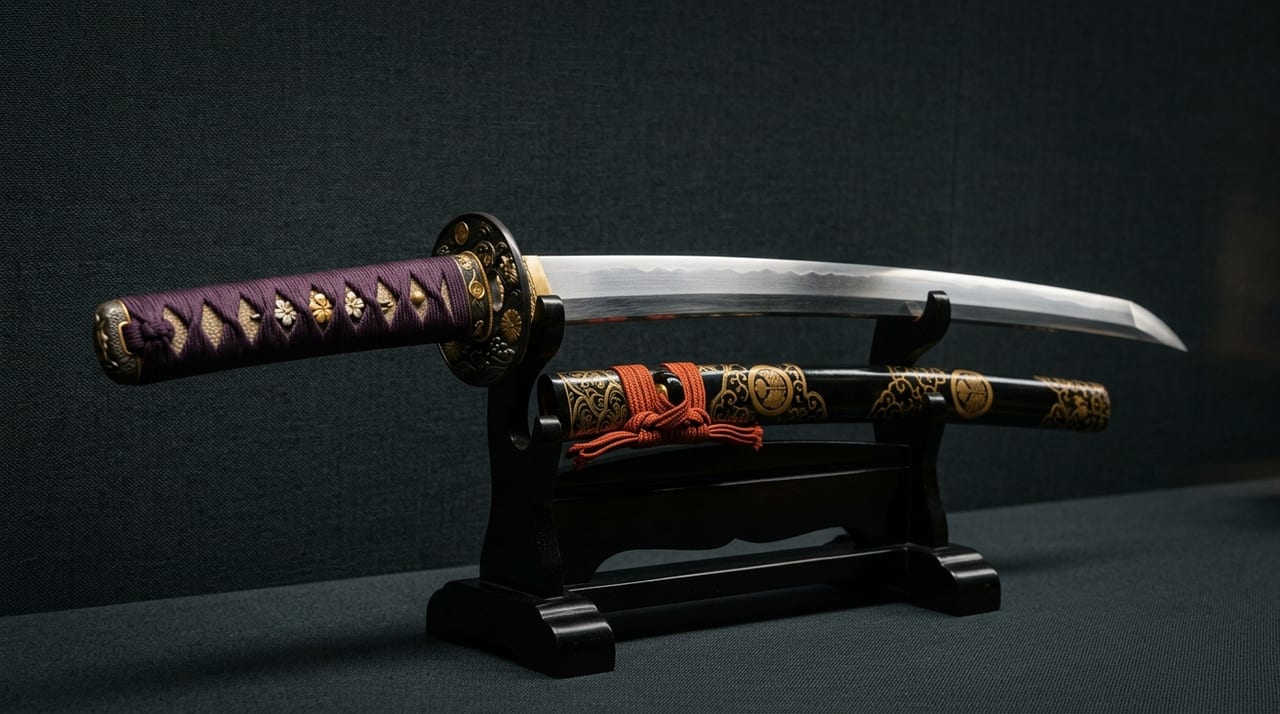 * Image is for illustrative purposes only.
Table of Contents
What Is a Tenchūsashi — Sword Etiquette at Edo Castle
"Tenchūsashi" or "tenchū wakizashi" was a special wakizashi that samurai of the Edo period were permitted to wear when attending and entering Edo Castle (the shogun's residence).
Under the buke etiquette of the Edo shogunate, the type, length, and style of koshirae for carrying swords were strictly regulated according to place, rank, and occasion. Within the "tenchū" — the inner halls of Edo Castle, meaning the reception rooms, corridors, and great halls where the shogun held audiences — samurai were prohibited from wearing ordinary uchigatana (long swords), and only a special-specification wakizashi called a tenchūsashi was permitted.
Formal Characteristics of the Tenchūsashi
The tenchūsashi exhibits the following characteristics.
Nagasa Regulations
The nagasa of a tenchūsashi was generally around 1 shaku 5 sun (approximately 45 cm). However, there was no strictly unified standard, and there was variation depending on the period, shogunal policy, and individual rank. The important point was that it was "not an uchigatana (2 shaku or more)."
The Formality of the Koshirae
The koshirae of a tenchūsashi, unlike that of a practical uchigatana, was required to have a dignified formal appearance suited to ceremonial dress.
- Shirasaya form: Some records indicate that the protocol called for bringing the sword in a shirasaya when attending the tenchū.
- Metal fittings: Fittings made of precious metals such as gold, silver, and gilt bronze were preferred, and many bore the family crests of the shogunal family and daimyo houses.
- Itomaki tsuka: An itomaki (thread-wrapped) tsuka was used for formal dress, and the color and wrapping style of the tsuka cord were sometimes regulated according to rank.
- Color of the lacquered saya: Decoration appropriate to rank was used, including black lacquer, vermilion lacquer, and raden (mother-of-pearl inlay) finishes.
Characteristics of the Blade
The blade of a tenchūsashi did not necessarily require a special form, but blades of appreciable quality were often chosen. Records exist of works by renowned tōkō of Bizen, Yamashiro, and Sōshū-den being used.
The Role of the Tenchūsashi in Buke Etiquette
The Prohibition on Drawing and Ceremonial Sword-Wearing
In principle, drawing a sword was prohibited in the tenchū of Edo Castle. The sword-wounding incident by Asano Takumi-no-kami in Chūshingura (the Genroku Akō Incident, 1701) — famous for the phrase "Tenchū de gozaru" ("We are in the shogun's halls") — was regarded as a grave violation of precisely this buke rule of "prohibition on drawing in the tenchū."
The tenchūsashi was "a sword worn as a formality," and its primary function was symbolic, demonstrating a samurai's rank. While it had some practical utility for self-defense, actively using it constituted a violation of etiquette.
Differences According to Rank
The formality of the tenchūsashi differed according to a samurai's rank.
- The shogunal family and the Gosanke: Used tenchūsashi of the highest-grade metal fittings, lacquerwork, and blades.
- Daimyo (shinpan, fudai, tozama): Brought a tenchūsashi with koshirae appropriate to their kokudaka and rank. The formality of the sword when attending the castle became a barometer indicating the domain's standing.
- Hatamoto and gokenin: Used tenchūsashi with simpler koshirae. However, hatamoto in positions close to the shogun were required to have tenchūsashi of higher formality.
Genpuku and the Tenchūsashi — A Life Milestone
For samurai men, wearing a tenchūsashi when attending Edo Castle for the first time (often after genpuku, the coming-of-age ceremony) was a milestone marking recognition as a full-fledged samurai. There was also a custom of inheriting one from one's father or predecessor, and it sometimes held the significance of a family heirloom.
Asano Takumi-no-kami and the Tenchūsashi — Chūshingura and Sword Etiquette
On the 14th day of the 3rd month of Genroku 14 (1701), the incident in which Asano Takumi-no-kami Naganori, lord of the Akō domain, struck Kira Yoshinaka, a kōke (official in charge of ceremonies), in the Pine Corridor of Edo Castle (the Matsu no Rōka sword-wounding incident) is known as the most famous "sword outrage in the tenchū" in Japanese history.
What Asano used was a tenchūsashi (wakizashi). Since the uchigatana was deposited at the castle gate when attending the tenchū, wearing only a wakizashi in the tenchū was in accordance with regulations. However, drawing that wakizashi and wounding a person was regarded as a grave violation of the shogunate's buke etiquette, and led to the sentence of immediate seppuku.
This incident demonstrates how absolute the norm of "tenchūsashi = formal, ceremonial sword-wearing" was in Edo warrior society.
Surviving Examples of Tenchūsashi
Wakizashi handed down as tenchūsashi are housed in museums throughout Japan among the relics of daimyo and hatamoto families.
- Related to the Tokugawa shogunal family and the Gosanke: Wakizashi handed down as tenchūsashi used by the Tokugawa shogunal family and the Gosanke are housed at national museums, the Tokugawa Art Museum (Nagoya), the Mito Tokugawa Museum, and other institutions.
- Relics of daimyo families: In some cases, koshirae handed down as the domain lord's tenchūsashi for castle attendance are preserved in domain historical archives and local museums.
It should be noted that few items have a clear mei or written record identifying them as "tenchūsashi"; many are inferred from the style of the koshirae and their provenance.
The Disappearance of Tenchūsashi Culture after the Meiji Era
When the Sword Abolishment Edict (Haitōrei) of 1876 (Meiji 9) prohibited samurai from wearing swords altogether, tenchūsashi culture disappeared along with it. Court ceremonies in the Meiji period transitioned to Western-style ceremonial dress and swords, and the "imperial court sword etiquette" equivalent to the Edo-period tenchūsashi took on a new form.
However, at the enthronement of Emperor Meiji and in important imperial ceremonies, the traditional practice of bearing a tachi called the "mikatana" continued, and the place of Japanese swords in imperial court ceremony has continued to the present day, albeit in changed form.
Summary
The tenchūsashi occupies a special place in Japanese sword culture at the "intersection of etiquette and the sword." Functioning not as a practical weapon but as a symbol embodying a samurai's rank, decorum, and formality, the tenchūsashi illuminates the order and aesthetic sensibility of Edo-period warrior society through the world of swords. Through the incident of Asano Takumi-no-kami in Chūshingura, the etiquette surrounding the tenchūsashi is widely known even to people today, and its cultural influence lives on.