Sword Theft Prevention Network and Police Cooperation: Information Sharing System and Recovery Procedures
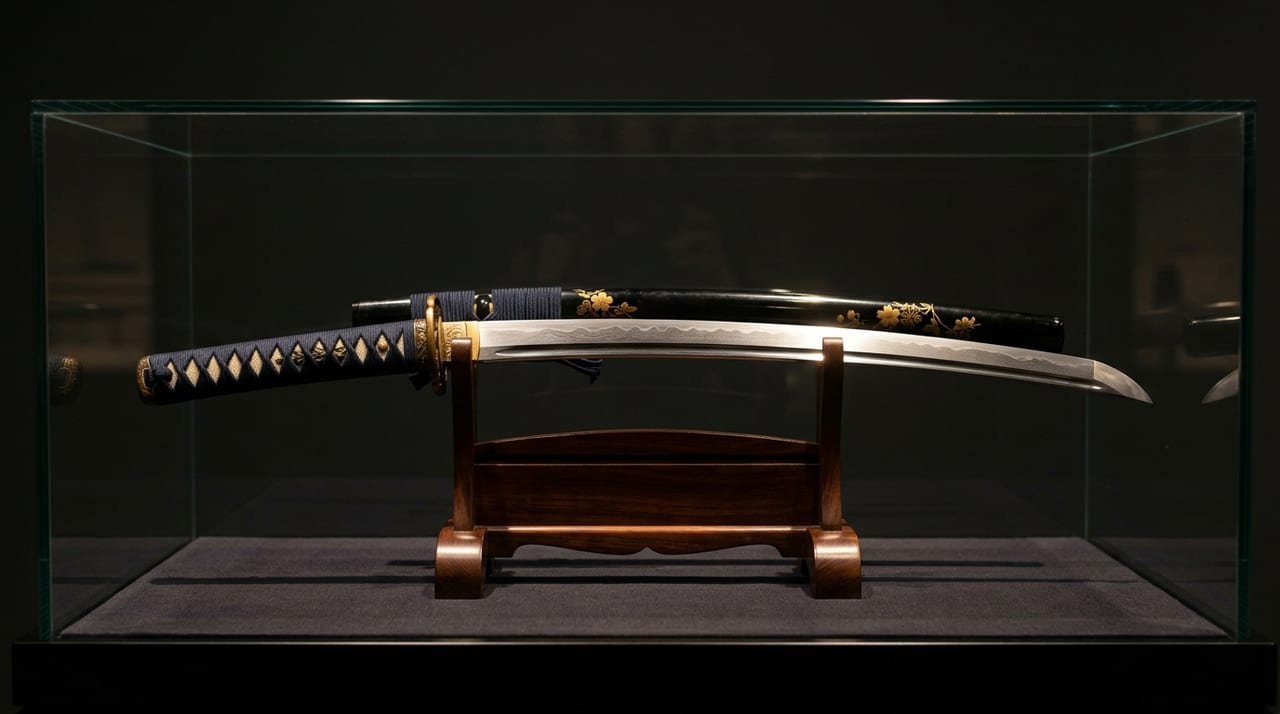 * Image is for illustrative purposes only.
Table of Contents
The Reality and Severity of Japanese Sword Theft
Japanese swords hold high value as artworks and cultural heritage, and their portability makes them easy targets for theft. Even nationally designated swords have gone missing, and the Agency for Cultural Affairs has published a list of missing nationally designated cultural properties (fine and decorative arts) to request information, including many swords such as tachi, katana, and tanto. (See Agency for Cultural Affairs "Nationally Designated Cultural Properties (Fine and Decorative Arts) That Have Gone Missing")
Thefts occur in museums, shrines and temples' treasure halls, and private residences. Thefts at public facilities are more likely to be reported and investigated promptly. In contrast, thefts from private homes are often discovered late, making it difficult to trace stolen items if they are resold in the meantime.
The Role of the Japanese Sword and Art Preservation Society (NBTHK) and the National Stolen Sword Information Network
The Public Interest Incorporated Foundation Japanese Sword and Art Preservation Society (hereinafter, NBTHK) is an organization that engages in preservation, research, and promotion of Japanese swords, while also serving as the core body for theft prevention and recovery support. The certificates of authenticity issued by NBTHK contain detailed information about the sword's form, inscription, jihada, and hamon, making them an indispensable information source for identifying stolen blades.
NBTHK works with police headquarters throughout the nation to build and operate a "stolen sword information database." When member organizations report stolen swords, NBTHK immediately reports the sword's inscription, form, photographs, and other information to police and simultaneously shares this information with members nationwide. Through this network, for example, if a sword stolen in Tokyo is brought to a pawnshop in Osaka, the information is shared within hours, enabling the police to make an early seizure.
The NBTHK Theft Prevention Committee regularly holds security guidance sessions and theft prevention seminars for member organizations throughout the nation (museums, galleries, and private collectors). Additionally, when new theft reports are received, the committee immediately distributes information through its journal "Sword and Art" and member newsletters to raise awareness and vigilance.
Police Theft Investigation Systems and Cultural Property Specialist Divisions
Stolen swords are generally treated as ordinary theft cases; however, when nationally designated important cultural properties are stolen, charges under the "Cultural Properties Protection Law" can be added, raising the priority of investigation. In large-scale museum thefts, the Metropolitan Police Department's Art Theft Task Force (Tokyo) or the cultural property specialist divisions of prefectural police departments conduct investigations.
Investigators in cultural property specialist divisions possess basic knowledge about swords and, at the time of theft reports, determine priority tracking targets based on the stolen sword's characteristics (inscription, form, presence or absence of certificate of authenticity, etc.). When a stolen sword is discovered in another prefecture, coordination among prefectural police forces enables swift seizure and condition verification.
However, police human resources are limited, and during periods with high theft counts, not all cases can receive equal attention. For this reason, information networks operated by private organizations such as NBTHK play a complementary role, working parallel to police efforts to track stolen swords and collect information.
Museum and Gallery Theft Prevention Systems and Security Standardization
When sword theft occurs in museums and galleries, the credibility of the entire institution is compromised, so extremely high investments are made in security measures. Particularly at large national and public institutions, multilayered defensive systems like the following are in place:
Display Case Security: Swords are displayed in specialized cases fitted with UV-resistant glass and shatter-resistant film. Cases are equipped with multiple sensors (lock opening detection, vibration detection, temperature and humidity management sensors), and when an abnormality is detected, an alarm sounds and automatic locking mechanisms engage.
Museum-wide Surveillance Systems: 24-hour monitoring with 4K high-resolution cameras. Footage is simultaneously recorded in multiple locations and provided to police immediately upon theft.
Staff Deployment: Security personnel are constantly stationed in exhibition rooms, and many institutions deploy additional dedicated security staff during periods when particularly valuable swords are on display.
Night and Closed-Day Security: Security guards patrol the building regularly and confirm that theft-prevention devices are operating. Additionally, remote monitoring systems allow central management rooms to maintain 24-hour real-time surveillance.
Despite such advanced security measures, theft cannot be completely prevented because there exists the possibility of internal theft by museum staff, and there are limits to physical defense against extremely organized and sophisticated theft methods.
Shrine and Temple Treasure Halls and Theft Prevention Challenges
Treasure halls in shrines and temples often lack the sophisticated security systems found in museums. Particularly at small rural shrines, there are insufficient resources to deploy dedicated security staff, creating a relatively higher theft risk.
In recent years, however, the following measures have been implemented:
Introduction of Remote Monitoring Systems: An increasing number of shrines are adopting low-cost systems that allow distant managers to monitor facilities 24/7 through smartphones and tablets.
Cultural Property Theft Insurance: More shrines and temples are obtaining specialized insurance covering cultural property theft, enabling loss compensation in the event of theft.
NBTHK Registration and Information Sharing: Important swords held in treasure halls are registered with NBTHK for authentication, with advance preparations made to enable swift information sharing in case of theft.
Private Collectors' Crime Prevention Strategies and Theft Insurance
Sword thefts from private residences account for approximately 60% of all sword theft incidents, representing the largest risk. Practical private security measures are as follows:
Use of Safes and Theft-Resistant Rooms: Swords valued at several million yen or more are stored in dedicated theft-resistant safes (equipped with fire and water resistance). Additionally, home security is strengthened with surveillance cameras and intrusion detection alarms.
Distributed Storage Strategy: High-grade swords are often stored in bank safe deposit boxes, with some collectors using reproductions or lower-grade swords for display and personal use.
Theft Insurance: Multiple insurance companies offer specialty insurance products covering sword theft as a supplement to fine art and movable property insurance. Premium rates are determined based on the sword's assessed value and the security rating of the storage location.
Filing a Theft Prevention Report and Police Registration: By filing a theft prevention report with police at the time of purchase and pre-registering photographs, inscriptions, certificate of authenticity numbers, and other information, investigation efficiency in cases of theft increases significantly.
Practical Recovery and Return Procedures for Stolen Swords
When a stolen sword is discovered, the following procedure is followed:
1. Discovery and Report: A stolen sword is discovered at a pawnshop, antique dealer, auction house, or similar venue. Pawnshops and similar establishments are automatically obligated to notify police (Pawnbroker Business Law).
2. Police Identity Verification: Police confirm the stolen sword's inscription and form and cross-reference it with the NBTHK stolen sword database. If it matches a reported theft, it is marked for recovery.
3. NBTHK Authentication Confirmation: When necessary, NBTHK conducts a fresh authentication to officially confirm that the item is stolen property.
4. Return Procedures: After confirmation, the sword is returned by police to the victim (the original owner at the time of theft). However, if a long period has elapsed since the theft and the stolen item has circulated through the market multiple times, the return claim may become complicated.
5. Post-Return Ownership Verification: Particularly in cases where inheritance has occurred, the current owner may differ from the registered owner at the time of theft, potentially requiring additional time to determine the correct return recipient.
International Stolen Sword Tracking and Interpol Cooperation
The number of stolen Japanese swords being sold overseas increases annually. In response, the National Police Agency has established an international tracking and seizure system for stolen swords through Interpol (International Criminal Police Organization).
Particularly in auction houses in Asian regions such as China, Hong Kong, and Singapore, cases have been reported where potentially stolen Japanese swords are offered for sale. In such cases, inquiries are made from the National Police Agency to the law enforcement agencies of the relevant countries, and seizure and return procedures proceed; however, due to the complexity of international legal procedures, recovery sometimes takes several years.
Formation of Theft Prevention Communities and Information Sharing Culture
Among NBTHK member institutions, a strong information-sharing culture regarding theft prevention has developed. For example, when new theft methods are reported or new theft group activities are confirmed, member organizations rapidly issue alerts to one another.
Additionally, industry associations of sword dealers and antique merchants issue caution notices to prevent stolen items from being sold through their channels. Particularly at large antique fairs and auctions, the verification of sellers' identities has become more rigorous, and there is a strong tendency to avoid the offering of swords with unknown provenance.
Conclusion: The Importance of Comprehensive Theft Prevention Systems
Prevention of Japanese sword theft requires the specialized investigative capabilities of police, information networks operated by industry organizations such as NBTHK, security measures implemented by museums and private collectors, and coordination with international law enforcement agencies all functioning comprehensively.
To minimize theft damage, there is a need for broader recognition of the importance of sword owners taking theft prevention measures in advance and registering with police and NBTHK beforehand. At the same time, it is important for the sword industry as a whole to strengthen its self-regulation and improve the traceability of provenance to prevent stolen items from circulating in the market. The sum total of these multifaceted efforts becomes the bulwark protecting Japanese swords as cultural heritage.