From Shitaji-togi to Final Finishing — A Detailed Guide to the 12 Stages of Japanese Sword Polishing
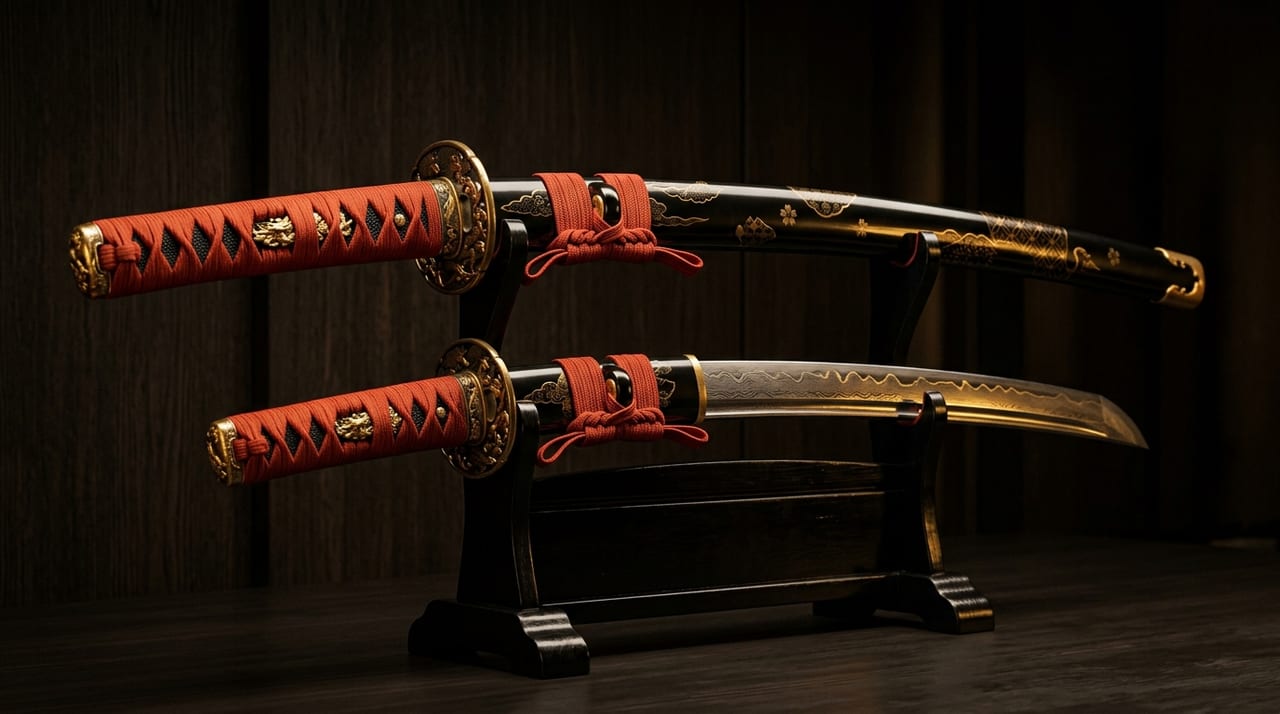 * Image is for illustrative purposes only.
Table of Contents
Polishing Draws Out the Beauty of the Sword — The Essence of the Togishi's Work
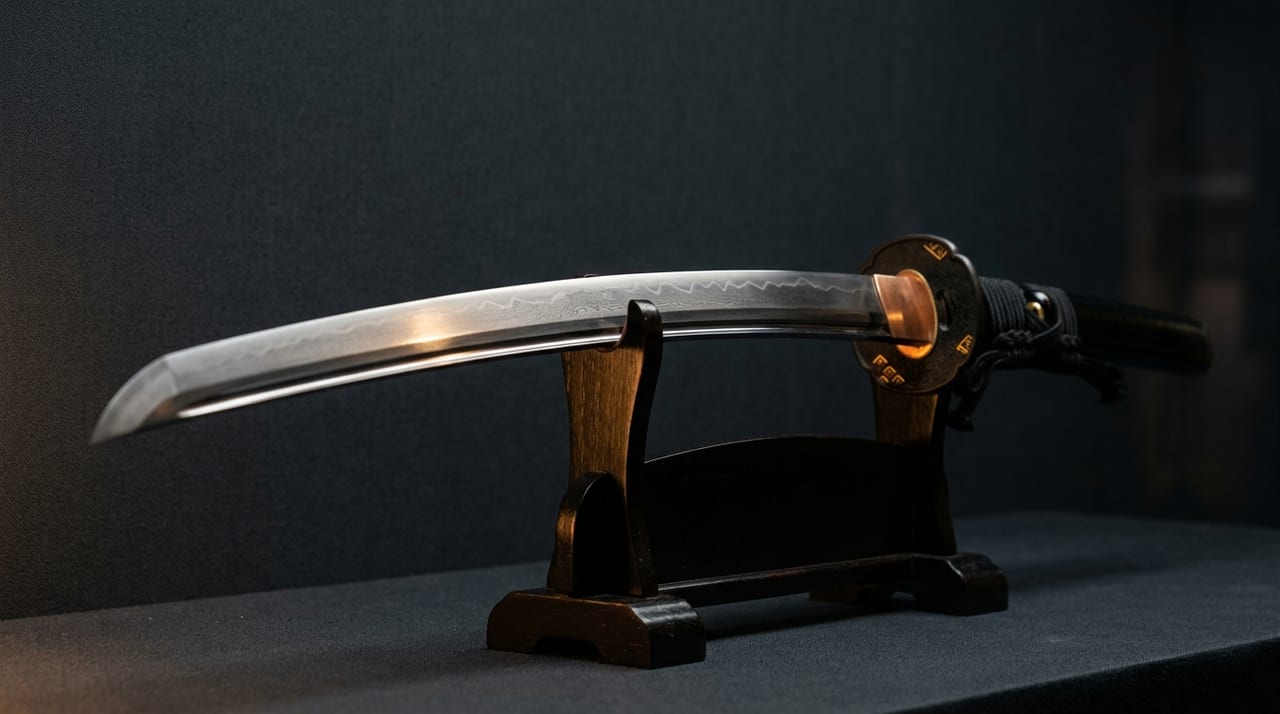
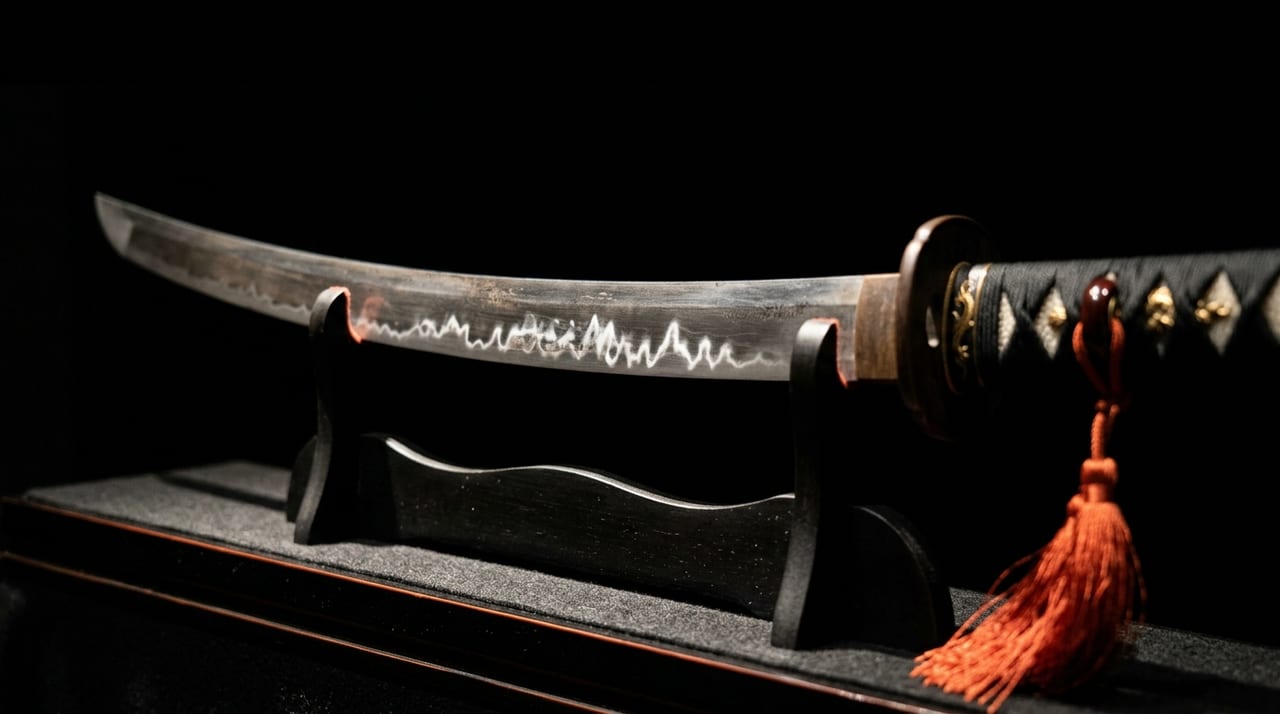
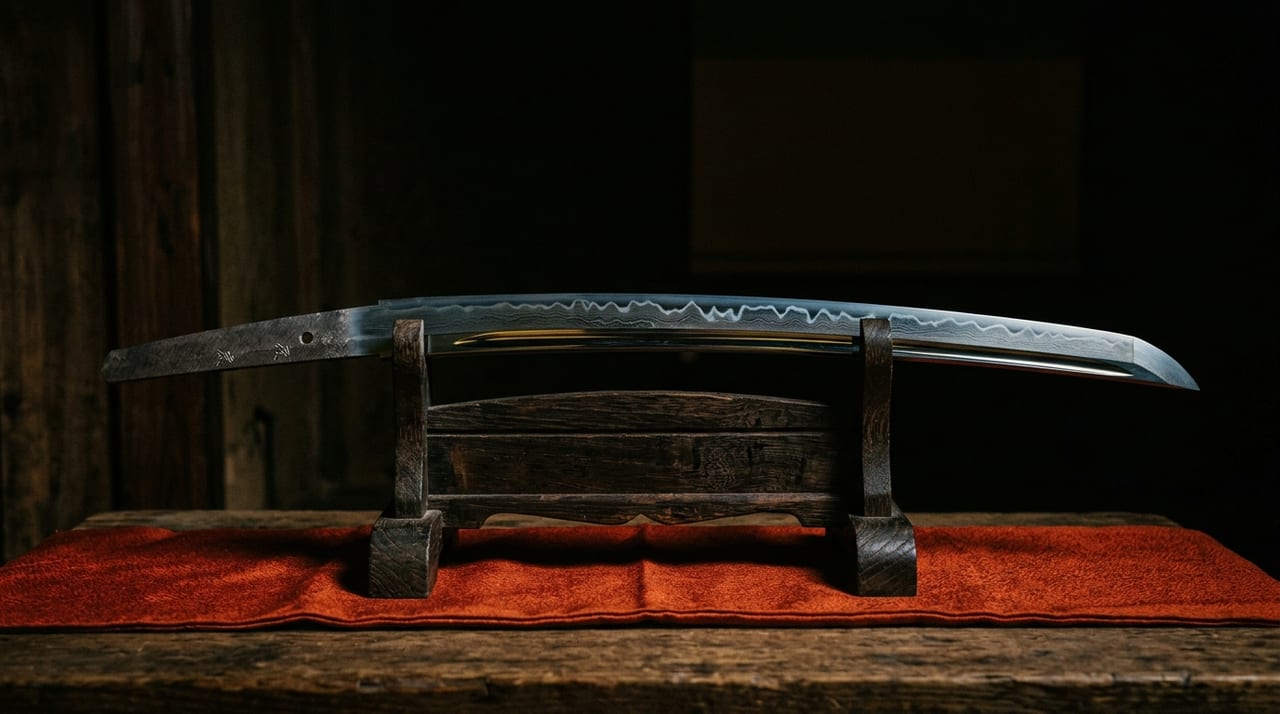
The beauty of the Japanese sword — the brilliance of the hamon, the grain of the jigane, the geometric sharpness of the shinogi — lies "dormant" at the stage when the tōkō has forged and quenched the blade. It is the togishi's work to draw this out to the fullest, and polishing is not mere surface processing but an artistic act of "manifesting the beauty of the sword."
Japanese sword polishing is generally divided into two major stages: shitaji-togi (rough foundation polishing) and shiage-togi (finishing polishing), each comprising multiple steps. The whetstones used change in fineness (grit) with each stage, progressing from coarser to increasingly finer stones. The overall process varies by school and togishi, but the following 12 stages are generally considered the foundation. As of 2026, the number of young togishi learning traditional polishing techniques is on the rise, but mastering the skilled craft still requires a long period of apprenticeship.
| Stage | Process Name | Main Content |
|---|---|---|
| 1 | Arato (rough whetstone) | Removes forging irregularities, the oxide scale (scale) remaining after quenching, and scratches from previous polishing, and shapes the blade's basic form (sori, blade angle, and mune profile). Equivalent to approximately #100–#320 grit |
| 2 | Nakato (medium whetstone) | Shapes the fine details of the blade: fine adjustment of the blade angle, clarification of the shinogi, and setting the edge angle. Equivalent to approximately #400–#600 grit |
| 3 | Hatorito (edge-setting whetstone) | Sets the polishing angle toward the edge and determines the angle of the blade path |
| 4 | Iyoto (Iyo whetstone) / Igato (Iga whetstone) | Natural whetstones named after their places of origin, used as a transitional stage from shitaji-togi to shiage-togi; they progressively refine surface scratches while the outline of the hamon gradually becomes visible |
| 5 | Uchigumori-to (inner-haze whetstone) | The entire blade is finely polished with natural uchigumori-to (Kyoto, Yamashiro-produced stones are considered the highest quality), and the nioiguchi of the hamon begins to appear |
| 6 | Habaki-moto polishing | The portion of the blade just above the habaki — the area near the nakago base that tends to be overlooked in regular polishing — is polished carefully |
| 7 | Hazuya (blade burnishing) | A technique of running a thin piece of whetstone along the temper boundary in one fixed direction to draw out to the fullest the whiteness and brilliance of the hamon — especially the nie and nioi near the temper boundary; one of the most important stages |
| 8 | Jizuya (surface burnishing) | A technique of pressing a piece of whetstone against the flat area to bring out the grain pattern of the jigane (itame, mokume, wood grain, ayasugi-hada) |
| 9 | Nugui (wiping) | The entire blade is polished with nugui-gami (wiping paper), giving it a darkened tone to make the hamon stand out |
| 10 | Hatori-shiage (edge-setting finish) | The edge is finished thin and sharp in the final hatori stage, making the hamon appear white and vivid |
| 11 | Kissaki / bōshi polishing | The shape and hamon of the kissaki and bōshi are finalized using a small dedicated whetstone |
| 12 | Final polishing | All minute scratches left by whetstone polishing are removed while checking the overall finish |
Shitaji-togi Stages — The Rough Work of Shaping the Blade
1. Arato (Rough Whetstone)
The coarsest whetstone used first. The surface of a blade after forging and quenching retains forging irregularities, oxide scale (scale) left after quenching, and scratches from previous polishing. The arato removes these and shapes the blade's basic form (sori, blade angle, and mune profile). The general whetstone grit is equivalent to approximately #100–#320.
2. Nakato (Medium Whetstone)
The stage of removing arato scratches while shaping the fine details of the blade. Fine adjustment of the blade angle, clarification of the shinogi, and setting of the edge angle are all performed here as the final shaping adjustments in preparation for the subsequent shiage-togi. The grit is equivalent to approximately #400–#600.
3. Hatorito (Edge-Setting Whetstone)
The stage of setting the polishing angle toward the edge. From this point, an intuitive technique of "polishing only the edge" becomes necessary, and the togishi's experience and feel become especially important. Once the blade angle (the angle of the blade path) is determined, both the sword's cutting sharpness and the visual position of the hamon are established.
4. Iyoto (Iyo Whetstone) / Igato (Iga Whetstone)
These are natural whetstones named after their places of origin, used as a transitional stage from shitaji-togi to shiage-togi. They are the stage in which the scratches on the blade surface are progressively refined and the outline of the hamon gradually becomes visible.
Shiage-togi Stages — Delicate Work to Draw Out the Beauty of the Hamon and Jigane
5. Uchigumori-to (Inner-Haze Whetstone)
An important whetstone that marks the entry point of shiage-togi. Natural uchigumori-to (Kyoto, Yamashiro-produced stones are considered the highest quality) is used to finely polish the entire blade. At this stage, the hamon's nioiguchi — the clarity of the hamon line — begins to appear.
6. Habaki-moto Polishing
The stage of carefully polishing the portion of the blade just above the habaki (the metal fitting at the base of the blade) — the part of the blade near the nakago base that tends to be overlooked in regular polishing.
7. Hazuya (Blade Burnishing)
A technique of running a thin piece of whetstone (a small fragment of uchigumori-to, or a dedicated hazuya stone) with the fingers along the temper boundary in one fixed direction. It is one of the most important stages for drawing out to the fullest the "whiteness and brilliance of the hamon" — in particular the brilliance of the nie and nioi near the temper boundary.
There is a metallurgical basis for the principle behind this visual difference. The edge of a Japanese sword is composed of a martensitic structure (hardness HRC 60 or above), while the flat jigane area consists of a mixture of pearlite and ferrite structures. Because the two structures differ greatly in their resistance to polishing, applying the same whetstone causes them to abrade at different rates, causing the hamon boundary to emerge as a visual contrast. By subtly varying the way the whetstone is applied, the pressure, and the angle, the togishi can give maximum expression to the hamon by exploiting this difference in microstructure.
8. Jizuya (Surface Burnishing)
A technique of pressing a piece of whetstone against the jihada (the flat area) and burnishing it. By applying the whetstone at a different angle from hazuya, the grain pattern of the jigane (itame, mokume, wood grain, ayasugi-hada) is made to stand out clearly. It is no exaggeration to say that the beauty of the jigane is determined by this stage.
9. Nugui (Wiping)
Rather than whetstone polishing, this stage uses nugui-gami (wiping paper) made from a mixture of pine resin and metal powder to polish the entire blade. By performing this step after jizuya, the entire blade takes on a darkened tone, and the hamon appears more vividly white in the hatori step that follows.
10. Hatori-shiage (Edge-Setting Finish)
The final hatori stage, which finishes the edge thin and sharp. The tools used are thin whetstone plates or a specially shaped whetstone called a hatorito. By performing this stage on the blade that has been darkened by nugui, the hamon appears white and vivid, and the sword's ultimate sharpness and the beauty of the edge are established.
11. Kissaki / Bōshi Polishing
The kissaki (the tip of the sword) and the bōshi (the hamon in the kissaki area) are the parts of the blade with the most complex shape, requiring delicate work with a small dedicated whetstone. The shape of the bōshi (hakikake, maru-bōshi, ōmaru-bōshi, kaen-bōshi, etc.) and the clarity of the hamon are finalized in this stage.
12. Final Polishing
The final stage, in which all minute scratches produced by whetstone polishing are removed while checking the overall finish. The ideal of completed polishing is a state in which the hamon, jigane, and shinogi all shine in their finest condition.
Types of Whetstones Used — From Natural Stone to Artificial Whetstones
The whetstones used in polishing are broadly divided into "natural whetstones" and "artificial whetstones." For shiage-togi, natural uchigumori-to (Kyoto-produced) is considered the highest quality, and in the hazuya and jizuya stages, hazuya and jizuya stone fragments — made by rubbing each piece one by one against an iron plate by hand — are used. Natural whetstone sources are increasingly depleted, and obtaining high-quality stones has become an important challenge for the togishi. In recent years, moreover, the quality of artificial whetstones has improved markedly, and it is said that in some stages a finish rivaling natural whetstones can be achieved.
It is said that the number of togishi certified by NBTHK numbers only in the hundreds nationwide, and among them the number of expert togishi who can perform every stage of advanced shiage-togi is even more limited. Quarrying sites for uchigumori-to are already seriously depleted, and many active togishi manage the conservation and procurement of high-quality stones on an individual basis. Owing in part to this scarcity, the cost of a complete traditional polishing — which varies depending on the condition and length of the blade — not infrequently exceeds several hundred thousand yen.
Conclusion — 12 Stages of Polishing That Complete the Beauty of the Sword
Japanese sword polishing is not merely a task of "making clean" but an artistic process of "drawing out the beauty dormant in the blade stage by stage." Shiage-togi passes through the sequence of hazuya → jizuya → nugui → hatori, causing the brilliance of the hamon and the grain of the jigane to manifest to the fullest. Without the skill of the togishi, no sword — however outstanding at the forging stage — can have its true beauty brought to light. Deepening one's understanding of Japanese sword polishing will be the first step toward a richer appreciation of the true pleasure of sword connoisseurship.