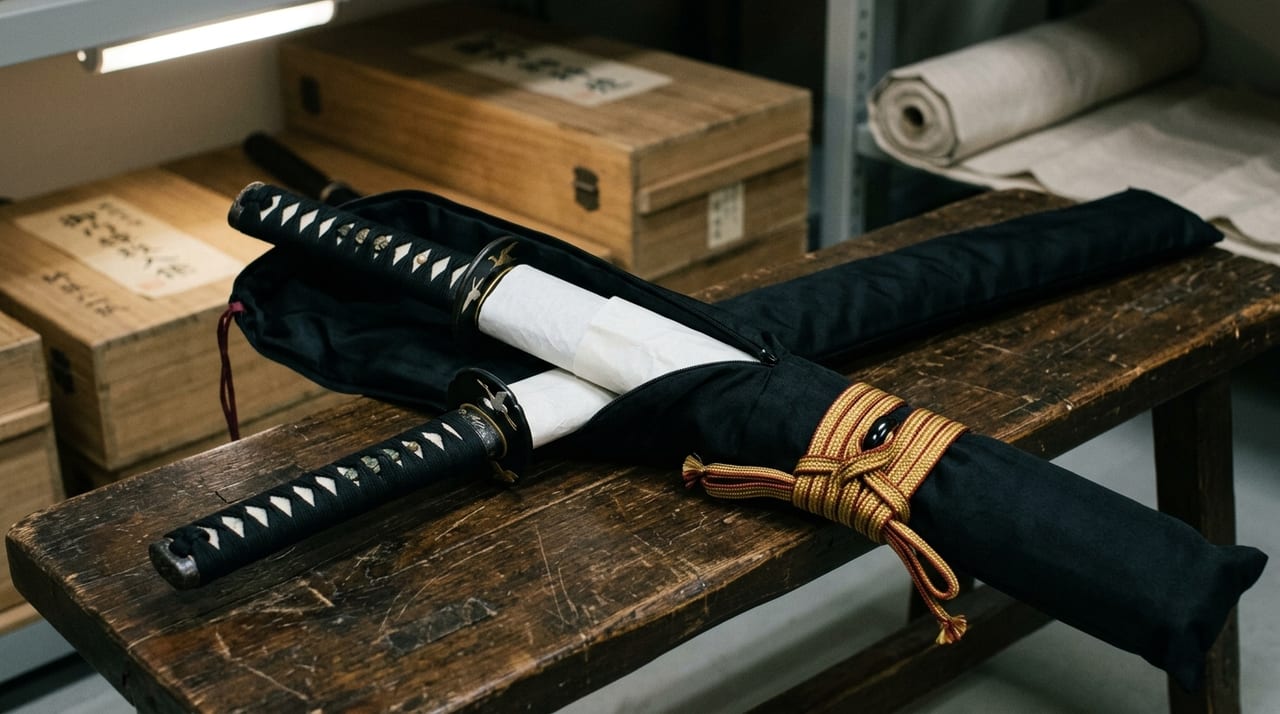
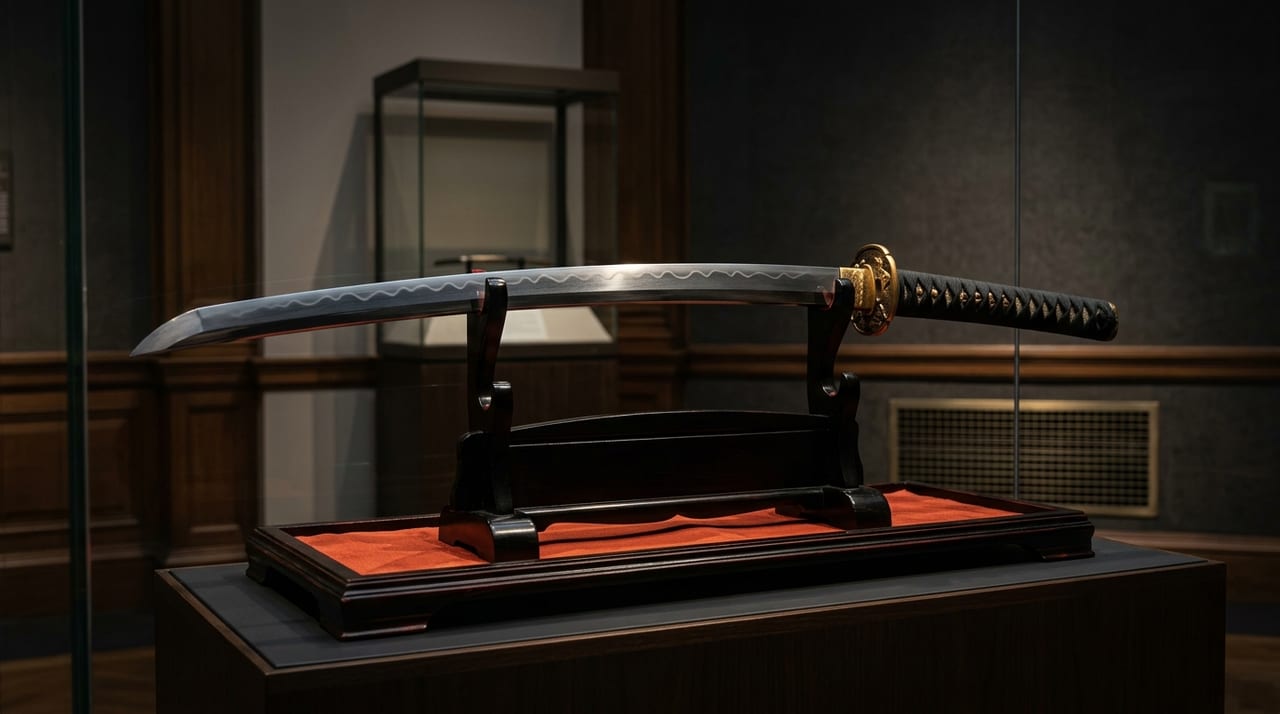
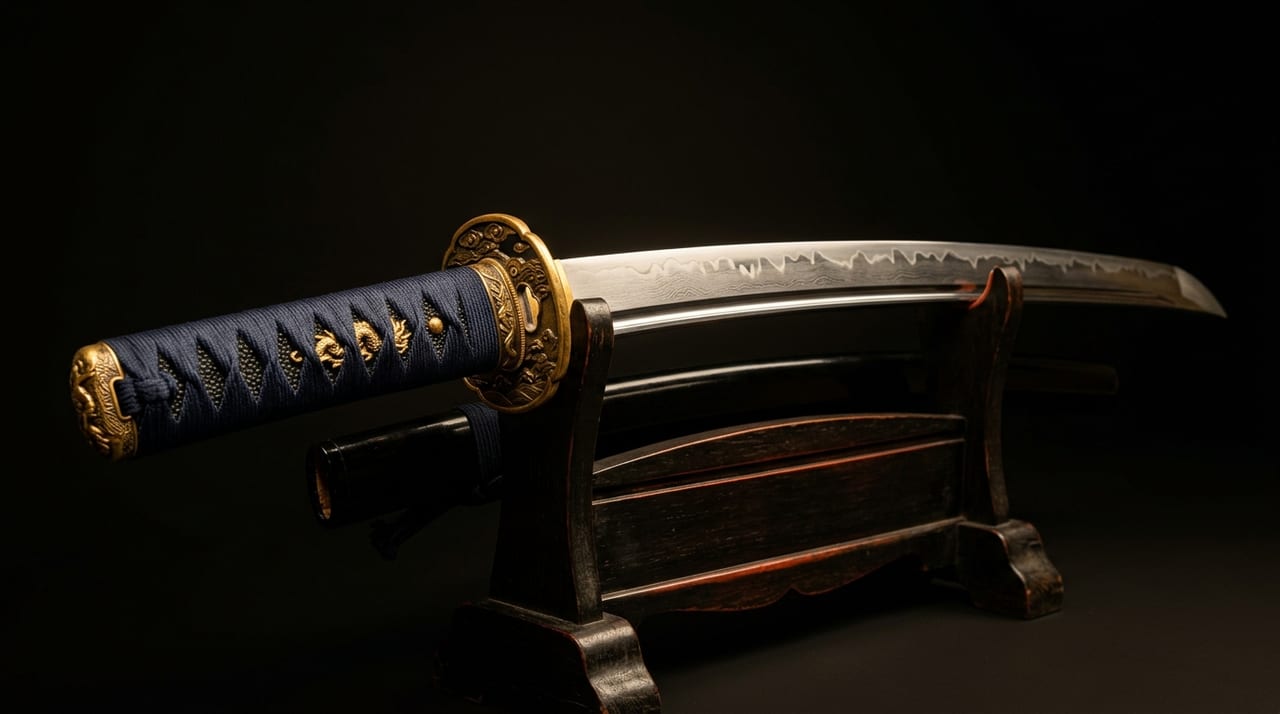
Nihontō and NFTs / Digital Ownership: A New Wave — A Blockchain-Opened Future for the Sword World
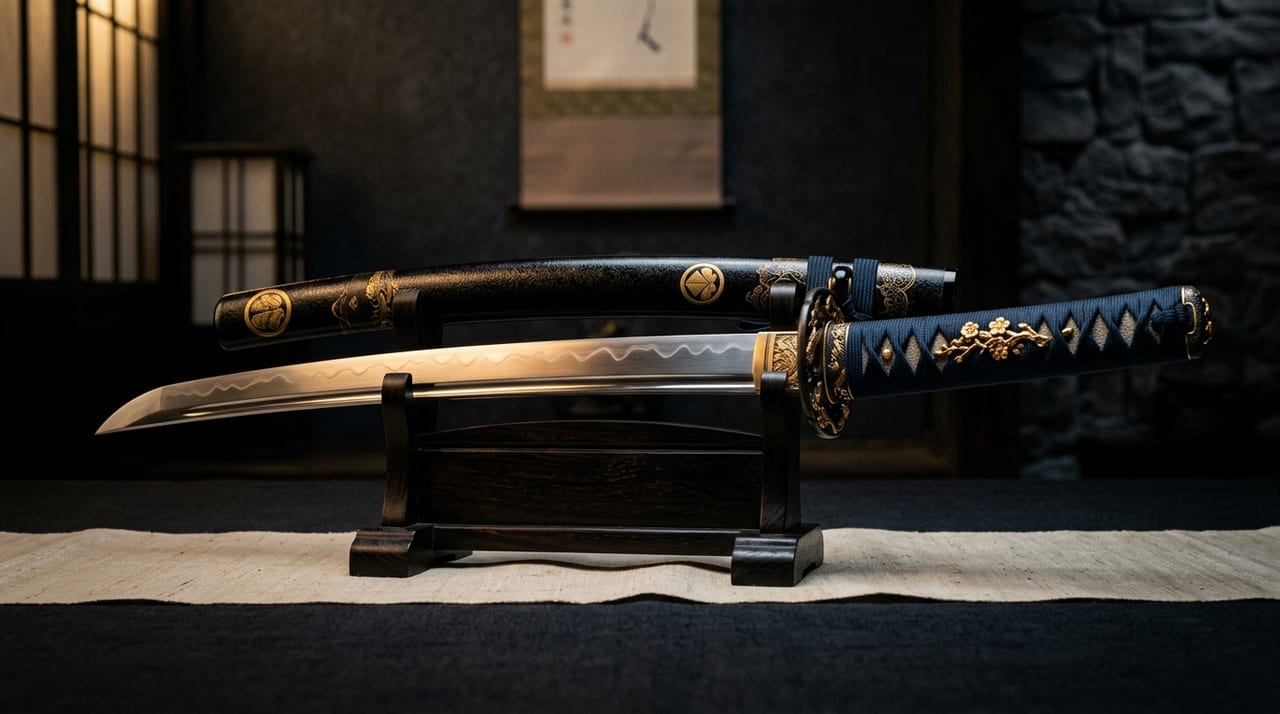 * Image is for illustrative purposes only.
Table of Contents
"Authentication" and "Provenance" in Question in the Digital Age
Nihontō are not mere weapons; they are "vessels of history" that embody their maker, their owners, and the age in which they were forged. Kanteisho (appraisal certificates) are issued by the NBTHK (Society for the Preservation of Japanese Art Swords), and certifications such as Tokubetsu Jūyō Tōken and Jūyō Tōken have a major influence on a sword's value. Yet paper kanteisho have their limits. The risks of loss and forgery, and the severing of provenance information at the time of resale — these have long been problems in the sword market.
In recent years, NFTs (non-fungible tokens) and blockchain have shed new light on these problems. Blockchain is a distributed ledger technology that is virtually impossible to tamper with, and data recorded on it cannot be rewritten. An NFT is a mechanism for attaching a "one-of-a-kind digital certificate" to that ledger.
How Blockchain-Based Provenance Management Works
The provenance of a sword is the single most important factor in determining its value. A sword that passed through a daimyo house in the Edo period commands a higher price than an undocumented work by the same tōkō (swordsmith). Traditionally, however, provenance has depended on oral tradition, old documents, and box inscriptions, always carrying the risk of forgery or dispersal.
By using blockchain, the following information can be recorded in a tamper-proof form.
- Basic information such as the tōkō's name, period of production, nagasa (blade length), and sori (curvature)
- Certification number and date of assessment by the appraisal authority
- Ownership history (anonymization is also possible)
- Restoration and polishing history
- Exhibition and loan records
By attaching all of this as NFT metadata, a "digital family register" for the sword becomes possible. When a sword is bought or sold, the NFT is transferred simultaneously, with the advantage that the provenance is updated automatically.
Overseas Cases of Digital Certificates
The use of NFTs for nihontō within Japan is still in its early stages, but in the fields of fine art and antiques the number of overseas cases is growing. Major auction houses such as Christie's and Sotheby's have piloted the practice of attaching NFT certificates to the sale of high-value artworks. The Swiss art-tech company Artory operates a blockchain-based artwork registration service and has formed partnerships with several leading auction houses.
Direct applications to nihontō are still rare, but among sword collectors, efforts combining digital archives of swords with proof of ownership have begun. NFTs with sword motifs have also been issued in the gaming and anime fields, and the affinity between sword culture and digital assets can be said to have been demonstrated.
A Hybrid Model of Physical Swords and Digital Assets
A business model drawing attention is the "Physical & Digital (Phygital)" format, in which a physical sword and an NFT are sold and managed as a set.
From the perspective of ownership division, there is "fractional ownership," in which a renowned sword is split into multiple NFTs that are co-owned by several investors. The sword itself is managed by a museum or specialist storage company, and NFT holders receive rights proportional to their share (such as viewing rights and a distribution of exhibition revenue).
If loan revenue from museums and exhibition fees are automatically distributed via smart contracts, a new form of investment emerges in which owners can earn operating returns while holding the sword.
As a use of digital twins, efforts to link 3D scan data and high-resolution images of swords to NFTs and realize exhibitions and experiences in metaverse spaces are also spreading.
Access to renowned sword collections, which was previously the preserve of the wealthy, may be democratized. If investment in renowned swords becomes possible from small amounts, it would likely lead to a broadening of the sword fan base.
Legal Challenges and Implementation Constraints
The use of NFTs for nihontō involves unique challenges.
Regulation under the Firearms and Swords Control Act (Jūtōhō) is the primary challenge. The ownership and transfer of swords within Japan is regulated by the Firearms and Swords Control Act (Jūtōhō), and registration with the Board of Education and notification of change of ownership are required. The transfer of ownership on an NFT is not a legal transfer of ownership and currently carries no legal force. NFTs remain strictly in the realm of "certificates" and "symbols of rights."
Integration with authentication is also a challenge. The reliability of blockchain records depends on the accuracy of the data entered. Unless an authoritative appraisal body such as the NBTHK is involved in the issuance of the NFT, the authority of the digital certificate cannot be guaranteed.
Export regulations cannot be ignored either. Swords designated as jūyō bunkazai (Important Cultural Property) or kokuhō (National Treasure) are in principle prohibited from being taken abroad. No international legal framework has been developed for how to handle the transfer of ownership without physical movement of the object when NFTs circulate across borders.
The Future of Nihontō — A Fusion of Tradition and Innovation
Nihontō have survived more than 700 years of technological innovation and changing times. The sword was established in turn as the ōdachi, the combat sword, and the work of art — each era giving it its own distinct significance.
NFTs and blockchain could become a new context for sword culture in the 21st century. The richness of information that paper kanteisho could never convey, instant connection with collectors around the world, the democratization of access to cultural heritage through distributed ownership — all of these hold the potential to contribute to the inheritance and development of sword culture. While the challenges are many, those involved with nihontō today are entering an era in which they must face the new frontier of digital technology.